
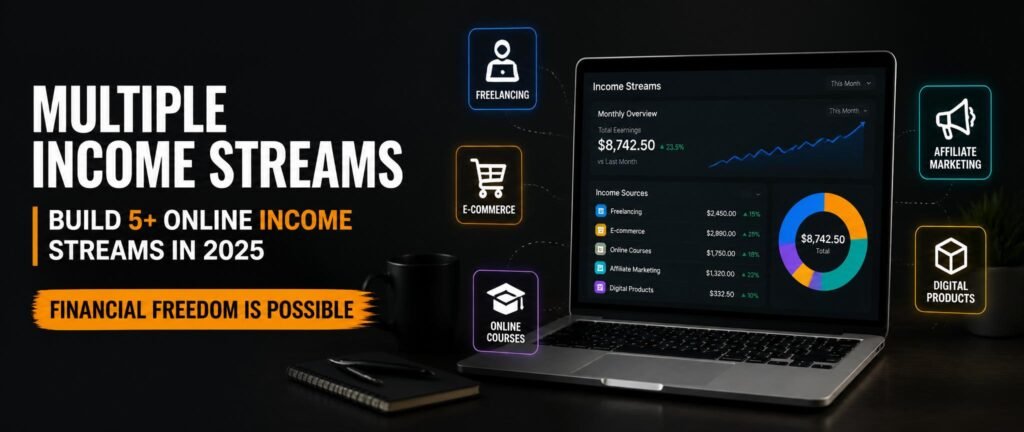
The dream of building a business from your laptop — working from anywhere, setting your own hours, and being your own boss — has never been more achievable than it is right now. The internet has fundamentally changed what it means to be an entrepreneur. You no longer need a storefront, a warehouse, or even a large amount of startup capital to build something profitable and sustainable.
But here’s the problem most aspiring online entrepreneurs run into: there are too many options. Dropshipping, freelancing, affiliate marketing, SaaS, content creation — every week there’s a new “best” business model being promoted online. Without a clear framework for evaluating your options, it’s easy to jump from idea to idea without making real progress.
This guide cuts through the noise. We’ve broken down seven proven online business models — what each one actually involves, how much it costs to start, how long it realistically takes to generate income, and what kind of person tends to thrive in each model. By the end, you’ll have a clear picture of which path makes the most sense for your skills, goals, and resources.
Why Start an Online Business in 2026?
Before diving into the models, it’s worth understanding why right now is such a powerful time to start an online business.
Global e-commerce is growing year over year. The creator economy is generating billions in revenue. Remote work has normalized the idea of earning income digitally. AI tools have dramatically reduced the cost and time required to create content, build products, and run marketing campaigns.
The barrier to entry has never been lower. What once required a team and significant investment can now be started by a single person with a laptop and an internet connection. The question isn’t whether online business is viable — it clearly is. The question is which model fits you best.
Model 1: Freelance Services
Freelancing is the fastest path from zero to income for most people. The concept is simple: you sell your skills directly to clients who need them.
Common freelance services include writing and copywriting, graphic design, web development, video editing, social media management, virtual assistance, bookkeeping, and digital marketing. If you have a marketable skill, there is almost certainly a client somewhere who will pay for it.
Platforms like Upwork, Fiverr, and Toptal make it easy to find your first clients without an existing network. Your startup cost is essentially zero — a profile, a portfolio, and consistent outreach are all you need to get started.
The biggest advantage of freelancing is speed. Many freelancers land their first paying client within days or weeks of starting. The biggest limitation is time — your income is directly tied to the hours you work. The natural evolution for successful freelancers is building an agency, hiring other freelancers, and eventually stepping out of the day-to-day delivery.
Best for: People with specific, in-demand skills who want to start earning quickly with minimal upfront investment.
Model 2: E-Commerce (Physical Products)
Selling physical products online remains one of the most popular online business models — and for good reason. People buy physical products every single day, and the infrastructure to sell them online has never been more accessible.
You have several sub-models to choose from. Dropshipping means you never hold inventory — you list products, and when a customer orders, the supplier ships directly to them. Print-on-demand lets you sell custom-designed products (t-shirts, mugs, phone cases) that are printed and shipped only when ordered. Private label involves finding a manufacturer, putting your branding on their product, and selling it as your own — popular on Amazon through the FBA (Fulfilled by Amazon) program.
Startup costs range from a few hundred dollars for a basic dropshipping store to several thousand dollars for private label with inventory. Expect to invest one to three months before making consistent sales as you test products, optimize your store, and build traffic.
Best for: People who enjoy product research, marketing, and operations. Those who can handle the logistics side of business.
Model 3: Digital Products
Digital products are one of the highest-leverage business models available. You create something once — an ebook, a template, a Lightroom preset pack, a spreadsheet, a font, a stock photo collection — and sell it repeatedly with no additional production cost.
The profit margins on digital products are extraordinary. Once your product is created and your payment processor is set up, every sale is nearly pure profit. There’s no shipping, no inventory, no restocking.
The challenge is marketing. A digital product sitting on Gumroad or Etsy with no audience isn’t going to sell itself. Building the traffic and audience to drive consistent sales takes time and consistent effort — through content marketing, SEO, social media, or paid advertising.
Best for: Creators, educators, and designers with deep expertise in a specific niche who are willing to invest in building an audience.
Model 4: Online Courses and Coaching
If you have expertise that others want to learn, online courses and coaching offer an incredibly rewarding business model — both financially and personally.
Recorded video courses (sold on platforms like Teachable, Kajabi, or Udemy) generate passive income once created. Live coaching or consulting generates active income but allows you to charge premium rates — often hundreds or thousands of dollars per client per month.
The startup costs are low. A decent camera, a good microphone, and a course platform subscription are all you need. The real investment is time — creating curriculum, recording content, and most importantly, building the audience that will buy from you.
For those with an existing following or professional reputation, this model can generate income almost immediately. For those starting from scratch, expect six to twelve months of audience building before seeing meaningful revenue.
Best for: Experts and professionals who enjoy teaching, have a validated skill people want to learn, and are willing to invest in building their platform.
Model 5: Content Creation and Monetization
Content creation — through blogging, YouTube, podcasting, or social media — is a long game. But for those who play it well, it’s one of the most valuable and diversified income models available.
The core idea is simple: build an audience by consistently delivering valuable content, then monetize that audience through multiple streams — display advertising, brand sponsorships, affiliate marketing, digital products, courses, and merchandise.
The compounding nature of content is what makes this model so powerful long-term. A blog post written today can generate traffic and income for years. A YouTube video published this month can accumulate millions of views over time. Your content library becomes a permanent asset.
The tradeoff is time. Most content creators spend six to twenty-four months creating consistently before seeing meaningful income. This model rewards patience, consistency, and genuine passion for the topic.
Best for: People who genuinely enjoy creating content, have patience for long-term building, and want multiple income streams from a single audience.
Model 6: Affiliate Marketing
Affiliate marketing lets you earn commissions by recommending other companies’ products. When someone clicks your unique tracking link and makes a purchase, you earn a percentage of the sale — typically anywhere from 5% to 50% depending on the product and program.
The appeal is obvious: no product to create, no customer service to handle, no inventory to manage. You focus purely on creating content that drives traffic and conversions.
The reality is that affiliate marketing requires significant upfront investment in content and audience building. Without traffic, there are no clicks. Without clicks, there are no commissions. Most affiliate marketers spend six to eighteen months building enough of an audience to generate meaningful, consistent income.
Best for: Content creators and bloggers who prefer recommending existing products over creating their own, and who have the patience to build traffic over time.
Model 7: Software as a Service (SaaS)
SaaS is the highest-ceiling online business model — and also the most demanding to build. The idea is straightforward: build a software tool that solves a real problem, and charge customers a recurring monthly or annual subscription to use it.
The recurring revenue model is what makes SaaS so valuable. Unlike one-time product sales, subscription revenue is predictable and compounds over time as you add customers faster than you lose them. Successful SaaS companies command premium valuations — often ten to twenty times annual revenue.
The challenge is the startup cost and technical complexity. Unless you can code yourself, you’ll need to hire developers — which typically means an initial investment of ten thousand to one hundred thousand dollars or more before you have a working product. And even then, customer acquisition is its own challenge.
Best for: Technical founders or those who can partner with a developer co-founder. People with a clear understanding of a specific problem and the resources to invest in building a solution.
How to Choose the Right Model for You
With seven solid options in front of you, the natural question is: which one should I start with?
Consider these factors. If you need income quickly, start with freelancing or services — you can be earning within weeks. If you have creative skills and enjoy making things, digital products or content creation may be a natural fit. If you’re technical or have significant capital, SaaS offers the highest long-term upside.
A smart strategy used by many successful online entrepreneurs is to start with a service-based model to generate immediate income, then use that income and knowledge to invest in a more scalable model — digital products, courses, or SaaS — over time.
Conclusion
There has never been a better time to build an online business. The tools are accessible, the markets are global, and the potential is real — but only for those who choose a model thoughtfully, commit to it fully, and stay consistent long enough to see results.
Pick the model that aligns with your skills and situation. Start small, learn fast, and build from there. The entrepreneurs who succeed online aren’t necessarily the most talented — they’re the ones who start, stay consistent, and adapt as they grow.