
Most lost proposals don’t die because the price was too high or a competitor was simply better. They die from small, avoidable mistakes buried inside an otherwise decent document — a vague scope, a confusing price, leftover placeholder text, a follow-up that never happens. A client rarely tells you why they went quiet. They just stop replying, and you’re left assuming it was the budget when it was actually something you could have fixed in ten minutes.
What makes these mistakes especially costly is that they rarely produce feedback. A client who’s put off by a confusing price or a vague scope almost never writes back to explain why — they simply stop responding, and the freelancer or agency owner is left guessing whether it was the budget, the timing, or something else entirely. That silence is exactly why these mistakes persist: without direct feedback, there’s no obvious signal telling you which part of the proposal needs to change.
This guide walks through the ten mistakes that show up most often in business proposals, why each one quietly kills deals, and exactly how to fix it. If you’re building your proposal from scratch, pair this with our guide on how to write a business proposal that wins clients for the full structure, and our free business proposal templates roundup if you’d rather start from a solid base instead of a blank page.

Table of Contents
- Mistake 1: Sending a Generic, Copy-Pasted Proposal
- Mistake 2: Burying the Price at the Bottom
- Mistake 3: Vague or Undefined Scope of Work
- Mistake 4: No Clear Timeline
- Mistake 5: Leaving Placeholder Text in the Final Document
- Mistake 6: Making the Client Guess What to Do Next
- Mistake 7: Overloading the Proposal With Jargon
- Mistake 8: Ignoring the Client’s Actual Problem
- Mistake 9: No Follow-Up Plan
- Mistake 10: Sending It Too Slow (or Too Fast)
- Quick Self-Check Before You Hit Send
- FAQs
- Final Verdict
Mistake 1: Sending a Generic, Copy-Pasted Proposal
The fastest way to lose a client’s trust is to send them a proposal that clearly could have gone to anyone. If the opening paragraph doesn’t reference their specific business, their specific problem, or something from your actual conversation with them, the client notices immediately — even if they can’t articulate exactly what feels off.
Why it costs you the deal: Clients aren’t just buying a service; they’re buying the feeling that you understood their specific situation. A generic proposal signals that you’ll probably deliver generic work too.
The fix: Open with a short, specific paragraph that references something concrete from your conversation — a number they mentioned, a problem they described in their own words, a deadline they’re working toward. Even two sentences of specificity at the top changes how the entire document reads.
Mistake 2: Burying the Price at the Bottom
Some people delay the pricing section, hoping the client will be so impressed by the rest of the proposal that the number won’t matter as much by the time they reach it. In practice, most clients scroll straight to the price first anyway, and burying it just makes the document feel evasive.
Why it costs you the deal: If a client has to search for the price, they start to wonder what else is being obscured. It reads as a sales tactic rather than a straightforward business document.
The fix: Give pricing its own clearly labeled section, positioned logically after the scope (so the client understands what they’re paying for) but never hidden or minimized. For guidance on structuring pricing itself — flat fee, tiered, or itemized — see our full pricing guide.
Mistake 3: Vague or Undefined Scope of Work
Phrases like “ongoing support” or “full marketing services” feel professional while writing them, but they create real problems later. Without a defined scope, the client doesn’t know exactly what they’re agreeing to, and you don’t have a clear boundary for what falls outside the original agreement.
Why it costs you the deal: Vague scope makes it harder for a client to say yes, because they can’t picture exactly what they’re getting. It also sets up scope-creep disputes later, which damages a relationship even after the deal closes.
The fix: List deliverables as specific, countable items wherever possible — “4 blog posts per month,” “one homepage redesign with up to 2 rounds of revisions,” “weekly 30-minute check-in call” — instead of broad service categories.
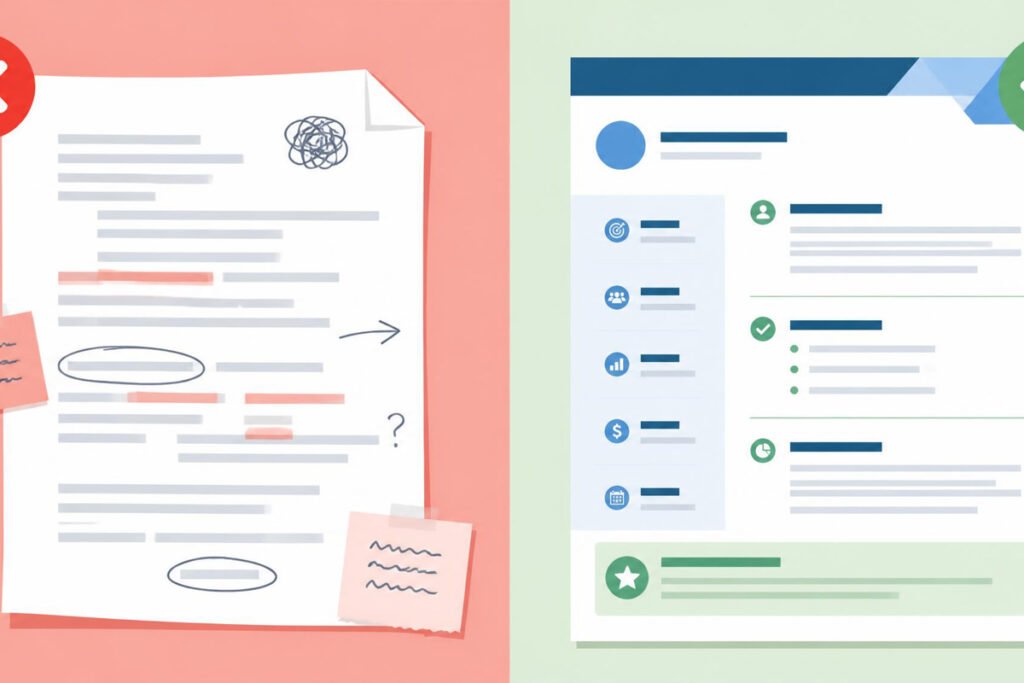
Before and after: “Ongoing social media management” tells the client almost nothing about what they’re actually paying for each month. “3 Instagram posts per week, 1 monthly performance report, and 2 rounds of content revisions” gives them something concrete to evaluate, compare against other proposals, and hold you accountable to later. The second version also protects you — if the client later asks for a fourth weekly post or a second report, you have a clear, documented basis for treating that as a scope change rather than an ambiguous argument about what was “included.”
Mistake 4: No Clear Timeline
A proposal that describes what will happen but never says when leaves the client without a way to plan around the project. Even a rough timeline is better than none, because it gives the client something concrete to react to.
Why it costs you the deal: Clients are often comparing multiple proposals against internal deadlines you don’t know about. If your timeline is missing, they may simply assume it doesn’t fit and move to a proposal that spells it out.
The fix: Include a simple timeline section — even a short table with milestones and estimated dates — right after the scope of work. If exact dates aren’t possible yet, use relative timing (“Week 1–2: discovery and setup,” “Week 3–6: execution”).
Mistake 5: Leaving Placeholder Text in the Final Document
This is the single most avoidable mistake on this list, and one of the most damaging. A stray “[Client Name],” an unedited “[Insert Service Here],” or a section still reading “Lorem ipsum” instantly signals that the document was rushed or, worse, sent to someone else first.
Why it costs you the deal: It’s not just embarrassing — it actively makes the client question how much attention you’ll pay to their actual project if you couldn’t proofread a four-page document.
The fix: Read the entire proposal top to bottom, out loud if possible, right before sending — not just the sections you actively edited. If you’re working from a template, this step matters even more, since templates are exactly where placeholder text hides longest.
Mistake 6: Making the Client Guess What to Do Next
A proposal that ends after the pricing section, with no instruction on what happens next, leaves the client to figure out the process themselves — do they reply by email? Sign something? Wire a deposit? Uncertainty at the finish line causes real delays, even from genuinely interested clients.
Why it costs you the deal: Momentum matters. A client who’s ready to say yes but doesn’t know the mechanism for saying yes often just… doesn’t, not out of rejection but out of friction.
The fix: End every proposal with a short, explicit “Next Steps” section: how to approve it, what happens immediately after approval, and any deposit or start-date requirement. Make the path from “interested” to “signed” as short and obvious as possible.
Mistake 7: Overloading the Proposal With Jargon
Industry-specific language can feel like it signals expertise, but for a client outside your field, dense jargon often does the opposite — it makes the proposal harder to read and easier to set aside for later, which often means never.
Why it costs you the deal: A proposal is a persuasion document, not a technical spec sheet. If a client has to re-read a paragraph three times to understand what you’re actually offering, you’ve lost momentum you can’t easily get back.
The fix: Write as if explaining the project to a smart friend outside your industry. Where a technical term is unavoidable, add a short plain-language clarification in parentheses the first time it appears.
Mistake 8: Ignoring the Client’s Actual Problem
Some proposals describe a service in detail — what will be done, how, and by when — without ever explicitly connecting it back to the problem the client actually described wanting solved. The client is left to do the translation work themselves.
Why it costs you the deal: Clients respond to proposals that clearly show “I understood your problem and here’s how this solves it,” not just “here’s a list of things I do.” Skipping that connection makes the proposal feel like a menu instead of a solution.
The fix: Include a short “Understanding Your Goals” or “The Challenge” section near the top that restates the client’s problem in your own words before moving into your proposed solution. This single addition does more for persuasion than almost anything else on this list.
Mistake 9: No Follow-Up Plan
Sending a proposal and then waiting silently for a response is one of the most common — and most fixable — mistakes freelancers and small agencies make. Clients get busy, proposals get buried in inboxes, and silence doesn’t necessarily mean rejection.
Why it costs you the deal: Without a planned follow-up, genuinely interested clients slip away simply because the moment passed and nobody reminded them. Deals are frequently closed on the second or third touchpoint, not the first.
The fix: Decide on a follow-up cadence before you even send the proposal — for example, a short check-in email 3–4 business days later, and a second one a week after that if there’s still no response. Keep follow-ups brief and low-pressure rather than repeating the entire pitch.
A useful habit here is treating the follow-up plan as part of the proposal itself, not an afterthought you figure out later. Set a calendar reminder the same moment you hit send, so the follow-up happens on schedule regardless of how busy the rest of the week gets. The follow-up message doesn’t need to re-sell the project — something as simple as “just checking whether you had any questions on the proposal I sent over” is usually enough to prompt a response, since it gives the client an easy, low-effort way to re-engage without feeling chased.
Mistake 10: Sending It Too Slow (or Too Fast)
There’s a balance most people miss on timing. Taking a week to send a proposal after an initial conversation lets the client’s urgency fade and gives competitors time to get in front of them first. On the other end, sending a proposal within minutes of a call can feel templated and impersonal, as if it wasn’t actually built around what was just discussed.
Why it costs you the deal: Timing signals something about how you work. Too slow reads as disorganized or uninterested; too fast reads as generic and copy-pasted, tying back into mistake #1.
The fix: Aim to send within 24–48 hours of the conversation that prompted the proposal — fast enough to keep momentum, slow enough to make the document feel genuinely tailored to what was discussed.
Quick Self-Check Before You Hit Send
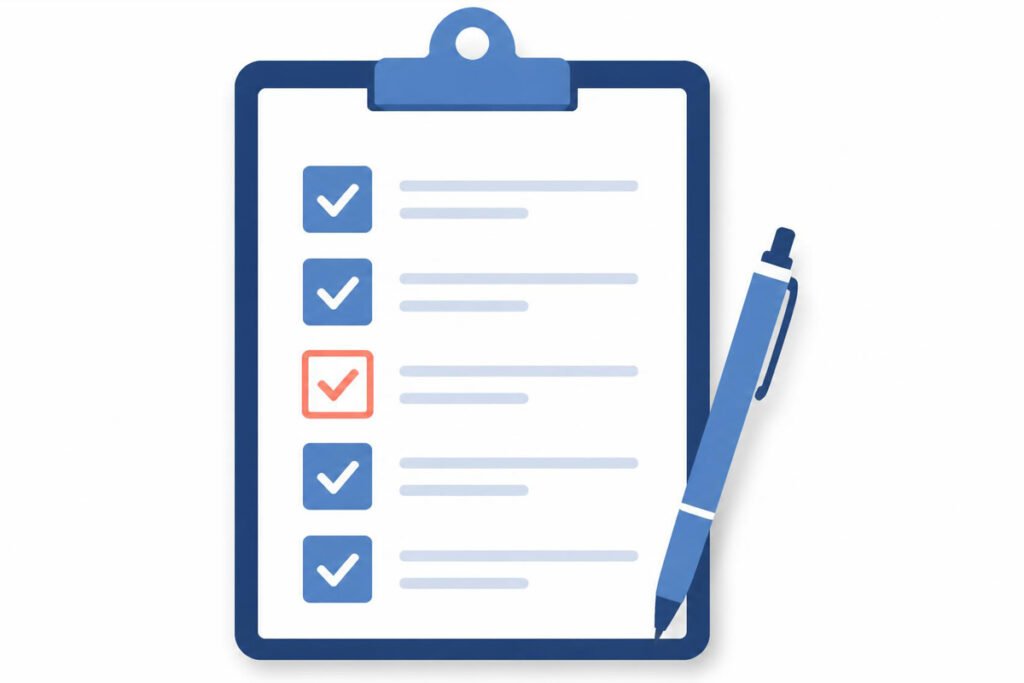
Before sending any proposal, run through this short list:
- Does the opening paragraph reference something specific to this client?
- Is the price clearly labeled and easy to find, not buried?
- Are deliverables listed as specific, countable items?
- Is there a timeline, even a rough one?
- Has the entire document been read top to bottom for leftover placeholder text?
- Is there a clear “Next Steps” section at the end?
- Would a smart friend outside your industry understand every paragraph?
- Does the document explicitly connect back to the problem the client described?
- Do you have a follow-up date already set for if there’s no response?
- Is this going out within roughly 24–48 hours of the conversation that prompted it?
If you can answer yes to all ten, the proposal is in far better shape than most of what lands in a client’s inbox.
FAQs
Which of these mistakes actually causes the most lost deals? Vague scope of work and a missing “Next Steps” section tend to cause the most silent losses, because they don’t generate an objection — the client simply doesn’t know what they’re agreeing to or how to move forward, so nothing happens. Mistakes like jargon or pricing placement usually cause hesitation rather than outright rejection, but a confused client rarely asks for clarification; they just go quiet.
Should I ever apologize in a follow-up if I haven’t heard back? No — avoid over-apologizing for following up, since it reframes a normal business practice as an inconvenience. A short, neutral check-in (“wanted to see if you had any questions on the proposal”) works better than one that sounds apologetic for reaching out.
Is it a mistake to send a proposal without talking to the client first? In most cases, yes. A proposal built entirely from an email inquiry, without any conversation, is far more likely to misjudge scope, budget expectations, or the real problem the client is trying to solve. Even a short 15-minute call before sending a proposal noticeably improves how well it lands.
How long should I wait before following up if there’s no response? A common approach is a first follow-up around 3–4 business days after sending, and a second (final) follow-up about a week after that if there’s still silence. Beyond two follow-ups, additional messages tend to have diminishing returns and can start to feel like pressure rather than helpfulness.
Does using a template increase the risk of these mistakes? It can, particularly mistake #5 (leftover placeholder text) and mistake #3 (vague scope), since templates are often built with generic language that needs to be replaced entirely, not lightly edited. A template is a useful starting structure, but every section still needs to be rewritten with the specific client and project in mind.
Final Verdict
None of these ten mistakes are complicated to fix individually — that’s exactly what makes them so common. Nobody sits down and decides to write a vague, jargon-heavy proposal with no follow-up plan; it happens by default, when a proposal gets written quickly between other tasks and sent without a second read.
The proposals that consistently win aren’t necessarily the most impressively designed or the cheapest. They’re the ones that clearly show the client their problem was understood, make the price and next steps impossible to miss, and get sent while the conversation that prompted them is still fresh. Run through the self-check list above before your next proposal goes out, and you’ll have already fixed the mistakes that quietly cost most freelancers and small businesses their next deal.
It’s also worth revisiting this list periodically rather than treating it as a one-time fix. As a business grows, proposals tend to get sent faster and with less individual attention — the same shortcuts that felt harmless on the fifth proposal start reappearing by the fiftieth. Building the self-check into a standard part of the sending process, rather than something to remember only when a deal falls through unexpectedly, is what keeps proposal quality consistent even as volume increases.