
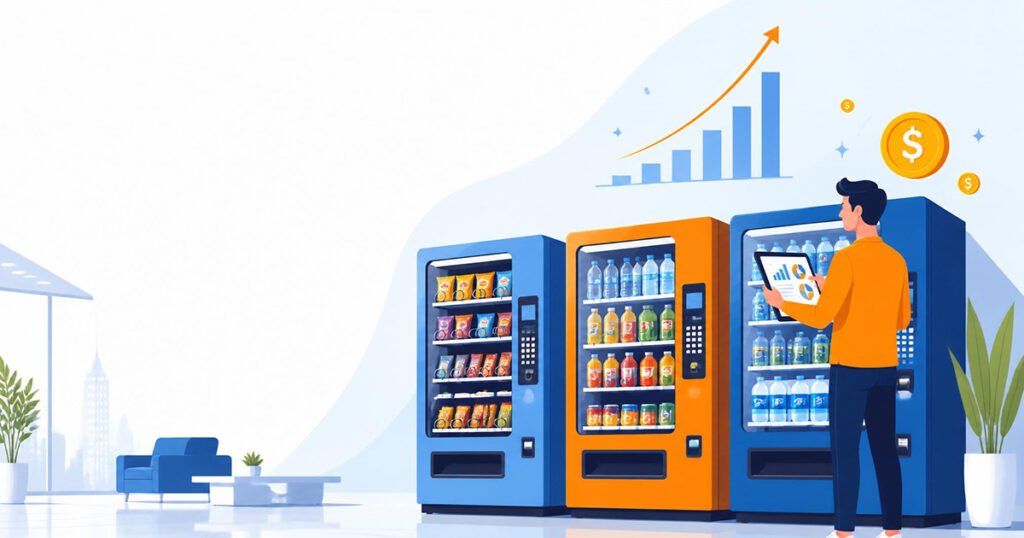
If you’ve been searching for a low-overhead way to build recurring income without quitting your day job, learning how to start a vending machine business is one of the smartest moves you can make in 2026. Vending doesn’t require a storefront, a large team, or years of industry experience — just the right machines, the right locations, and a plan to keep both stocked and running.
This comprehensive guide walks you through everything: costs, machine types, legal requirements, location scouting, supplier relationships, pricing strategy, and how to scale a single machine into a multi-unit vending route that generates consistent monthly cash flow. Whether you’re a first-time entrepreneur, a student looking for a side hustle, or someone exploring 12 unique business ideas for students, vending machines offer one of the most accessible entry points into small business ownership.
Table of Contents
- Why the Vending Machine Business Is Booming in 2026
- How Much Does It Cost to Start a Vending Machine Business?
- Types of Vending Machines You Can Start With
- Step-by-Step: How to Start a Vending Machine Business
- Choosing the Right Locations
- Licensing, Permits, and Legal Requirements
- Sourcing Machines and Products
- Pricing Strategy and Profit Margins
- Marketing and Growing Your Vending Route
- Common Mistakes to Avoid
- Insurance and Risk Protection
- Scaling from One Machine to a Full Route
- Frequently Asked Questions
1. Why the Vending Machine Business Is Booming in 2026
Vending machines have quietly become one of the most attractive small-business models for people who want ownership without the demands of a traditional retail operation. There’s no rent for a physical storefront, no staff to manage in most cases, and the entire operation can be run part-time around a full-time job.
Several trends are driving renewed interest in vending in 2026:
- Cashless and app-based payment systems have made machines far more profitable, since customers no longer need exact change.
- Smart vending technology now allows real-time inventory tracking from a smartphone, meaning owners can manage multiple machines without visiting each one daily.
- Healthier product demand has opened a niche for wellness-focused vending — protein snacks, cold-pressed juices, and organic items — commanding higher price points than traditional candy and soda machines.
- Micro-markets and specialty vending (electronics, PPE, pet supplies, beauty products) are expanding vending far beyond the classic snack machine.
If you enjoy the idea of a business model with predictable overhead, this guide will help you understand how to start a vending machine business the right way — from your very first machine to a growing route of them.
2. How Much Does It Cost to Start a Vending Machine Business?
One of the biggest appeals of vending is the relatively low barrier to entry compared to other physical retail businesses. Here’s a realistic cost breakdown:
| Expense | Estimated Cost |
|---|---|
| Used vending machine | $1,200 – $3,000 |
| New vending machine | $3,000 – $10,000 |
| Initial product inventory | $200 – $500 per machine |
| Business registration & licensing | $50 – $500 (varies by state) |
| Vending machine insurance | $300 – $1,000/year |
| Location placement fee/commission | Often 5–15% of sales (negotiated, not upfront) |
| Transportation (van or truck) | $0 if you already own one, or $5,000+ if purchasing |
Total starting investment for one machine typically ranges from $2,000 to $6,000, making it far more accessible than businesses requiring a physical storefront or specialized equipment fleet, similar in accessibility to niche startups like a self-defense keychain business, where a modest upfront investment can be scaled steadily over time.
3. Types of Vending Machines You Can Start With
Choosing the right machine type is the first major decision in learning how to start a vending machine business. Each category serves a different market and comes with its own margins.
Snack and Beverage Machines
The classic entry point — chips, candy, soda, and bottled water. Low cost, widely accepted in offices, gyms, and schools, and easy to restock.
Healthy Vending Machines
Stocked with protein bars, fresh fruit cups, sparkling water, and low-sugar snacks. These machines often justify a 20–30% higher price point due to demand in gyms, hospitals, and corporate offices.
Coffee and Hot Beverage Machines
Popular in office break rooms and waiting areas. Slightly higher upfront cost due to water-line installation but strong repeat usage.
Specialty Vending Machines
This growing category includes:
- Electronics (phone chargers, earbuds, cables)
- Personal care and beauty products
- PPE and hygiene kits (hand sanitizer, masks)
- Pet supplies in dog parks or pet stores
- Frozen food and ice cream machines
Bulk/Toy Vending Machines
Low-cost gumball or toy capsule machines — a great starter option for testing a location before investing in larger equipment.
Choosing the right category depends on your target foot traffic, much like choosing a niche matters in other creative micro-businesses, such as those explored in innovation spotlight ideas in business.
4. Step-by-Step: How to Start a Vending Machine Business
Step 1: Research Your Local Market
Before purchasing a single machine, study foot traffic patterns in your area. Visit potential host locations and observe how busy they are at different times of day.
Step 2: Choose Your Business Structure
Most vending operators start as a sole proprietorship or LLC. An LLC offers liability protection, which becomes increasingly important as you add machines and locations — this legal separation is similar to concepts covered in difference between business and company, which explains why formal business structuring matters even for small operations.
Step 3: Register Your Business
Register your business name with your state, obtain an EIN (Employer Identification Number) from the IRS, and open a dedicated business bank account.
Step 4: Secure Financing (If Needed)
Options include personal savings, a small business loan, equipment financing directly through vending machine manufacturers, or a business line of credit.
Step 5: Purchase Your First Machine
Buy new, refurbished, or used — refurbished machines from reputable vending suppliers offer the best balance of cost and reliability for beginners.
Step 6: Secure a Location
This is the single most important factor in vending profitability (more on this in the next section).
Step 7: Stock and Install
Load your machine with an initial inventory based on the demographic of the location — office workers want different products than gym-goers.
Step 8: Set Up Payment Systems
Install a cashless payment reader alongside cash acceptance to maximize sales — cashless transactions can increase vending revenue by up to 20–30%.
Step 9: Establish a Restocking Schedule
Depending on foot traffic, restocking may be needed weekly or bi-weekly.
Step 10: Track Performance and Reinvest
Use your first machine’s data to decide where and when to expand.
5. Choosing the Right Locations
Location is everything in vending. A great machine in a poor location will underperform a basic machine in a high-traffic spot.
High-performing location types include:
- Office buildings and corporate campuses
- Apartment complexes and residential communities
- Gyms and fitness centers
- Hospitals and medical offices
- Schools and universities (subject to nutrition regulations)
- Auto repair shops and waiting rooms
- Laundromats
- Manufacturing plants and warehouses
How to approach a location owner:
- Identify the decision-maker (property manager, HR director, or business owner).
- Offer a no-cost, no-hassle pitch: you provide the machine, stock it, and maintain it — they simply provide the space.
- Offer a small commission (5–15% of gross sales) as an incentive.
- Provide a written placement agreement outlining maintenance responsibilities, restocking frequency, and removal terms.
Building strong relationships with location owners mirrors the networking approach used successfully in other event- and service-based ventures, such as those outlined in how to start a party rental business, where partnerships with venues and planners directly drive growth.
6. Licensing, Permits, and Legal Requirements
Requirements vary by state and municipality, but generally include:
- Business license from your city or county
- Sales tax permit, since vending sales are taxable in most states
- Health department permit, required if selling perishable food or beverages
- Vending machine decal/registration, required in several states and often renewed annually
- Compliance with the Americans with Disabilities Act (ADA) for machine height and accessibility if placed in public buildings
Always confirm requirements directly with your state’s Secretary of State office and the U.S. Small Business Administration for the most current licensing rules, since regulations are updated periodically.
7. Sourcing Machines and Products
Where to Buy Machines
- Vending equipment manufacturers (new machines, often with financing plans)
- Vending machine liquidation auctions (used equipment at discounted prices)
- Regional vending distributors offering refurbished units with warranties
Where to Source Products
- Wholesale clubs (Costco, Sam’s Club, BJ’s) for smaller operations
- Vending-specific wholesale distributors for bulk discounts as you scale
- Direct manufacturer accounts for branded snack and beverage products once volume increases
Buying in bulk from a single trusted distributor — rather than mixing suppliers — simplifies your accounting and keeps unit costs predictable, a principle worth applying across any product-based venture.
8. Pricing Strategy and Profit Margins
Vending machine profitability depends on three factors: product cost, location traffic, and pricing.
General profit margin guidelines:
- Snack/beverage machines: 25–50% profit margin per item
- Healthy vending machines: 30–45% profit margin, with higher price tolerance
- Specialty vending (electronics, PPE): 40–60% margin due to lower competition
Sample math for a single snack machine:
- Average daily sales: 30–50 items
- Average profit per item: $0.75–$1.25
- Estimated monthly profit per machine: $500–$1,500, depending on location traffic
As you add machines, profits scale largely linearly, since fixed overhead (business registration, insurance, transportation) doesn’t increase proportionally with each new unit — a major reason vending is considered one of the more scalable low-investment models compared to labor-heavy service businesses.
9. Marketing and Growing Your Vending Route
While vending doesn’t require traditional advertising, growth still depends on visibility and reputation:
- Build a simple website listing your services for property managers seeking vending partners.
- Network locally with property management companies, gym owners, and HR departments.
- Ask satisfied host locations for referrals — word-of-mouth is the single biggest growth driver in vending.
- Use social proof, such as before/after photos of machine installations, to pitch new locations.
- Consider seasonal promotions, like discounted snack pricing during back-to-school or holiday periods, to boost short-term sales volume.
10. Common Mistakes to Avoid
- Choosing a poor location — even the best machine fails in low-traffic areas.
- Understocking or overstocking — leads to either lost sales or spoiled inventory.
- Ignoring maintenance — a broken machine loses trust with the location owner quickly.
- Skipping insurance — a single liability claim can wipe out months of profit.
- Failing to diversify machine types — relying only on snack machines limits your margin potential.
- Not tracking data — without sales tracking, you can’t identify which products or locations are underperforming.
11. Insurance and Risk Protection
Just as service-based businesses need proper coverage — as detailed in best insurance for pressure washing business — vending machine owners should carry:
- General liability insurance to cover injury or property damage claims
- Product liability insurance in case a stocked item causes harm or illness
- Equipment/property insurance to cover machine theft, vandalism, or damage
- Commercial auto insurance if using a vehicle to transport inventory and machines
Location owners will frequently ask for proof of insurance before agreeing to host a machine, so securing coverage early can actually help you close more location deals, not just protect you from risk.
12. Scaling from One Machine to a Full Route
Once your first machine proves profitable, reinvest earnings into additional units rather than withdrawing all profit immediately. A typical scaling path looks like:
- Machines 1–3: Learn restocking rhythms and refine your location-pitch process.
- Machines 4–10: Consider hiring part-time help for restocking, and invest in a dedicated vending route vehicle.
- Machines 10+: Transition into a full vending route business, potentially adding smart inventory software to manage multiple locations remotely.
- Diversify machine types across your route — mixing snack, beverage, and specialty machines to reduce dependency on any single product category.
This same reinvestment mindset — start small, prove the model, then scale — applies across almost every business type featured on Ideas Junction, whether it’s a dessert business, a gutter business, or a service-based venture like pressure washing.
13. Frequently Asked Questions
Is a vending machine business profitable in 2026? Yes. With the right locations and product mix, a single machine can generate $500–$1,500 in monthly profit, and profitability scales efficiently as you add more machines to your route.
How much money do I need to start a vending machine business? Most entrepreneurs start with $2,000–$6,000 for their first machine, inventory, and basic licensing — significantly less than most brick-and-mortar business models.
Do I need a license to operate vending machines? Yes, requirements vary by state but typically include a general business license, sales tax permit, and — for food/beverage machines — a health department permit.
What is the most profitable type of vending machine? Specialty and healthy vending machines (electronics, wellness snacks, PPE) tend to carry higher margins than traditional snack and soda machines, though they may see lower overall transaction volume.
How do I find locations for my vending machines? Target high-foot-traffic spaces like offices, gyms, apartment complexes, and hospitals, and approach the property manager or business owner directly with a no-cost placement offer.
Can I run a vending machine business part-time alongside a full-time job? Yes — this is exactly how most vending operators begin. A single machine typically needs restocking once or twice a week and minimal ongoing maintenance, making it a realistic side hustle before scaling into a full-time route.
How long does it take to become profitable? Most operators recover their initial investment on a single machine within three to eight months, depending on location traffic and product margins, after which nearly all revenue converts directly into profit.
14. Smart Vending Technology to Watch in 2026
Technology has changed vending more in the past few years than in the previous three decades combined, and staying current gives new operators a real competitive edge.
- Remote monitoring software: Modern machines can send real-time alerts when stock runs low, when a coil jams, or when a payment terminal goes offline — letting you fix problems before a customer ever notices.
- Cashless-first payment terminals: Tap-to-pay, mobile wallets, and QR-code checkout are now standard expectations rather than premium add-ons, and machines without them consistently underperform.
- Dynamic pricing displays: Some newer machines allow you to adjust pricing remotely for slow-moving items, run limited promotions, or test price points without a technician visit.
- Telemetry-based restocking routes: Software can now calculate the most efficient restocking route across multiple machines based on real inventory data, saving hours of guesswork once your route grows beyond three or four locations.
- Energy-efficient refrigeration units: Especially relevant for beverage and frozen food machines, newer compressors reduce electricity costs for host locations — a genuine selling point when pitching a spot to a property manager watching utility bills.
Investing in even one or two of these features on your first machine can meaningfully reduce the time you spend on manual maintenance checks, freeing you up to focus on securing your next location.
15. How to Evaluate a Location Before Committing
Not every busy-looking space makes a good vending location, and learning to evaluate a site properly will save you from a costly relocation later.
Ask these questions before signing a placement agreement:
- How many people pass this spot daily, and at what times?
- Is there existing vending or food service competition nearby?
- Does the location have reliable electrical access near the proposed spot?
- Will the space owner guarantee a minimum contract term, or can they remove your machine with little notice?
- Is the area visible and well-lit, or tucked away where foot traffic naturally avoids it?
A simple trial period — often 60 to 90 days — is a smart way to test a new location before investing in a second or third machine at the same site. If sales don’t hit a reasonable threshold within that window, it’s usually more efficient to relocate the machine than to keep restocking a low-performing spot.
16. Building Long-Term Contracts With Host Locations
Once a machine proves itself at a location, formalizing the relationship protects your investment. A written vending placement agreement should typically include:
- The exact commission percentage (if any) owed to the host location
- Who is responsible for machine damage caused by third parties
- Notice period required before either party can end the agreement
- Restocking frequency expectations
- Utility responsibilities (who pays for the electricity the machine uses)
Having this in writing avoids disputes later and signals professionalism to larger property management companies, who are often managing dozens of vendor relationships and appreciate operators who make the paperwork easy.
Final Thoughts
Learning how to start a vending machine business comes down to three fundamentals: securing the right locations, managing consistent restocking, and reinvesting profits into growth. It’s one of the few small business models where you can start with a single unit, learn the operational rhythm, and scale into a multi-location route entirely at your own pace — without the overhead of a traditional storefront.
If you’re exploring other low-investment paths into entrepreneurship, browse more startup guides in our Business Startup category for additional ideas tailored to first-time business owners.
Internal links used: self-defense keychain business, party rental business, pressure washing insurance, business startup category, blog category (x2) External authority link used: U.S. Small Business Administration (SBA.gov)