
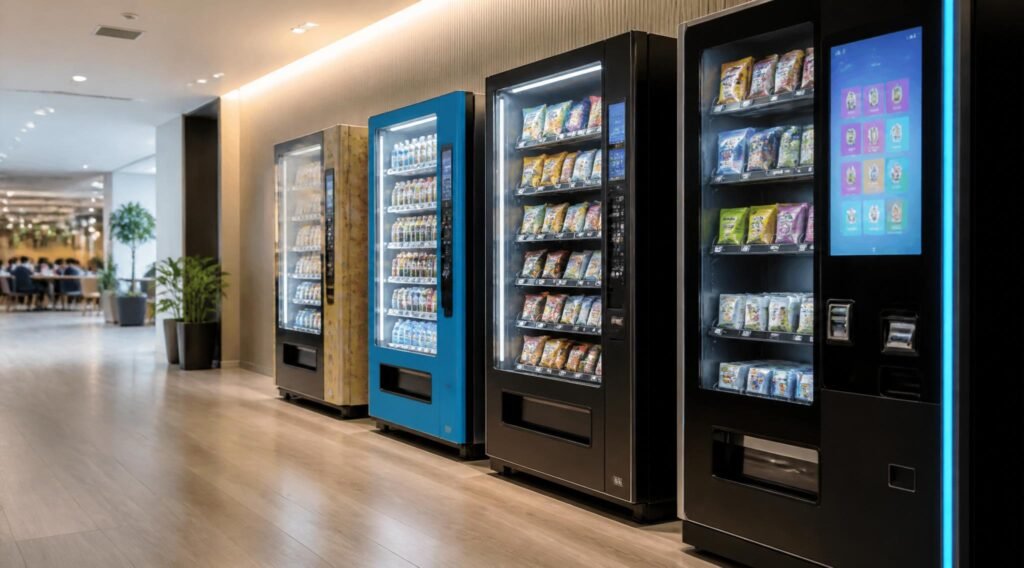
Have you ever walked past a busy vending machine in an office lobby, gym, or shopping mall and thought, “someone is making passive income right there”? You’re right. If you’re wondering how to start a vending machine business, you’re looking at one of the few startup models that can genuinely run with low daily involvement once it’s set up correctly.
Unlike many storefront businesses, a vending machine business doesn’t require you to rent a shop, hire a large team, or sit behind a counter all day. It requires the right machines, the right locations, and a system for restocking and collecting revenue. In this comprehensive guide, we’ll walk through every step — from research and licensing to buying machines, negotiating locations, pricing your products, and eventually scaling into a full vending route.
Table of Contents
- Why Start a Vending Machine Business
- Types of Vending Machines You Can Choose From
- Step 1: Research Your Market and Pick a Niche
- Step 2: Write a Simple Business Plan
- Step 3: Choose a Legal Business Structure
- Step 4: Get Licenses and Permits
- Step 5: Calculate Startup Costs and Secure Funding
- Step 6: Buy the Right Vending Machines
- Step 7: Find and Secure High-Traffic Locations
- Step 8: Stock Smart and Price Strategically
- Step 9: Protect Your Business With Insurance
- Step 10: Add Technology — Cashless Payments and Remote Monitoring
- Step 11: Market Your Vending Machine Business
- Step 12: Scale Your Route and Add Machines
- Common Challenges and How to Solve Them
- How Much Can You Actually Earn?
- Planning Your Exit Strategy
- Vending as a Student or Side Hustle
- Frequently Asked Questions
- Final Thoughts
Why Start a Vending Machine Business
Before diving into the “how,” it’s worth understanding the “why.” A vending machine business appeals to first-time entrepreneurs for a few clear reasons:
- Low overhead — no storefront rent, no large staff, and minimal daily labor once machines are placed.
- Scalable model — you can start with one machine and grow to dozens across a city.
- Flexible schedule — most operators restock machines a few times a week, not every day.
- Multiple product categories — snacks, drinks, healthy food, electronics, even personal care items can all be vended.
- Recurring revenue — once a machine is placed in a good location, it keeps generating sales with minimal marketing.
That said, like any small business, success depends on doing the groundwork properly — picking the right niche, the right machines, and the right locations. Let’s break that down step by step.
Types of Vending Machines You Can Choose From
Not all vending machines are the same, and choosing the right type shapes your entire business model.
- Snack and beverage combo machines — the most common entry point; low cost, widely accepted in offices and schools.
- Healthy vending machines — stocked with protein bars, fresh fruit, or low-sugar drinks; popular in gyms and hospitals.
- Coffee and hot beverage machines — ideal for office buildings and factories.
- Specialty vending machines — electronics, phone accessories, cosmetics, or even fresh food.
- Bulk/candy machines — very low startup cost, great for beginners testing the model.
- Smart vending machines — touchscreen, cashless, and app-connected; higher upfront cost but better data and margins.
If you’re also exploring other low-investment business models with a similar “set it and manage it” structure, it’s worth comparing notes with operators running a party rental business, since both rely heavily on asset placement, logistics, and repeat customer relationships rather than a physical storefront.
Step 1: Research Your Market and Pick a Niche
Every solid answer to “how to start a vending machine business” begins with research, not machine shopping. Spend time studying:
- Local demand — what do office workers, students, or gym-goers in your area actually buy?
- Competitor machines — walk through malls, hospitals, schools, and business parks to see what’s already placed and what’s missing.
- Pricing norms — check what similar machines charge nearby so your pricing isn’t wildly out of step.
- Underserved niches — healthy vending, allergen-free snacks, or eco-friendly packaging are growing categories with less competition in many markets.
Picking a niche early prevents you from buying the wrong machines later and helps you pitch location owners with a clear, specific offer.
Step 2: Write a Simple Business Plan
You don’t need a 40-page investor deck, but you do need clarity on paper. A lean vending machine business plan should cover:
- Your chosen niche and target locations
- Startup budget and expected monthly costs (restocking, maintenance, commissions)
- Revenue projections per machine
- Growth plan — how many machines in 6, 12, and 24 months
- Your restocking and cash-collection schedule
This document becomes your roadmap and is also useful if you ever apply for a small business loan or equipment financing.
Step 3: Choose a Legal Business Structure
Before you sign a single location contract, decide how your business will be legally structured — sole proprietorship, LLC, or corporation. This decision affects your taxes, liability, and how much paperwork you’ll deal with long-term.
Many new vending operators aren’t sure whether they’re forming a “business” or a “company” in the legal sense, and the terms are often used interchangeably even though they carry different implications. If you want a clear breakdown before registering, this guide on the difference between business and company is a useful starting point before you file any paperwork.
Most solo vending operators choose an LLC because it separates personal assets from business liability without the complexity of a full corporation.
Step 4: Get Licenses and Permits
Vending machine businesses are regulated at the local and state/provincial level, and requirements vary by region. Generally, you’ll need to look into:
- General business license — required in most cities to legally operate.
- Vendor’s permit or seller’s permit — needed if you’re selling taxable goods.
- Health department permits — required if you’re vending food or beverages, especially perishable items.
- Sales tax registration — you’ll need to collect and remit sales tax on vended products in most jurisdictions.
- Location-specific permits — some property types (schools, government buildings) have their own vendor approval processes.
Skipping this step is one of the most common mistakes new operators make — machines get placed, then pulled out weeks later because paperwork wasn’t in order. Handle licensing before you place a single unit.
Step 5: Calculate Startup Costs and Secure Funding
Startup costs vary widely depending on the type and number of machines you buy.
Typical cost ranges:
- Bulk candy/toy machines: $50–$300 each
- Used snack or drink machines: $1,200–$3,000 each
- New standard snack/drink combo machines: $3,000–$5,000 each
- Smart/touchscreen vending machines: $5,000–$10,000+ each
- Initial inventory stock: $200–$500 per machine
- Location commission deposits or fees: varies by contract
Funding options include:
- Personal savings (most common for a first machine)
- Small business loans or lines of credit
- Equipment financing directly through vending machine suppliers
- Partnering with a co-investor to split costs and profits
Start with one or two machines to prove the model in your market before committing to a larger fleet.
Step 6: Buy the Right Vending Machines
When purchasing machines, weigh new versus used carefully:
- New machines cost more upfront but come with warranties, modern payment systems, and fewer repair headaches.
- Used machines are cheaper to start with but may need refurbishment, and older card-reader technology may need upgrading.
Look for machines with:
- Reliable refrigeration (for drinks and perishables)
- Cashless payment compatibility (tap-to-pay, mobile wallets)
- Remote monitoring capability (to track stock and sales without a physical visit)
- Easy-to-service designs, since downtime directly costs you sales
Buy from reputable vending equipment distributors and always ask about parts availability and service support before purchasing.
Step 7: Find and Secure High-Traffic Locations
Location is the single biggest factor in vending machine profitability. A great machine in a dead corner earns nothing; an average machine in a busy break room can perform very well.
High-potential locations include:
- Office buildings and business parks
- Schools, colleges, and universities
- Gyms and fitness centers
- Hospitals and medical offices
- Manufacturing plants and warehouses
- Apartment complexes and dormitories
- Auto repair shops and waiting areas
How to approach location owners:
- Prepare a short, professional pitch explaining what you offer and how it benefits them (convenience for employees/tenants, no cost to install, optional commission).
- Offer a commission structure — typically 5–25% of gross sales, paid to the property owner or manager.
- Provide a simple written agreement covering machine placement, restocking schedule, liability, and how either party can end the arrangement.
- Start with a short trial period so both sides can evaluate performance before committing long-term.
Building relationships with several property managers at once increases the odds of landing your first few placements quickly.
Step 8: Stock Smart and Price Strategically
Once your machine is placed, product selection and pricing determine your margins.
- Track which items sell fastest and rotate out slow movers.
- Price items with a healthy margin (typically 25–50% markup over your wholesale cost) while staying competitive with nearby retail prices.
- Stock seasonal or trending items (protein snacks, cold drinks in summer, hot cocoa in winter) to boost sales.
- Avoid overstocking perishable items to reduce waste and spoilage losses.
Keep a simple spreadsheet or use your machine’s built-in reporting (on smart machines) to identify your best and worst performers per location.
Step 9: Protect Your Business With Insurance
Vending machines are physical assets exposed to theft, vandalism, weather damage (for outdoor units), and liability if a customer is ever injured by a malfunctioning machine. Basic coverage worth exploring includes:
- General liability insurance — covers injury or property damage claims.
- Equipment/property insurance — covers repair or replacement if machines are damaged, stolen, or vandalized.
- Product liability insurance — protects you if a vended food or drink item causes harm.
Every service-based small business — from vending routes to field service companies — needs to think seriously about coverage early rather than after an incident. Operators in other equipment-heavy niches face very similar decisions; this breakdown on choosing the right insurance for a pressure washing business walks through the same core categories (liability, equipment, and business interruption coverage) that apply almost identically to a vending machine operation.
Step 10: Add Technology — Cashless Payments and Remote Monitoring
Modern vending is increasingly cashless. Machines equipped with tap-to-pay card readers and mobile wallet support consistently outsell cash-only units, since fewer customers carry cash today.
Remote monitoring technology also lets you:
- See real-time stock levels without visiting each machine
- Get alerts when a machine is low on inventory or malfunctioning
- Track sales data by product and by location
- Plan efficient restocking routes instead of guessing
While this technology adds to your upfront cost, it typically pays for itself through higher sales conversion and reduced wasted trips.
Step 11: Market Your Vending Machine Business
Marketing a vending business looks different from a typical retail brand — most of your “marketing” is really about winning locations and staying visible to property decision-makers.
- Build a simple one-page website or profile listing your services, machine types, and contact information.
- Create a short pitch deck or flyer you can leave with property managers.
- Ask satisfied location partners for referrals to other property managers in their network.
- Use local business directories and small business groups to find leads on new construction, office parks, or gyms opening in your area.
Step 12: Scale Your Route and Add Machines
Once your first machine or two is profitable and running smoothly, focus on scaling:
- Reinvest early profits into additional machines rather than withdrawing them immediately.
- Group new locations geographically to build an efficient restocking route and cut down on driving time.
- Consider diversifying machine types (adding healthy vending or coffee machines) to serve different location types.
- Track profitability per machine so you can drop underperforming locations and redeploy that machine elsewhere.
Growth in this business tends to be gradual and location-driven rather than explosive, which is exactly why it suits people looking for a steady, manageable side business or full-time route.
Building an Efficient Restocking Routine
As your machine count grows, restocking stops being a casual errand and becomes an operational system. A poorly planned route wastes fuel, time, and ultimately profit, so it’s worth setting this up properly even with just three or four machines.
- Map your locations geographically and visit them in a logical loop rather than backtracking across town.
- Set a consistent schedule — most snack and drink machines need restocking once or twice a week, while high-traffic locations may need more frequent visits.
- Keep a rolling inventory log so you know exactly what each machine needs before you arrive, cutting down on wasted trips back to your supplier.
- Batch your supply runs — buy inventory for the whole week in one trip to your wholesale supplier instead of multiple smaller purchases.
- Track expiration dates carefully for perishable items to avoid spoilage losses eating into your margins.
A tight restocking routine is often the difference between a vending route that feels manageable and one that quietly drains your time and profits.
Common Challenges and How to Solve Them
- Machine downtime — solve with a reliable maintenance contact and by choosing machines with good parts availability.
- Theft and vandalism — mitigate with secure mounting, cameras where possible, and insurance coverage.
- Slow-selling locations — track data early and be willing to relocate machines that underperform after a fair trial period.
- Cash collection logistics — cashless payment systems reduce both the hassle and the security risk of carrying cash.
- Competition for good locations — build relationships and offer better commission terms or service reliability than competitors.
How Much Can You Actually Earn?
Earnings vary enormously based on location quality, machine count, and product category, but as a general reference point:
- A single well-placed snack/drink machine can generate $75–$400 in monthly profit after restocking and commission costs.
- Operators running a small route of 10–20 machines often report $1,500–$4,000+ in monthly net income, though this depends heavily on location quality and product mix.
- Specialty or smart vending machines in premium locations can outperform these averages significantly.
These figures are illustrative, not guarantees — always model your own numbers based on local pricing, commission rates, and restocking costs before scaling.
It also helps to think in terms of profit per machine per month rather than total revenue, since gross sales can look impressive while margins stay thin if commission rates, spoilage, or restocking travel time aren’t accounted for. Building a simple monthly tracking sheet per location — sales, cost of goods, commission paid, and time spent — will quickly show you which machines deserve more investment and which ones need to be relocated or replaced.
Planning Your Exit Strategy
Even at the startup stage, it’s smart to think ahead about how you might eventually sell your vending route if you choose to exit the business later — whether to retire, pursue a new venture, or simply cash out on the value you’ve built.
Selling any small business, including a vending route, involves transferring location contracts, machine assets, and sometimes supplier relationships, all of which require proper documentation. This guide on the legal documents needed to sell a business is a useful reference to keep in mind as your vending operation grows, so you’re prepared well before any sale conversation begins.
Vending as a Student or Side Hustle
Because a vending machine business can start small — even with a single bulk candy machine for under a few hundred dollars — it’s a popular option for people looking for a manageable side income rather than a full-time commitment.
Students in particular are often drawn to this model because it requires only a few hours a week for restocking and can be run around a class schedule. If you’re exploring options in this category, this list of unique business ideas for students includes several models with a similarly low time commitment and startup cost, worth comparing against a vending route before you commit.
Frequently Asked Questions
Q1: How much money do I need to start a vending machine business? You can start with as little as a few hundred dollars for a single bulk candy machine, though a standard snack and drink machine setup typically costs $3,000–$5,000 per unit including initial inventory.
Q2: Is a vending machine business profitable? Yes, when machines are placed in high-traffic locations with fair commission terms. Profitability depends heavily on location quality, product pricing, and how efficiently you manage restocking routes.
Q3: Do I need a license to operate vending machines? In most regions, yes. You’ll typically need a general business license, a vendor’s or seller’s permit, and possibly health department approval if selling food or beverages.
Q4: How do I find locations for my vending machines? Approach office buildings, gyms, schools, hospitals, and apartment complexes directly with a simple pitch and a commission offer, usually between 5–25% of gross sales.
Q5: Can I run a vending machine business part-time? Absolutely. Many operators start with one or two machines as a side hustle, restocking a few hours per week, before scaling into a full-time route.
Q6: What’s the biggest mistake new vending operators make? Placing machines before securing proper licensing, or choosing locations based on convenience to themselves rather than actual foot traffic and demand.
Final Thoughts
Learning how to start a vending machine business comes down to a repeatable formula: pick the right niche, secure high-traffic locations, price and stock intelligently, and protect the business with proper licensing and insurance. It’s a model that rewards patience and steady reinvestment far more than rapid expansion — start with one or two machines, prove the numbers in your own market, and scale deliberately from there.
Whether you’re testing this as a student side hustle or building toward a full vending route across your city, the fundamentals in this guide give you a clear, practical starting point to launch with confidence.