
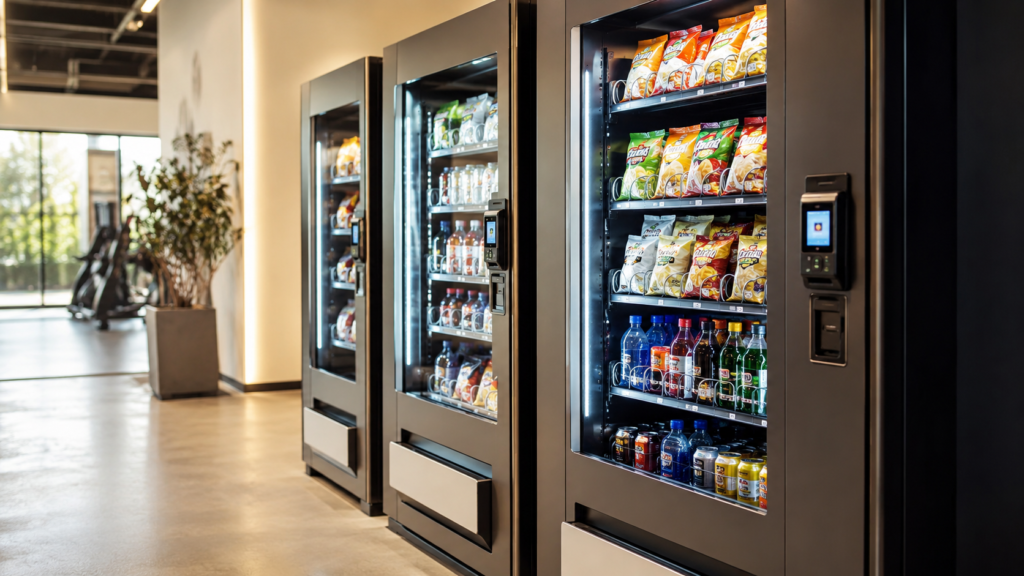
Vending machines have quietly become one of the most accessible ways to build a semi-passive income stream. No storefront, no employees to manage on day one, and a startup cost that can be as low as a few thousand dollars. If you’ve been searching for a low-investment business idea that doesn’t require you to quit your job first, a vending machine business deserves a serious look.
This guide walks through everything you need to know — from choosing the right machine type to picking profitable locations, understanding licensing, and scaling from one machine to a small fleet. Whether you’re comparing this to other low-cost ventures like a self-defense keychain business or a party rental business, vending stands out because it combines low overhead with recurring, predictable revenue.
Unlike many “start a business” ideas that require years of specialized skill or licensing before you see your first dollar, vending machines can go from idea to first sale within a matter of weeks. That short runway to revenue is part of why the industry keeps attracting first-time entrepreneurs, side-hustlers, and even retirees looking for a manageable second income stream. It’s also why understanding the fundamentals properly — rather than jumping in blind — makes such a meaningful difference to long-term profitability.
Why Vending Machines Are Still a Smart Business in 2026
The vending industry has evolved far beyond the coin-operated snack machines of the past. Cashless payment systems, remote inventory monitoring, and smart machines that track sales in real time have turned vending into a data-driven, scalable operation.
A few reasons entrepreneurs keep entering this space:
- Low barrier to entry. You can start with a single used machine for under $2,000, compared to tens of thousands needed for a retail storefront.
- Passive-leaning income. Once a machine is placed and stocked, it generates revenue with minimal daily involvement — restocking once or twice a week is often enough.
- Scalability. Ten machines don’t require ten times the effort of one. Route-based restocking makes scaling efficient.
- Recession resilience. People still buy snacks, drinks, and everyday essentials regardless of economic conditions.
- Flexible product categories. From snacks and drinks to electronics, cosmetics, and even fresh food, the vending model adapts to almost any niche.
Step 1: Understand the Vending Machine Business Model
Before buying equipment, it’s worth understanding how money actually moves in this business. You purchase or lease a machine, secure a location to place it (often through a revenue-share agreement with the property owner), stock it with products bought at wholesale prices, and collect the difference between wholesale cost and retail price — minus location commission, restocking time, and maintenance.
Most operators fall into one of two models:
- Direct ownership — you buy the machine outright, keep full profits, but bear all maintenance and replacement costs.
- Vending route acquisition — you buy an existing route of machines with established locations and sales history, which reduces the guesswork of finding placements from scratch.
For beginners, starting with one or two owned machines in a location you’ve personally negotiated is usually the safer, more educational path.
Step 2: Choose Your Vending Machine Type
Not all vending machines serve the same market. Picking the right category early will shape your entire strategy — from the locations you target to the margins you can expect.
Snack and Beverage Machines
The most common and easiest entry point. Wide product familiarity means less customer education needed, and suppliers are easy to find. Margins per item are modest (often 20–50% markup), but volume compensates.
Combo Machines
These combine snacks and drinks in a single unit, ideal for smaller locations that don’t have room for two separate machines. They’re a popular first purchase for new operators.
Specialty and Healthy Vending
Fresh produce, protein bars, organic snacks, and health-focused drinks command higher price points and attract offices, gyms, and schools looking to offer better options. Margins here can be notably higher than traditional snack machines.
Bulk/Candy Machines
Extremely low-cost entry (some machines cost under $100), ideal for testing the waters, though profit per unit is small and best suited for high-foot-traffic spots like malls or laundromats.
Electronics and Personal Care Kiosks
Found in airports and malls, these vend phone chargers, headphones, or cosmetics. Higher capital requirement but significantly higher margins per sale.
Fresh Food and Micro-Market Machines
The fastest-growing category. Refrigerated units dispensing sandwiches, salads, and meal kits appeal to office buildings and hospitals. These require more oversight for freshness and rotation but can outperform snack machines in revenue per unit.
Step 3: Calculate Startup Costs
A realistic budget separates hobbyists from operators who actually turn a profit. Here’s a general breakdown for a first-time entrepreneur launching with 2–3 machines:
| Expense Category | Estimated Cost |
|---|---|
| Used snack/combo machine (per unit) | $1,500 – $3,500 |
| New machine (per unit) | $3,000 – $10,000 |
| Initial inventory | $200 – $500 per machine |
| Cashless payment system installation | $200 – $400 per machine |
| Business licensing and permits | $50 – $500 (varies by state) |
| Insurance (general liability) | $300 – $800/year |
| Transportation for restocking | Variable (existing vehicle or small van) |
| Location commission reserve | 5–15% of gross sales |
Just like the cost breakdowns you’d see for pressure washing business insurance, your total investment depends heavily on whether you buy new or used equipment, and how aggressively you scale in year one. Many operators recommend starting with 1–2 machines, proving the model works, and reinvesting profits into additional units rather than over-leveraging early.
Step 4: Handle Licensing, Permits, and Taxes
Vending is regulated more than most people expect. Requirements vary by state and even by city, but generally include:
- Business registration — forming an LLC or sole proprietorship and registering your business name.
- Sales tax permit — most states require you to collect and remit sales tax on vended items.
- Vending machine license — many municipalities require a specific permit per machine, sometimes renewed annually.
- Health department permits — mandatory if you’re vending perishable food items.
- Weights and measures registration — some states inspect machines periodically for pricing accuracy.
Contact your state’s Secretary of State office and local city hall before placing your first machine. Skipping this step is one of the most common — and costly — mistakes new operators make.
Step 5: Find Profitable Locations
Location is the single biggest factor determining whether a vending machine succeeds or sits empty. High foot traffic alone isn’t enough — you need foot traffic combined with limited nearby food and drink alternatives.
High-Performing Location Types
- Office buildings and corporate campuses
- Apartment complexes and dormitories
- Gyms and fitness centers
- Auto repair shops and waiting areas
- Laundromats
- Hospitals and medical offices
- Manufacturing and warehouse facilities
- Schools and universities (subject to nutrition regulations)
How to Approach Property Owners
Cold outreach works, but a simple, professional pitch matters. Offer a revenue-share arrangement (commonly 5–15% of gross sales) rather than a flat rental fee, since this removes the property owner’s financial risk and makes approval easier. Bring data: expected foot traffic, product variety, and how you’ll handle restocking and maintenance without burdening their staff.
A written placement agreement — even a simple one-page contract — protects both parties and should specify commission rate, restocking frequency, and terms for removing the machine if performance is poor.
Step 6: Source Your Machines and Suppliers
You have three main sourcing paths:
- Buying new from vending equipment manufacturers — higher cost, but comes with warranties and the latest cashless payment tech.
- Buying used through vending equipment dealers or auctions — significantly cheaper, ideal for testing a location before committing to new equipment.
- Leasing — lower upfront cost with monthly payments, useful if capital is tight, though total cost over time is usually higher.
For inventory, national wholesalers like Costco Business Center, Sam’s Club, or regional snack distributors typically offer the best per-unit pricing once you’re buying in bulk. As your route grows, negotiate directly with regional snack and beverage distributors for better margins than retail wholesale clubs can offer.
Step 7: Set Up Cashless Payment Systems
Cash-only machines are increasingly a liability. Card readers and mobile payment integration (Apple Pay, Google Pay, tap-to-pay) typically increase sales by 20–30% simply by removing the friction of needing exact change. Most modern card reader add-ons also include remote sales tracking, so you can monitor which machines need restocking without a physical visit — a major time-saver as your route grows.
Step 8: Build a Restocking and Maintenance Routine
Consistency is what separates a side hustle from a scalable business. Set a fixed restocking schedule (weekly is standard for most snack/beverage machines) and track:
- Which products sell fastest at each location (adjust selection accordingly)
- Expiration dates, especially for fresh or perishable items
- Mechanical issues — jammed coils, payment system errors, temperature control for refrigerated units
- Cash collection (for machines still accepting cash)
Route optimization becomes important once you’re managing more than 4–5 machines. Group locations geographically to minimize drive time, similar to how a party rental business plans delivery and pickup logistics around efficient routes.
Step 9: Protect Your Business with Insurance
General liability insurance is non-negotiable — it covers you if a customer is injured by a malfunctioning machine or a product-related issue. Depending on your product categories, you may also want:
- Product liability insurance — especially important for food and beverage items
- Equipment insurance — covers theft, vandalism, or damage to machines placed in public locations
- Commercial auto insurance — if you’re using a vehicle regularly for restocking runs
The same due diligence that applies to choosing insurance for a pressure washing business applies here: compare quotes from insurers experienced with small, location-based service businesses, and don’t underinsure just to save on premiums.
Step 10: Market and Grow Your Vending Business
Vending machines largely market themselves through visibility, but a few strategies accelerate growth:
- Local business networking — property managers, facility managers, and small business owners are your real customer base, not the end consumer.
- Referral incentives — offer existing location partners a small bonus or commission increase for referring new placement opportunities.
- Branding your machines — a clean, well-branded wrap or signage builds trust with property owners considering a placement.
- Online presence — even a simple website listing your services helps when property managers search for vending providers in their area.
- Diversify products seasonally — hot drinks and soups in winter, cold beverages and ice cream in summer, boosts average sales per machine.
Common Mistakes First-Time Vending Operators Make
- Choosing convenience over performance when picking a location, instead of verifying real foot traffic
- Overstocking slow-moving products and letting inventory expire
- Skipping the written placement agreement, leading to disputes over commission or machine removal
- Underestimating restocking time when planning to scale beyond 3–4 machines solo
- Ignoring cashless payment setup, losing a significant percentage of potential sales
- Not tracking machine-level profitability, making it hard to know which locations are worth keeping
Scaling from One Machine to a Full Route
Once your first machine or two proves consistently profitable, scaling follows a fairly predictable path:
- Reinvest profits into a second and third machine rather than pulling all profit out early.
- Standardize your restocking schedule and keep simple spreadsheets (or vending-specific software) tracking sales per machine.
- Consider hiring part-time help for restocking once your route exceeds 8–10 machines.
- Negotiate better wholesale pricing as your volume increases.
- Explore acquiring an existing small vending route from a retiring operator — this can be faster than building placements from scratch.
Many successful vending operators run 15–30 machines part-time alongside other work before deciding whether to go full-time. There’s no rush — the beauty of this model is that it scales at your pace, and every additional machine you add should be judged on the same criteria you used for your very first one: strong foot traffic, low nearby competition, and a property owner willing to commit to a fair, written agreement.
Understanding Profit Margins in Vending
Profitability in vending isn’t just about markup percentage — it’s about turnover speed combined with margin. A candy bar bought wholesale for $0.50 and sold for $1.50 has a 200% markup, but if it only sells twice a week, it’s far less valuable than a $2.00 drink bought for $1.00 that sells fifteen times a week.
As a general benchmark:
- Snack items typically carry a 40–60% margin after wholesale cost
- Beverages often carry the highest margin percentage, sometimes 100% or more
- Fresh food items carry lower margin percentage (30–40%) but higher price points, which can mean more dollars per sale despite the thinner percentage
- Specialty/health items can command premium pricing, often 20–30% higher than standard snack pricing, because customers expect to pay more for better options
Track cost-per-item, sale price, and restocking frequency for every product at every machine. Within a few months of data, you’ll see clearly which products to keep, which to drop, and which locations deserve a second machine.
Best Products to Stock by Location Type
Matching your product mix to the location dramatically affects sales:
- Office buildings — coffee, energy drinks, protein snacks, and quick lunch items perform well during weekday business hours
- Gyms — protein bars, electrolyte drinks, and low-sugar snacks align with the customer mindset
- Apartment complexes — a broad mix of traditional snacks, sodas, and late-night comfort items, since residents shop at all hours
- Schools and universities — subject to nutrition guidelines in many states, so healthier snack and beverage options are often required, not optional
- Auto shops and waiting rooms — comfort snacks and hot beverages, since customers are often waiting 30 minutes or more
- Hospitals — a wide range including fresh food, since staff work long shifts and want variety beyond vending-machine junk food
Rotating seasonal products and testing new items every few months keeps sales fresh and prevents stagnation, especially at high-traffic locations where repeat customers notice when the selection never changes.
Vending Machine Technology Trends Worth Watching
The vending industry has moved well past simple mechanical dispensers, and staying aware of current technology helps new operators make smarter equipment decisions:
- Remote telemetry systems that alert you when a machine is low on stock or experiencing a mechanical fault, cutting down on wasted restocking trips
- AI-driven inventory prediction that forecasts which products will sell out first at each location based on historical data
- Age-verification and ID scanning for machines vending age-restricted items like vape products or alcohol in permitted regions
- Smart cooling systems that reduce energy costs on refrigerated units, which matters when you’re running multiple machines around the clock
- QR-code-based loyalty programs that reward repeat customers with discounts, encouraging return visits to the same machine
Newer operators don’t need every feature from day one, but choosing machines with upgrade paths for these technologies protects your investment as the industry standard shifts further away from cash-only, low-tech units.
Choosing the Right Legal Structure
Most vending entrepreneurs start as a sole proprietorship because it’s the simplest and cheapest structure to set up. However, forming an LLC is worth strongly considering even at a small scale, because:
- It separates personal assets from business liabilities, which matters given that vending machines are placed in public or semi-public spaces where accidents can happen
- It presents a more professional image to property managers when negotiating placement agreements
- It simplifies tax planning as you scale beyond a handful of machines and start generating meaningful revenue
Consult a local accountant or business attorney before deciding, since state-specific filing fees and ongoing compliance requirements vary. For a business with this level of public exposure, the modest cost of forming an LLC is usually worth the liability protection it provides.
Frequently Asked Questions
How much does it cost to start a vending machine business? A modest start with one or two used machines typically costs between $2,000 and $6,000, including equipment, initial inventory, and licensing.
Is a vending machine business profitable? Yes, when locations are chosen well. A single well-placed snack and drink machine can generate $200–$500 in net monthly profit, with fresh food and specialty machines often earning more.
Do I need a license to operate vending machines? In most areas, yes. Requirements vary by state and city, and often include a business license, sales tax permit, and sometimes a specific vending machine permit per unit.
How do I find locations for my vending machines? Approach property managers of offices, apartment complexes, gyms, and similar high-traffic locations directly, offering a revenue-share commission rather than a flat fee.
Can I run a vending machine business part-time? Absolutely. Most operators start part-time, managing a handful of machines around a full-time job before deciding whether to scale further.
How long does it take to become profitable? Most single-machine operators recoup their initial equipment and inventory cost within 6–12 months, depending on location quality and product pricing, after which the machine becomes largely pure profit minus restocking and maintenance costs.
Should I buy new or used vending machines when starting out? Used machines are generally the smarter choice for a first purchase, since they let you test whether a location performs well before committing significant capital to new equipment with advanced features.
Final Thoughts
A vending machine business offers something rare among low-investment startup ideas: a genuinely scalable, semi-passive model with a manageable learning curve. Success comes down to disciplined location selection, reliable restocking, and treating it like a real business from day one — proper licensing, insurance, and financial tracking included.
If you’re exploring other low-cost business models alongside vending, it’s worth browsing guides like free cleaning courses with certificates or comparing operational trade-offs in owning a party bus — both offer useful lessons in balancing upfront investment against long-term recurring revenue, a principle that applies directly to building a profitable vending route.