
Introduction
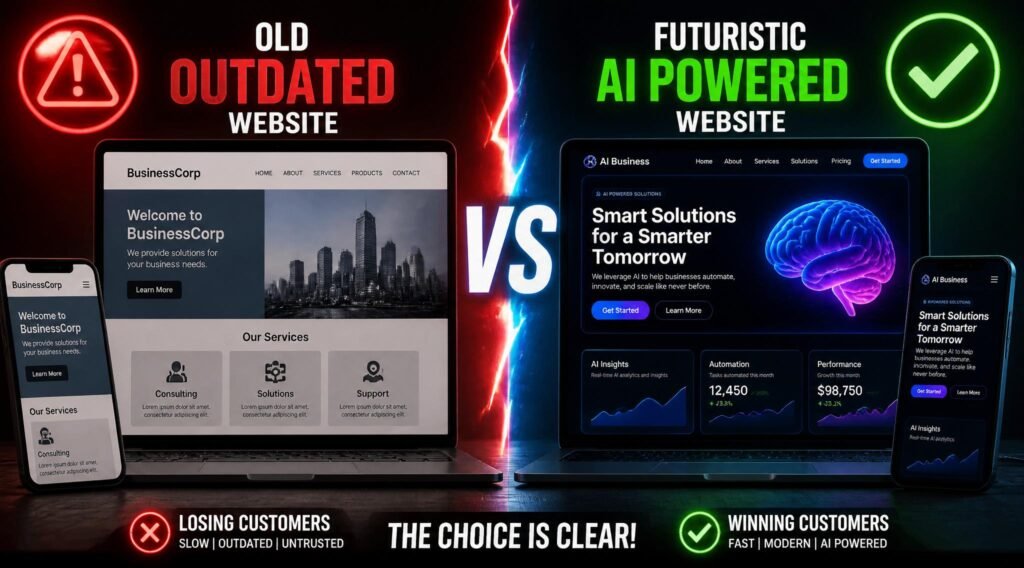
Web design in 2026 is no longer just about aesthetics. It is about performance, psychology, personalization, and conversion optimization. In the American digital market, where competition is extremely high, businesses cannot rely on outdated design practices anymore.
Modern users expect websites that are:
- Fast and responsive
- Visually engaging
- Mobile-first
- Interactive and dynamic
- Personalized to their behavior
- Easy to navigate
- Trustworthy and secure
If a website fails to meet these expectations, users leave within seconds and rarely return.
That is why businesses are investing heavily in modern web design strategies that combine creativity with data-driven decision-making.
Professional digital agencies like Ideas Junction help businesses adopt modern design systems that improve user engagement, brand trust, and conversion rates.
In this article, we will explore the most important web design trends dominating the American market in 2026 and how businesses can use them for growth.
Why Web Design Trends Matter in 2026
Web design trends are not just visual preferences. They reflect:
- User behavior changes
- Technology evolution
- Search engine requirements
- Business competition
- UX expectations
A modern website must do more than look good. It must:
- Convert visitors into customers
- Communicate brand value clearly
- Load quickly across devices
- Provide seamless user experience
Businesses that ignore modern design trends often appear outdated, which directly affects trust and conversions.
1. AI-Powered Web Design
Artificial intelligence is transforming web design in 2026.
AI is being used to:
- Generate layouts automatically
- Personalize content in real time
- Optimize user journeys
- Analyze user behavior
- Improve conversion paths
Websites are becoming smarter and more adaptive.
For example, users may see:
- Different homepage content based on location
- Personalized product recommendations
- Dynamic CTAs based on behavior
AI-driven design improves engagement and increases conversion rates significantly.
2. Mobile-First Design Is Mandatory
Mobile traffic dominates the internet, especially in the American market.
Modern websites are designed primarily for mobile devices first, then adapted for desktop.
Mobile-first design focuses on:
- Fast loading speed
- Touch-friendly interfaces
- Simplified navigation
- Readable typography
- Optimized images
Google also uses mobile-first indexing, meaning mobile performance directly affects search rankings.
Businesses ignoring mobile optimization lose both traffic and revenue.
3. Minimalist and Clean UI Design
Minimalism continues to dominate modern web design.
The goal is simplicity:
- Less clutter
- More focus
- Better readability
- Clear messaging
Minimalist websites:
- Load faster
- Convert better
- Feel more professional
- Improve user focus
Users in 2026 prefer clean interfaces over overly complex layouts.
Too much visual noise reduces trust and increases bounce rates.
4. Motion UI and Micro-Animations
Motion design has become a powerful UX tool.
Micro-animations include:
- Button hover effects
- Scroll animations
- Loading indicators
- Transition effects
- Interactive feedback
These small animations improve:
- User engagement
- Emotional experience
- Visual feedback
- Brand perception
However, animations must be optimized to avoid slowing down performance.
5. Dark Mode and Adaptive Themes
Dark mode is now a standard feature in modern web design.
Benefits include:
- Reduced eye strain
- Modern aesthetic appeal
- Battery saving on mobile devices
- Improved visual hierarchy
Many websites now offer:
- Light mode
- Dark mode
- Automatic theme switching
Adaptive themes improve user satisfaction and personalization.
6. Advanced Personalization
Personalization is one of the biggest trends in 2026.
Websites now adapt based on:
- User behavior
- Location
- Device type
- Previous interactions
- Preferences
Examples include:
- Personalized homepage content
- Dynamic product recommendations
- Customized offers and CTAs
Personalization increases:
- Engagement
- Conversions
- Customer satisfaction
7. 3D Elements and Immersive Visuals
3D design is becoming more common in modern websites.
It includes:
- Interactive product models
- 3D animations
- Depth-based visuals
- Immersive storytelling
These elements help brands:
- Stand out visually
- Increase engagement
- Create memorable experiences
However, performance optimization is critical to avoid slow loading.
8. Voice Search Optimization
With the rise of smart devices, voice search is growing rapidly.
Modern websites are optimized for:
- Conversational queries
- Natural language content
- Structured data
- FAQ-based design
Voice-friendly websites improve:
- SEO visibility
- Accessibility
- User convenience
Businesses targeting US audiences must consider voice search behavior.
9. Accessibility-Focused Design
Accessibility is now a core requirement, not an optional feature.
Accessible websites include:
- Screen reader support
- Keyboard navigation
- High contrast text
- Alt text for images
- Clear semantic structure
Accessibility improves:
- Inclusivity
- SEO performance
- Legal compliance
- User experience
Companies that ignore accessibility risk losing customers and credibility.
10. Interactive Storytelling
Websites are becoming more narrative-driven.
Instead of static pages, businesses now use:
- Scroll-based storytelling
- Interactive sections
- Visual journeys
- Dynamic content transitions
This approach helps:
- Capture attention
- Increase time on site
- Improve emotional engagement
Interactive storytelling is especially powerful for brands and agencies.
11. Performance-First Design
Speed is one of the most important ranking and UX factors in 2026.
Modern websites focus on:
- Lightweight code
- Optimized images
- Lazy loading
- Efficient scripts
- Fast hosting infrastructure
Slow websites lose users instantly.
Performance optimization directly impacts:
- SEO rankings
- Conversion rates
- User satisfaction
12. AI Chatbots and Smart Interfaces
AI chatbots are now a standard part of modern websites.
They provide:
- 24/7 customer support
- Instant responses
- Lead generation
- User guidance
Smart interfaces help businesses reduce support costs and improve user experience.
13. Neo-Brutalism and Bold Design Styles
A growing trend in 2026 is bold, experimental design styles.
Neo-brutalism includes:
- Strong typography
- High contrast layouts
- Raw design elements
- Unconventional spacing
This style is popular among creative industries and startups looking to stand out.
14. Data-Driven Design Decisions
Modern web design is no longer based on guesswork.
Businesses now use data to improve design:
- Heatmaps
- User recordings
- A/B testing
- Conversion tracking
Data-driven design ensures continuous improvement and better ROI.
15. Seamless Integration With Business Tools
Modern websites are integrated with:
- CRM systems
- Email marketing tools
- Payment gateways
- Analytics platforms
- Automation tools
This improves:
- Business efficiency
- Lead management
- Customer experience
Custom development agencies like Ideas Junction specialize in building integrated digital ecosystems.
Why These Trends Matter for Businesses
Ignoring modern web design trends leads to:
- Lower engagement
- Poor SEO rankings
- Reduced conversions
- Weak brand perception
Following trends helps businesses:
- Stay competitive
- Improve customer experience
- Increase revenue
- Build stronger digital presence
Future of Web Design in 2026 and Beyond
The future of web design will focus on:
- AI-driven personalization
- Fully immersive experiences
- Voice-first interfaces
- Ultra-fast performance
- Emotional UX design
Websites will become more intelligent, adaptive, and human-centered.
Final Thoughts
Web design in 2026 is a combination of technology, psychology, and business strategy.
Successful websites are no longer just visually attractive — they are:
- Fast
- Intelligent
- Personalized
- Accessible
- Conversion-focused
Businesses that adopt modern design trends gain a significant competitive advantage in the digital marketplace.
Companies like Ideas Junction help brands stay ahead by building modern, performance-driven websites designed for real business results.
The future of web design belongs to businesses that innovate, adapt, and prioritize user experience.
Frequently Asked Questions (FAQ)
What is the biggest web design trend in 2026?
AI-powered personalization and mobile-first design are the most important trends.
Why is minimalist design popular?
Because it improves clarity, speed, and user experience.
How does web design affect SEO?
Good design improves speed, usability, and engagement, which directly affects rankings.
Are animations good for websites?
Yes, if optimized properly. They improve engagement but should not slow performance.
Why is mobile-first design important?
Because most users browse websites on mobile devices, especially in the US market.