
Amazon FBA (Fulfillment by Amazon) lets you sell physical products online without ever touching a box yourself. You send inventory to Amazon’s warehouses, and Amazon handles the picking, packing, shipping, customer service, and returns for every order. For anyone who’s already explored dropshipping or print-on-demand and wanted more control over quality and margins, FBA is the natural next step up: you own real inventory, but Amazon still does the operational heavy lifting.
It isn’t free money, and it isn’t instant. Successful FBA sellers treat it like a real retail business: research a product carefully, source it reliably, price it to survive Amazon’s fees, and build reviews and rankings over months rather than days. This guide walks through every stage of that process, from opening your seller account to shipping your first shipment to Amazon’s fulfillment centers.
Who This Business Model Fits Best
FBA tends to suit people who can commit real (not token) startup capital, enjoy research and negotiation more than pure creative work, and are comfortable with the ordinary ups and downs of physical retail: supplier delays, seasonal demand shifts, and the occasional bad review. It’s a strong fit for anyone who already understands a specific product category well, whether from a hobby, a past job, or simply years of being a picky shopper in that niche themselves. It’s a weaker fit for anyone who wants to start with zero upfront spend; unlike a service business or an affiliate site, FBA requires buying real inventory before you’ve made a single sale.
What Is Amazon FBA, Exactly?
When you enroll a product in FBA, you ship a batch of inventory to one or more Amazon fulfillment centers. From that point on, Amazon stores it, and whenever a customer orders it, Amazon’s own team picks, packs, and ships it, usually with fast Prime shipping. Amazon also handles customer service questions and standard returns on your behalf. In exchange, you pay Amazon a combination of referral fees (a percentage of each sale) and fulfillment fees (based on the size and weight of the product), plus ongoing storage fees for however much inventory is sitting in their warehouses.
This is different from FBM (Fulfillment by Merchant), where you store and ship every order yourself, and different from dropshipping, where you never hold inventory at all and a third-party supplier ships directly to the customer. FBA sits in the middle: you own the stock and take on real inventory risk, but you get Amazon’s logistics network and trust signals (like Prime eligibility) in return.
Step 1: Decide If FBA Is the Right Model for You
FBA rewards patience and upfront capital more than any other beginner online business model on this site. Unlike a service business or a print-on-demand store, you’re committing real money to inventory before you’ve made a single sale. It tends to suit people who can commit a real (not token) startup budget, are comfortable doing product research and negotiating with suppliers, and are willing to wait weeks for inventory to arrive and rank before seeing consistent sales. If that sounds like too much commitment right now, a lower-risk starting point like print-on-demand or affiliate marketing may be a better first move before graduating into FBA later.
Step 2: Set Up Your Amazon Seller Account
Head to Amazon’s Seller Central and register as a seller. You’ll choose between two plans: an Individual plan with no monthly fee but a small per-item fee on every sale, and a Professional plan with a flat monthly subscription that removes the per-item fee and unlocks bulk listing tools, advertising, and eligibility for more product categories. Most people planning to sell more than a handful of items a month find the Professional plan pays for itself quickly. You’ll need to provide business or personal identification, a bank account for payouts, and tax information as part of registration.
Step 3: Find a Profitable Product
Product research is the single most important step in this entire process, and it’s where most failed FBA businesses go wrong. A genuinely promising product usually checks several boxes at once:
- Steady, provable search demand on Amazon itself, not just general internet interest
- Manageable competition, meaning the top listings aren’t dominated by a handful of massive, long-established brands
- Small and lightweight enough to keep fulfillment fees reasonable relative to the sale price
- Room to differentiate through bundling, quality, or branding rather than competing purely on price
- Not in a restricted or gated category that requires special approval before you can list it
Resist the urge to chase whatever is trending this month. A steady, less exciting product with reliable year-round demand is usually a safer first product than a seasonal trend that spikes and disappears.
Product Categories Worth Considering First
Certain categories tend to be friendlier to first-time FBA sellers because they’re ungated, ship easily, and have proven, steady demand:
- Home organization and storage accessories
- Kitchen tools and small accessories
- Pet supplies and pet accessories
- Fitness and recovery accessories (resistance bands, yoga blocks, and similar items)
- Office and desk organization products
Categories like grocery, supplements, beauty, and baby products often require additional approval, documentation, or certifications before you can list in them, which makes them a harder starting point for a first product even though demand can be strong.
Managing Inventory and Avoiding Stockouts
Running out of stock is one of the most damaging things that can happen to a new listing, since Amazon’s ranking algorithm rewards consistent availability and punishes gaps. Track your sell-through rate from the first week of sales and place a reorder well before you expect to run out, factoring in both production time from your supplier and shipping time to Amazon’s fulfillment centers, which combined can easily take several weeks. Many sellers build a simple spreadsheet that flags a reorder date automatically based on recent sales velocity, rather than relying on a rough mental estimate. Overstocking carries its own cost too, since long-term storage fees rise the longer inventory sits unsold, so the goal is steady, predictable turnover rather than either extreme.
Step 4: Source Your Product
Once you’ve picked a product direction, you need a supplier. Most first-time FBA sellers source through supplier marketplaces like Alibaba, working with manufacturers directly rather than other resellers. Order samples from two or three suppliers before committing to a full production run; checking build quality, materials, and how responsive the supplier is to questions will save you from expensive surprises later. Negotiate minimum order quantities, per-unit pricing, and production timelines in writing before sending any payment, and always build in extra time for customs and shipping delays on top of whatever timeline the supplier quotes you.
Step 5: Create Your Product Listing
Your listing is your entire storefront, so treat it like one. A strong listing includes a clear, keyword-rich title, several high-quality images showing the product from multiple angles and in use, bullet points that lead with benefits rather than just specifications, and a detailed description. Sellers on the Professional plan can also build enhanced brand content with additional images and comparison charts once they’re brand-registered, which reliably improves conversion rates. Keyword research matters here just as much as it does for a blog post: the words real customers actually search for should show up naturally in your title and bullet points.
Step 6: Prepare and Ship Inventory to Amazon
Before shipping, review Amazon’s current packaging and labeling requirements carefully; small labeling mistakes are one of the most common reasons first shipments get delayed or rejected at the fulfillment center. Depending on the product, you may need to apply FNSKU barcodes yourself or pay Amazon to do prep on your behalf. Once your shipment is created in Seller Central and properly labeled, you’ll ship it to the fulfillment center (or centers) Amazon assigns, and it typically takes a few days after arrival for the inventory to become available for sale.
Step 7: Price Your Product and Plan for Fees
Amazon’s fee structure has several layers: a referral fee taken as a percentage of each sale, a fulfillment fee based on the size and weight of the item, and ongoing storage fees for inventory sitting in Amazon’s warehouses (which increase notably if stock lingers too long, especially during peak season). Build all of these into your price from day one rather than discovering your margin has quietly disappeared after your first payout. A simple rule many sellers use: work backward from a target profit margin after every single fee, rather than starting from what a competitor charges and hoping the math works out.
As a rough worked example: if a product costs a certain amount to manufacture and ship to Amazon, and you know roughly what percentage Amazon takes in referral and fulfillment fees for that size and category, you can solve for the minimum retail price needed to hit your target margin before you ever list the product. Sellers who skip this step and price based on what similar listings charge often discover, only after their first full month of sales and fees, that they were barely breaking even or losing money on every unit.
Step 8: Launch, Get Reviews, and Optimize
A new listing with zero reviews and no sales history competes at a real disadvantage. Most sellers launch with a modest advertising budget (Amazon’s own pay-per-click ads) to get the first wave of sales and reviews flowing, then gradually shift spend toward the keywords that convert best once real data comes in. Respond to customer questions quickly, address negative reviews professionally rather than defensively, and keep restocking on time; running out of stock resets a lot of the ranking momentum you’ve built.
Cost and Budget Breakdown
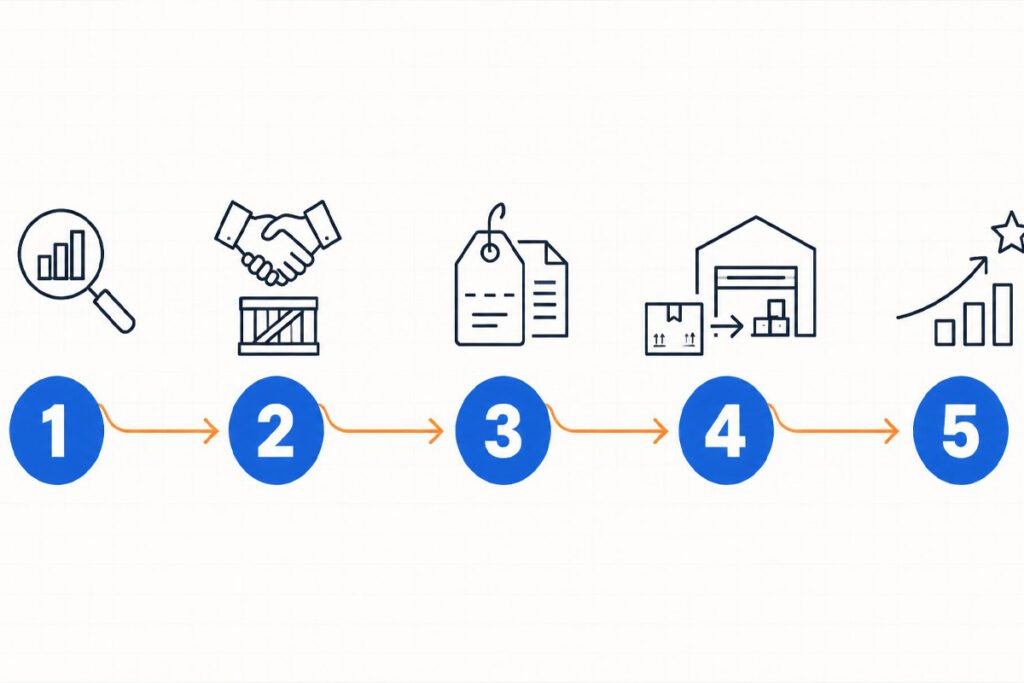
Startup costs for FBA vary more than almost any other business model on this site. Some sellers test the model on a genuinely lean budget by starting with a small trial order and FBM before committing to full FBA volumes; others invest several thousand dollars upfront to order enough inventory to avoid running out during the critical early ranking period. Rough categories to budget for:
- Initial inventory and manufacturing costs (the largest variable, and the one worth the most research)
- Sample orders from two or three suppliers before committing to a full production run
- Amazon’s Professional selling plan subscription, if you choose it
- Product photography and listing design
- An initial advertising budget to generate early sales and reviews
Whatever your budget, keep a cash reserve beyond your first inventory order. Reordering before you sell out is where a lot of first-time sellers get caught short.
Common Mistakes First-Time FBA Sellers Make
- Picking a product based on personal interest rather than validated demand and competition data
- Underestimating total fees and pricing too close to breakeven
- Ordering too little inventory and running out of stock right as a listing starts to rank
- Skipping supplier samples to save a little time or money upfront
- Ignoring the FBA-specific business and tax obligations that come with holding real inventory
FBA vs. Other Online Business Models
FBA isn’t the only low-overhead online business worth considering, and it isn’t always the right first step. If the idea of holding physical inventory feels like too much risk to start, dropshipping and print-on-demand both let you test product ideas without buying stock upfront. If you’d rather sell your own handmade or design-based products directly, an Etsy shop may be a better fit than competing on Amazon’s marketplace. And if physical products don’t appeal to you at all, it’s worth browsing broader passive income ideas or the wider list of ways to make money online before committing capital to inventory.
Legal and Business Basics for FBA Sellers
Most first-time sellers start as sole proprietors, then form an LLC once sales volume and liability exposure justify it; our step-by-step LLC guide walks through that filing process. You may also need a general business license, and since FBA involves selling physical goods online, it’s worth checking our guide on whether you need a business license to sell online as requirements vary by state and by product category. Our legal basics for new business owners guide also covers sales tax registration, which becomes relevant once you’re shipping product across state lines through Amazon’s fulfillment network. This is general information, not legal or tax advice; confirm your specific obligations with a licensed professional before you launch.
The U.S. Small Business Administration’s licenses and permits guide is a solid starting point for federal-level requirements that apply regardless of which state you’re selling from.
When to Scale Beyond Your First Product
Once your first product is profitable and consistently in stock, the fastest way to grow is usually a second SKU in the same category, letting you share supplier relationships and marketing learnings rather than starting from zero. This is the same growth arc covered in our ultimate startup and online business guide, and if you eventually want to formalize FBA as your primary income rather than a side project, our guide to small business ideas is worth a read for what comes after your first successful product line.
Frequently Asked Questions
How much money do I need to start an Amazon FBA business?
It depends heavily on your product and how lean you’re willing to start. Some sellers test the waters with a smaller initial order, while others invest more upfront to avoid running out of stock during the critical early ranking window. Whatever your starting point, keep a cash reserve for reordering beyond your very first batch.
Do I need an LLC before I start selling on Amazon?
No. Most sellers begin as sole proprietors and form an LLC once sales volume and liability exposure justify the extra paperwork. Our LLC formation guide covers that process when you’re ready.
How is FBA different from dropshipping?
With dropshipping, you never hold inventory; a third-party supplier ships directly to the customer. With FBA, you own the inventory and ship it to Amazon in bulk, which means more upfront cost but generally faster shipping, better trust signals, and more control over product quality.
How long does it take to become profitable?
Most sellers don’t see meaningful profit in the first month or two; that early period is largely spent building reviews, refining the listing, and finding a stable advertising strategy. Sellers who treat the first few months as a research and refinement phase, rather than expecting instant returns, tend to stick with it long enough to see real results.
Can I run an FBA business alongside a full-time job?
Yes, and many sellers do exactly that, especially in the early research and setup phase. The most time-intensive parts (supplier communication, listing optimization, ad management) can mostly be done outside of business hours, though shipment deadlines and supplier calls sometimes require flexibility.
What happens if my product gets negative reviews?
Respond professionally and promptly rather than ignoring them or reacting defensively. A thoughtful public response to a legitimate complaint often reassures future customers more than a perfect review score would, and it can flag genuine product or fulfillment issues worth fixing before they affect more customers.
Do I need a trademark or brand registry to sell on Amazon?
No, you can list products without one. Enrolling in Amazon’s Brand Registry (which requires a registered trademark) unlocks extra protections against counterfeit listings and access to enhanced content and advertising tools, which is usually worth pursuing once a product is selling consistently, but it isn’t a requirement to get started.
Last Updated: July 2026