
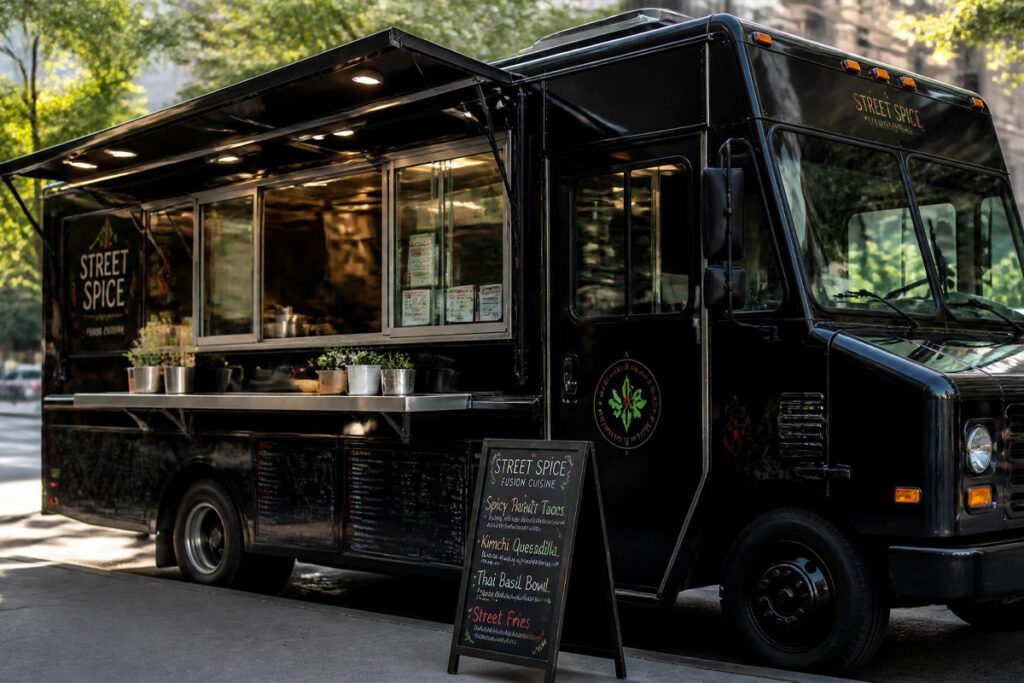
You’ve picked your menu, found a truck, and started sketching out a logo — and then the question hits: do you actually need a food truck business license before you can sell a single taco? The honest answer is yes, but “a license” undersells it. Food trucks sit at the intersection of three regulatory worlds — general business law, food safety law, and vehicle/parking law — which is exactly why so many first-time owners get tripped up. They budget for a truck and a fryer, then get blindsided by a $1,200 commissary kitchen requirement or a health inspector who shows up before opening day.
If you’re just getting started, it’s worth reading our guide on how to start a food truck business first, since licensing is one step inside that larger launch process. This article goes deep on the legal side specifically: which permits you need, what they cost, how long they take, and the mistakes that get trucks shut down in their first month.
Quick Answer
Yes — a food truck almost always needs multiple licenses, not just one. At minimum, expect to need a general business license from your city or county, a mobile food vendor permit, a health department permit (often tied to a commissary kitchen agreement), a food handler’s certification, and a fire/LP-gas inspection if you cook with propane. Depending on your state, you may also need a seller’s permit for sales tax and separate parking or vending zone permits for each city you operate in. The exact combination and cost varies by state and even by county, so always confirm requirements with your local health department and city clerk before you spend money on equipment.
Table of Contents
- What Licenses Does a Food Truck Actually Need?
- How to Figure Out What Your City and State Require
- The Core Permits and Licenses, Explained
- Permit Comparison at a Glance
- Licensing Requirements by Situation
- How to Apply: Step-by-Step
- Common Licensing Mistakes
- Expert Tips
- Final Thoughts
- Frequently Asked Questions
What Licenses Does a Food Truck Actually Need? {#what-licenses}
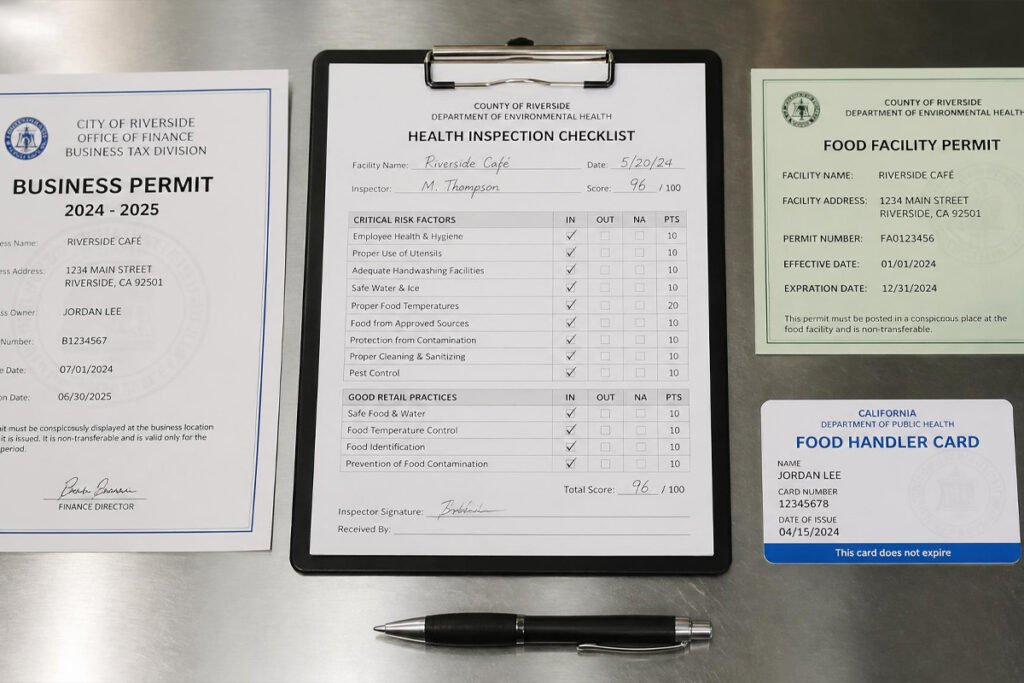
A food truck business license isn’t a single document — it’s a bundle of approvals from at least three different agencies that don’t always talk to each other. Generally speaking, you’re dealing with:
- Business-formation and tax paperwork (the same things any small business needs): an EIN, a general business license, and often a state seller’s permit.
- Food-safety paperwork, issued by your local or county health department, which governs everything from where you can prep food to how your truck is equipped.
- Vehicle and location paperwork, which governs where you’re allowed to park, drive, and sell.
Why does this matter so much for a food truck specifically, compared to say a dropshipping store? Because you’re handling perishable food in a mobile unit that operates in public space — three separate risk categories (foodborne illness, fire, and traffic/zoning) that each have their own regulator. If you’re comparing business models before committing, our breakdown of small business ideas for 2026 is a useful gut-check on how food trucks stack up against lower-regulation options.
How to Choose the Right Licensing Path for Your Truck {#how-to-choose}
Before you start filling out applications, ask yourself these three questions:
- Will you operate in one city or multiple cities? Many vending permits are city-specific, so a truck that works festivals across three counties may need three separate permits.
- Are you cooking with propane, or only reheating/assembling? This single distinction determines whether you need a fire department LP-gas inspection at all.
- Do you already have access to a licensed commissary kitchen? Most health departments require food trucks to prep and restock from an approved commercial kitchen — you generally can’t run everything out of your home kitchen.
For a general primer on the legal groundwork every new business should have in place before licensing conversations even start, see our legal basics for new business owners guide. And for federal-level food safety standards that most state and local health codes are modeled on, the FDA’s Food Code is the authoritative public reference — see the FDA Food Code for the source document local regulators build from.
The Core Permits and Licenses, Explained {#core-permits}
1. General Business License
Overview: This is the baseline registration nearly every business needs from the city or county where you’re headquartered, regardless of industry. Key Features:
- Registers your business name and structure with the local government
- Usually paired with an EIN from the IRS if you’re not a sole proprietor
- Often renewed annually with a flat fee Best For: Every food truck, no exceptions. Pros: ✅ Cheap ✅ Fast to obtain ✅ Required foundation for everything else Cons: ❌ Doesn’t cover food safety or parking on its own Our Verdict: This is step one, not the finish line — pair it with the entity and structure decisions covered in our LLC formation guide if you’re forming an LLC for liability protection.
2. Mobile Food Vendor Permit
Overview: A permit specific to mobile food operations, separate from a standard restaurant permit, that authorizes you to sell food from a vehicle. Key Features:
- Often requires proof of an approved commissary kitchen
- May specify approved vending zones or exclusion areas (e.g., near existing restaurants)
- Typically requires truck plans/specifications to be pre-approved Best For: Any truck that sells directly to the public from the vehicle itself. Pros: ✅ Legally required to operate ✅ Signals legitimacy to event organizers Cons: ❌ Application backlogs can take weeks ❌ Rules vary drastically by city Our Verdict: Apply for this early — it’s frequently the longest lead-time item, and event organizers will often ask to see it before booking you. If you’re also weighing a fixed vs. mobile setup, our home-based small business guide walks through that lower-overhead alternative.
If food service feels like too much regulatory overhead for a first business, it’s worth comparing against lower-friction models like dropshipping or print on demand, both of which skip food-safety licensing entirely.
3. Health Department Permit / Food Service License
Overview: Issued after inspection, this confirms your truck meets food-safety standards for storage, temperature control, handwashing, and waste disposal. Key Features:
- Requires an in-person or documented inspection of the truck
- Usually tied to a commissary kitchen agreement for prep and restocking
- Must be renewed periodically, often annually Best For: Every truck cooking or handling raw ingredients on board. Pros: ✅ Non-negotiable for legal operation ✅ Protects you from liability in a foodborne-illness incident Cons: ❌ Can require truck modifications to pass ❌ Re-inspections cost time and money Our Verdict: Budget for this early in your buildout, not after — retrofitting a truck to pass inspection after purchase is far more expensive than designing to code from the start.
4. Food Handler’s Certification
Overview: A certification (sometimes called a food safety manager certification) proving that you or your staff understand safe food handling. Key Features:
- Usually completed via a short course and exam
- Some states require it per employee, others just for a manager on duty
- Often valid for 2–3 years before renewal Best For: The owner and any staff who handle food. Pros: ✅ Inexpensive ✅ Can usually be completed online in a few hours Cons: ❌ Easy to forget to renew ❌ Doesn’t substitute for the health department permit Our Verdict: Get this done before you apply for your health permit — some jurisdictions require proof of certification as part of that application.
5. Fire Department / LP-Gas Inspection
Overview: Required for any truck using propane or other combustible fuel for cooking equipment. Key Features:
- Checks propane tank mounting, ventilation, and fire suppression systems
- May require a Class K fire extinguisher on board
- Often needs annual re-certification Best For: Trucks with on-board cooking (frying, grilling, open flame). Pros: ✅ Reduces real fire risk ✅ Often required by insurers regardless of law Cons: ❌ Can require costly suppression system upgrades Our Verdict: Loop in your insurance provider at the same time — many commercial auto and liability policies for food trucks require proof of this inspection anyway.
6. Seller’s Permit / Sales Tax License
Overview: A state-level registration authorizing you to collect and remit sales tax on food sold. Key Features:
- Usually free or low-cost to obtain from your state’s department of revenue
- Required in most (not all) states that charge sales tax on prepared food Best For: Any truck selling in a state that taxes prepared food. Pros: ✅ Simple online application in most states ✅ Keeps you compliant with tax authorities Cons: ❌ Requires ongoing filing, not a one-time task Our Verdict: Set up quarterly reminders from day one — sales tax compliance issues are one of the most common reasons new food businesses get penalized.
A note on insurance and business structure: Licensing and insurance conversations tend to happen together, since many permit-issuing agencies ask for proof of coverage. If you’re still weighing entity types for liability reasons, our freelancing business guide and affiliate marketing guide both cover simpler liability profiles worth comparing against a food truck’s higher-risk one.
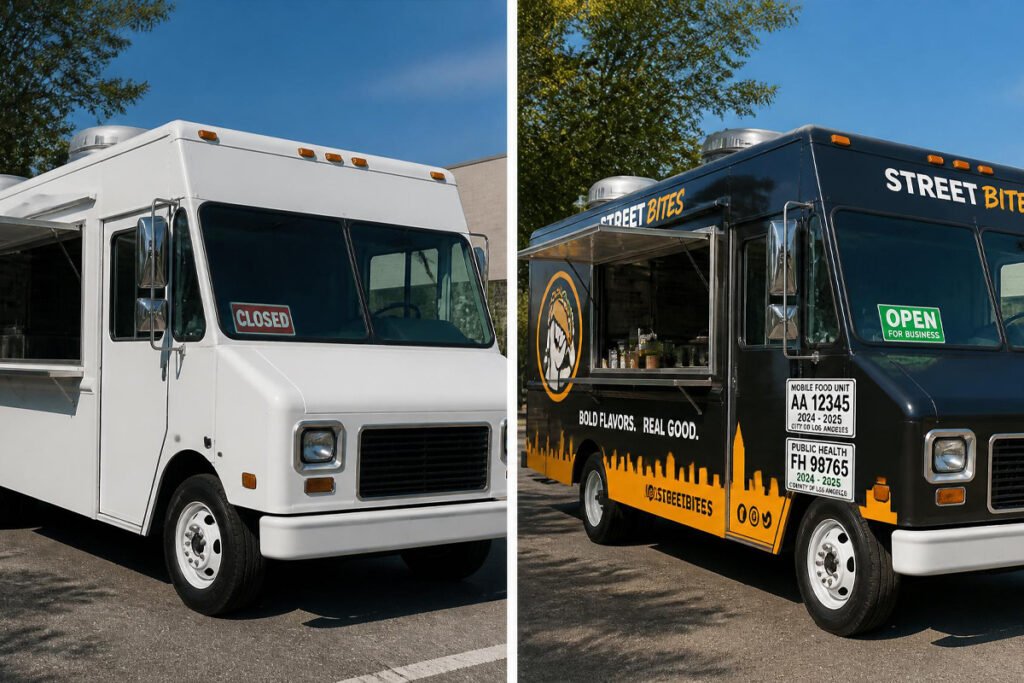
7. Vehicle and Zoning/Parking Permits
Overview: Covers where and how you’re allowed to physically park and vend, separate from what you’re allowed to sell. Key Features:
- Commercial vehicle registration and inspection through your state DMV
- City-issued vending zone permits, sometimes with distance restrictions from brick-and-mortar restaurants
- Special event permits for festivals or private venues Best For: Trucks operating on public streets rather than exclusively private events. Pros: ✅ Opens up high-traffic locations legally Cons: ❌ Zoning rules are the most inconsistent part of food truck law city to city Our Verdict: Call the city clerk’s office directly rather than relying on old blog posts (including this one) for zoning specifics — these rules change often and enforcement varies.
Permit Comparison at a Glance {#comparison-table}
| Permit/License | Issued By | Typical Cost | Renewal |
|---|---|---|---|
| General Business License | City/County Clerk | $50–$400/year | Annual |
| Mobile Food Vendor Permit | City Health/Business Dept. | $100–$1,000+ | Annual |
| Health Department Permit | County/City Health Dept. | $200–$1,000+ | Annual |
| Food Handler’s Certification | State-approved provider | $10–$50/person | Every 2–3 years |
| Fire/LP-Gas Inspection | Local Fire Marshal | $50–$300 | Annual |
| Seller’s Permit | State Dept. of Revenue | Often free | Ongoing filing |
| Vending Zone/Parking Permit | City | Varies widely | Annual or per-event |
(Costs are general ranges for illustration — always confirm exact current fees with your local agencies, since they vary significantly by state and city.)
Licensing Requirements by Situation {#by-situation}
Operating in a Single City vs. Multiple Cities
If you plan to stay within one city, you’ll likely deal with one set of vending zone rules and one health department. Trucks that travel between cities or counties for festivals need to research each jurisdiction’s mobile vendor rules separately — what’s legal in one city may require an entirely separate permit two towns over.
Renting a Commissary Kitchen vs. Building Your Own
Most health departments require proof of a licensed commissary kitchen for prep and restocking; very few allow home-kitchen prep for commercial sale. If cost is a concern, compare this against the lower overhead of home-based business models before committing to commissary rental costs.
Seasonal or Event-Only Operations
If you’re only vending at festivals or private events rather than daily street sales, you may be able to operate under temporary event permits rather than a full annual mobile vendor permit — worth confirming with your city, since it can meaningfully cut your first-year costs.

How to Apply: Step-by-Step {#how-to-apply}
Step 1: Confirm Your Business Structure
Decide on a sole proprietorship, LLC, or corporation before applying for anything else, since most permit applications ask for your legal business name and structure. See our LLC step-by-step guide if you haven’t formed your entity yet.
Step 2: Secure a Commissary Kitchen Agreement
Line up a licensed commercial kitchen before your health inspection, since most departments require this as a prerequisite, not an afterthought.
Step 3: Apply for Your Health Department Permit
Submit your truck’s equipment specifications and schedule an inspection. Expect a multi-week wait in busier counties, so apply as early as your build-out allows.
Step 4: Get Food Handler Certified
Complete your certification course before or alongside your health permit application — many jurisdictions want proof on file already.
Step 5: Register for Your Mobile Vendor and Parking Permits
Apply with your city for a mobile vending permit and confirm which zones you’re legally allowed to park in.
Step 6: Schedule Your Fire Inspection (If Cooking with Propane)
Book this once your equipment is installed, since inspectors need to see the actual tank mounting and ventilation setup.
Step 7: Register for Sales Tax Collection
Set up your state seller’s permit before your first sale, and calendar your filing deadlines immediately.
Common Licensing Mistakes {#common-mistakes}
Buying the truck before confirming health code requirements. Many owners purchase or build out a truck first, only to discover it needs costly modifications to pass inspection. Confirm your local health code’s equipment requirements before finalizing your build — our business operations and compliance guide covers this kind of sequencing mistake in more depth.
Assuming one permit covers every city you vend in. Vending permits are frequently city-specific. A truck licensed in one city that shows up unpermitted at a festival two counties over can be fined or turned away on the spot.
Skipping the seller’s permit because “it’s just a truck.” Sales tax obligations apply regardless of business size or mobility. If you’re unsure how tax obligations differ by entity type, it’s worth revisiting alongside your legal basics for new business owners reading.
Underestimating how different this is from other mobile or physical-space businesses. Compare notes with owners in adjacent regulated fields — our guides on mobile car detailing licensing considerations, drone photography business requirements, and vending machine business basics all illustrate how much licensing complexity varies by industry, even within “low-overhead” business categories.
Expert Tips {#expert-tips}
Call your local health department directly before buying equipment — a 20-minute phone call can save you thousands in retrofit costs after the fact, since requirements vary more by county than most owners expect.
Keep a physical (and digital) folder of every permit, certification, and inspection report in the truck itself. Health and fire inspectors, as well as event organizers, will often ask to see proof on the spot.
Renew certifications a month early, not on the deadline. Processing backlogs at health departments are common during peak season (spring and early summer), and operating with a lapsed permit can shut you down mid-season.
[IMAGE 5 — Final Result | Alt text: “fully licensed food truck ready to serve customers”]
Final Thoughts {#final-thoughts}
Best overall approach: start your permit applications the same week you commit to the business idea, not after the truck is built — most of these approvals have lead times measured in weeks. Best for tight budgets: confirm commissary and health code requirements before spending on equipment, since retrofitting is always more expensive than designing to code. Best for multi-city operators: treat each city as a separate licensing project rather than assuming reciprocity.
If you’re still deciding whether a food truck is the right business model for you, compare it against other options in our ultimate startup and online business guide or the broader business ideas by life stage roundup before you commit to the licensing timeline above.
Frequently Asked Questions {#faq}
Do I need a business license just to sell food from a truck at a private event? Usually yes — most health departments and cities require the same core permits (health permit, food handler certification) even for private or one-off events, though some jurisdictions offer temporary event-specific permits instead of a full annual license.
How long does it take to get all food truck permits and licenses? Plan for 4–8 weeks minimum when applying from scratch, longer in busy counties or during peak application season (spring). Health department inspections and mobile vendor approvals are usually the longest lead-time items.
How much does a food truck business license cost in total? Total licensing costs typically range from a few hundred to a few thousand dollars combined, depending on your city, county, and whether you need equipment modifications to pass inspection. See the comparison table above for a rough breakdown by permit type.
Food truck permit vs. mobile vendor permit — are they the same thing? Not always. “Mobile vendor permit” often refers specifically to where and how you’re allowed to sell in public space, while a “health department permit” or “food service license” covers food safety compliance. Many trucks need both, issued by different agencies.
Do I need a commercial kitchen, or can I prep food at home? Most health departments require food to be prepped and restocked from a licensed commissary or commercial kitchen — home kitchen prep for commercial sale is prohibited in the large majority of jurisdictions.
What happens if I operate without the correct permits? Consequences typically range from fines to on-the-spot shutdown by a health or code enforcement officer, and repeated violations can jeopardize your ability to get licensed in that jurisdiction going forward.
Do I need a separate fire department inspection if I don’t cook on board? If you’re only reheating pre-cooked food or assembling cold items without propane or open-flame cooking equipment, you may be exempt from the LP-gas inspection — confirm directly with your local fire marshal, since definitions of “cooking” vary.
Can I use the same permits if I move my truck to a new city? Generally no. Most mobile vendor and health permits are jurisdiction-specific, so relocating your primary operating city usually means reapplying for local permits even if your health certifications transfer.
Do food trucks need liability insurance as part of licensing? Some cities and event organizers require proof of general liability insurance before issuing a vending permit or event slot, even if it isn’t a state-mandated licensing requirement everywhere.
Is an LLC required to get a food truck business license? No — sole proprietors can obtain food truck permits too, but forming an LLC can offer liability protection worth considering given the food-safety risks involved. See our LLC formation guide for the setup process.
How does food truck licensing compare to licensing for other service businesses? It’s generally more involved, since food safety adds an entire regulatory layer that non-food service businesses skip. For comparison, see our posts on whether booth renters need a business license and whether roadside assistance providers need one, both simpler cases with fewer regulatory layers.
What if I’m selling my food truck later — does the license transfer with it? No — permits and health certifications are typically tied to the business owner and operating location, not the physical vehicle, so a buyer will need to reapply. If you’re on the selling side of any business transaction, our guide to legal documents needed to sell a business covers the paperwork involved.
Author: Morne Winston Last Updated: July 2026