
A great digital product, a real email list, and still no sales — it’s one of the more frustrating spots a creator can land in, and the missing piece is usually the page in between. Sending traffic straight to a marketplace listing or a generic checkout link almost always converts worse than a dedicated landing page built to answer one question: why should this specific visitor buy right now?
If you’ve already picked tools to build your product, chosen where to sell it, and started growing an email list, a landing page is the connective piece that turns all three into actual sales. This guide compares the five landing page and funnel builders creators rely on most in 2026, so you can pick the right one without overpaying for features you won’t use.
Quick Answer
The right landing page builder depends on how complex your sales process needs to be. Carrd is the fastest, cheapest way to get a clean single-product page live, ideal if you just need a simple offer-plus-checkout link. Leadpages adds built-in payment processing and templates specifically designed for selling, at a moderate monthly cost. Systeme.io goes further, bundling landing pages, email marketing, and course hosting into one platform with a genuinely usable free plan — a strong pick if you don’t want to juggle separate tools. Unbounce is built for creators who want serious A/B testing and conversion optimization once they have enough traffic to make testing worthwhile. ClickFunnels remains the most full-featured option for complex, multi-step sales funnels, at a correspondingly higher price point.
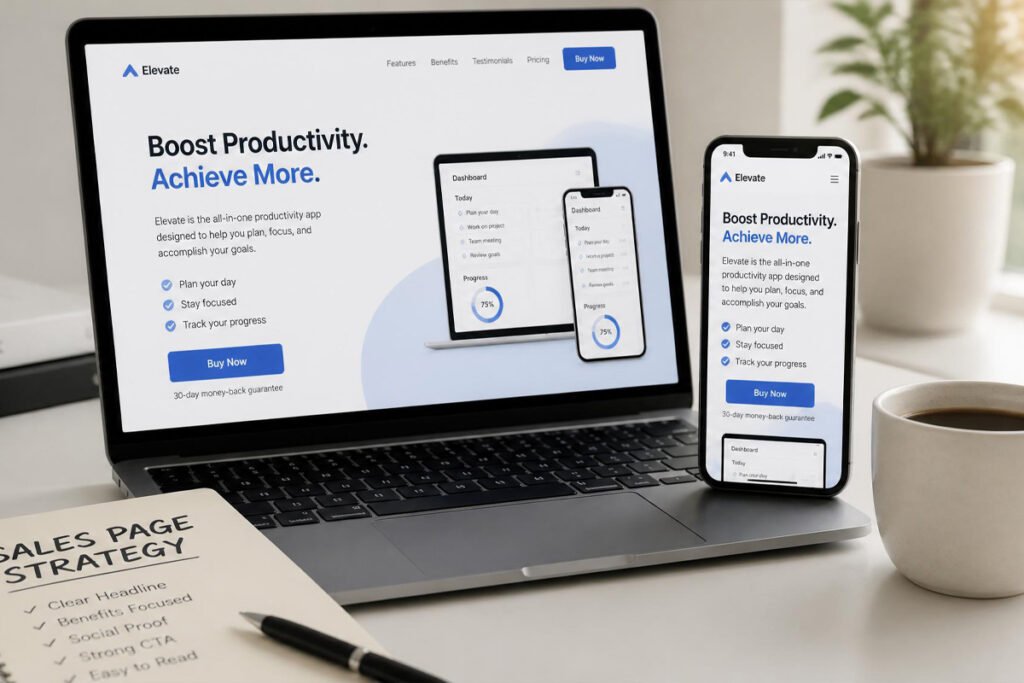
Table of Contents
- Why a Landing Page Converts Better Than a Generic Link
- How to Choose the Right Builder for Your Product
- Top 5 Best Landing Page Builders for Digital Products
- Platform Comparison Table
- Best Builder by Business Stage
- How to Build Your First Sales Page Step by Step
- Common Mistakes Creators Make With Landing Pages
- Expert Tips for Higher Converting Pages
- Final Thoughts
- Frequently Asked Questions
Why a Landing Page Converts Better Than a Generic Link
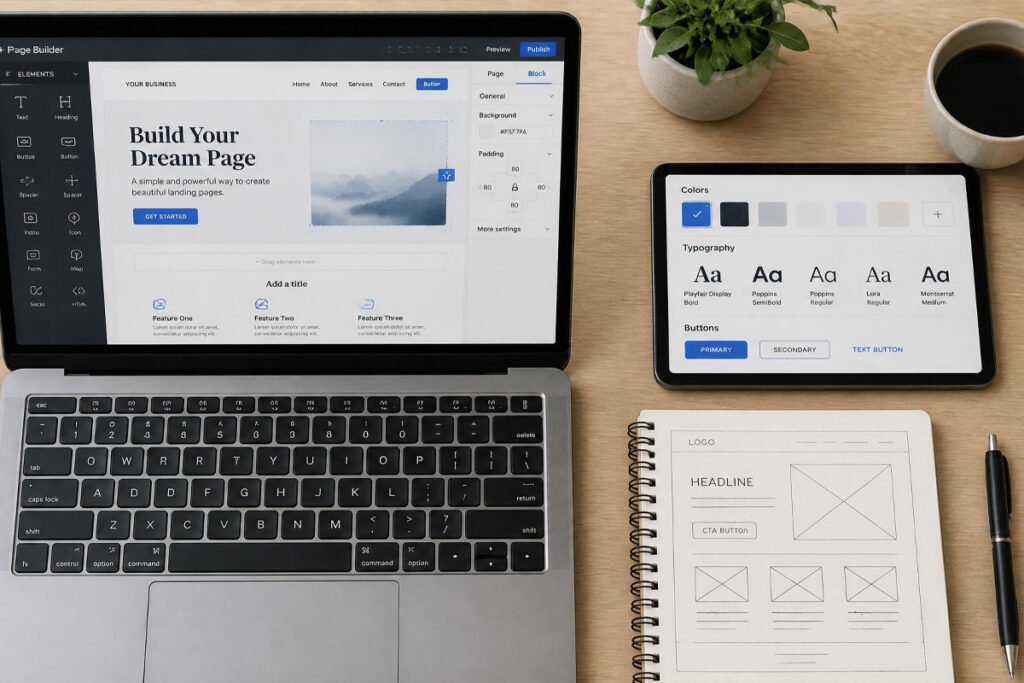
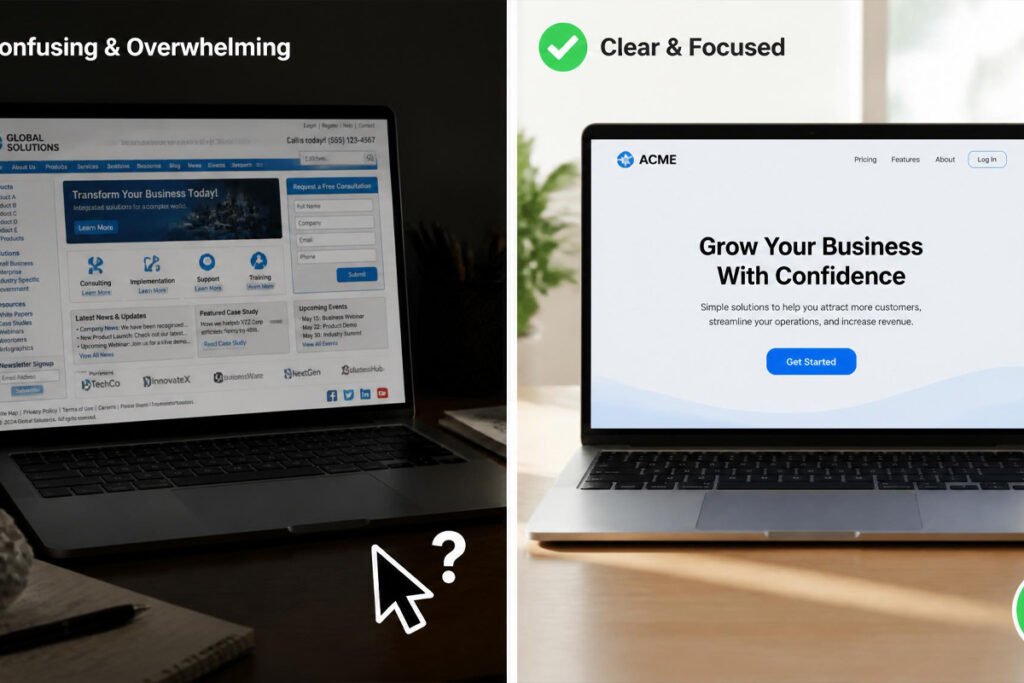
A landing page has one job: get a specific visitor to take one specific action. A generic marketplace listing or homepage competes for attention with dozens of other links, categories, and distractions. A dedicated page removes all of that, which is exactly why creators sending traffic to a focused landing page consistently see stronger conversion than those linking straight to a general storefront.
This matters just as much once you’ve built an audience through affiliate marketing or a growing email list — the traffic getting to your page is often the hardest part, and a weak landing page is one of the most common ways that hard-won traffic gets wasted.
How to Choose the Right Builder for Your Product
- How many products or funnels do you actually need right now? A single simple offer needs far less than a multi-step funnel with upsells and order bumps.
- Do you want everything bundled, or do you already have separate tools? If you already use a dedicated email platform, a standalone landing page builder may be all you need; if not, an all-in-one platform can simplify your stack.
- How much traffic are you actually sending to the page? A/B testing and advanced optimization tools only pay off once you have enough visitors for the data to mean something — they’re wasted on a page getting a handful of visits a week.
Top 5 Best Landing Page Builders for Digital Products
1. Carrd
Overview: Carrd strips landing page building down to the essentials — a single, fast, mobile-optimized page focused entirely on one offer, with no unnecessary features competing for a visitor’s attention.
Key Features:
- Extremely fast load times, which matters heavily for traffic from social and mobile
- Free plan available; paid plans start at a low annual cost rather than a monthly subscription
- Deliberately simple, one-page format that keeps visitor focus on a single call to action
Best For: Creators selling a single product who want the cheapest, fastest possible path to a live page.
Pros: ✅ Very low cost, even on paid tiers ✅ Loads fast, which helps mobile and social traffic convert ✅ No learning curve Cons: ❌ No built-in A/B testing ❌ Limited to simple, single-page layouts rather than full funnels
Our Verdict: If you’re validating a single digital product idea and don’t want to overinvest before you know it sells, Carrd is close to the lowest-risk starting point available.
2. Leadpages
Overview: Leadpages strikes a balance between Carrd’s simplicity and a full funnel builder, with conversion-focused templates and built-in payment processing so you can sell digital products directly from the page.
Key Features:
- Templates built specifically for lead generation and direct sales
- Built-in checkout via Stripe, so no separate payment tool is required
- Unlimited traffic, pages, and leads included on every plan
Best For: Small businesses and solopreneurs who want dedicated sales pages without a steep learning curve.
Pros: ✅ Built-in payment processing simplifies selling directly ✅ Unlimited traffic and leads, so costs stay predictable ✅ Conversion-focused templates out of the box Cons: ❌ No free plan, only a trial ❌ Less design flexibility than more advanced builders
Our Verdict: Once Carrd’s simplicity starts feeling limiting, Leadpages is a natural next step, especially if built-in checkout matters more to you than deep customization.
3. Systeme.io
Overview: Systeme.io bundles landing pages, email marketing, and course hosting into a single platform, with a genuinely usable free plan that includes real sales funnels rather than just a single page.
Key Features:
- Free plan includes up to 2,000 contacts, several full sales funnels, and one hosted course
- Zero transaction fees, even on the free plan
- Built-in affiliate program management if you want others promoting your product
Best For: Creators who want funnels, email, and course hosting in one platform instead of stitching together several tools.
Pros: ✅ Most generous free plan among all-in-one platforms ✅ Combines landing pages, email, and course hosting ✅ Built-in affiliate program tools Cons: ❌ Free plan limits you to a single automation rule, which restricts more complex funnels ❌ Interface is less polished than premium alternatives
Our Verdict: If you’re also looking to simplify your email marketing tool stack at the same time, Systeme.io’s bundled approach can genuinely replace two or three separate subscriptions.
4. Unbounce
Overview: Unbounce is built around conversion optimization, with AI-assisted testing and personalization tools designed for creators who already have consistent traffic and want to systematically improve conversion rates.
Key Features:
- Deep A/B testing and experimentation tools
- AI-driven copy and layout suggestions based on performance data
- Dynamic text replacement for matching page content to ad campaigns
Best For: Creators with steady traffic volume who want to actively test and improve conversion rates over time.
Pros: ✅ Strongest testing and optimization tools on this list ✅ Useful for scaling paid traffic campaigns efficiently Cons: ❌ Overkill and costly for low-traffic pages ❌ Steeper learning curve than simpler builders
Our Verdict: This isn’t a starting-point tool — it earns its cost once you have enough visitors that testing actually produces meaningful, actionable data.
5. ClickFunnels
Overview: ClickFunnels remains one of the most full-featured funnel builders available, supporting complex multi-step sequences with upsells, order bumps, and detailed funnel analytics in one platform.
Key Features:
- Full multi-step funnel building, including upsells and order bumps
- Extensive template library built specifically around sales psychology
- Detailed funnel-level analytics tracking every step of the buyer journey
Best For: Creators running complex sales funnels with multiple offers, upsells, or a structured launch sequence.
Pros: ✅ Most comprehensive funnel-building feature set on this list ✅ Strong community and template ecosystem Cons: ❌ Highest price point among these five options ❌ More complexity than most single-product sellers actually need
Our Verdict: Best reserved for once you’ve validated a product and are ready to build a genuine multi-step sales funnel — not the tool to start with for your very first digital product.
Platform Comparison Table
| Platform | Best For | Free Plan | Standout Feature |
|---|---|---|---|
| Carrd | Single-product validation | Yes (limited) | Fastest, cheapest setup |
| Leadpages | Direct sales pages | No (trial only) | Built-in checkout |
| Systeme.io | All-in-one funnels + email + courses | Yes (generous) | Bundles multiple tools in one |
| Unbounce | Conversion optimization at scale | No | Deep A/B testing |
| ClickFunnels | Complex multi-step funnels | No | Full funnel-building depth |
<a id=”by-stage”></a>
Best Builder by Business Stage
Just Validating an Idea
Carrd’s low cost and speed make it the safest option before you know whether a product will actually sell, similar to how you’d test a passive income idea before committing serious time to it.
Actively Selling With a Small Toolset
Leadpages or Systeme.io both work well here, depending on whether you want a standalone page builder or a bundled platform that also handles email and course hosting.
Scaling With Consistent Traffic
Unbounce becomes worthwhile once you have enough visitors to make testing meaningful, particularly if you’re also running affiliate marketing traffic to the same offer.
Running Complex, Multi-Product Funnels
ClickFunnels suits creators managing several offers, upsells, and structured launch sequences at once — a natural next step once your online business has outgrown a single simple product page.
How to Build Your First Sales Page, Step by Step
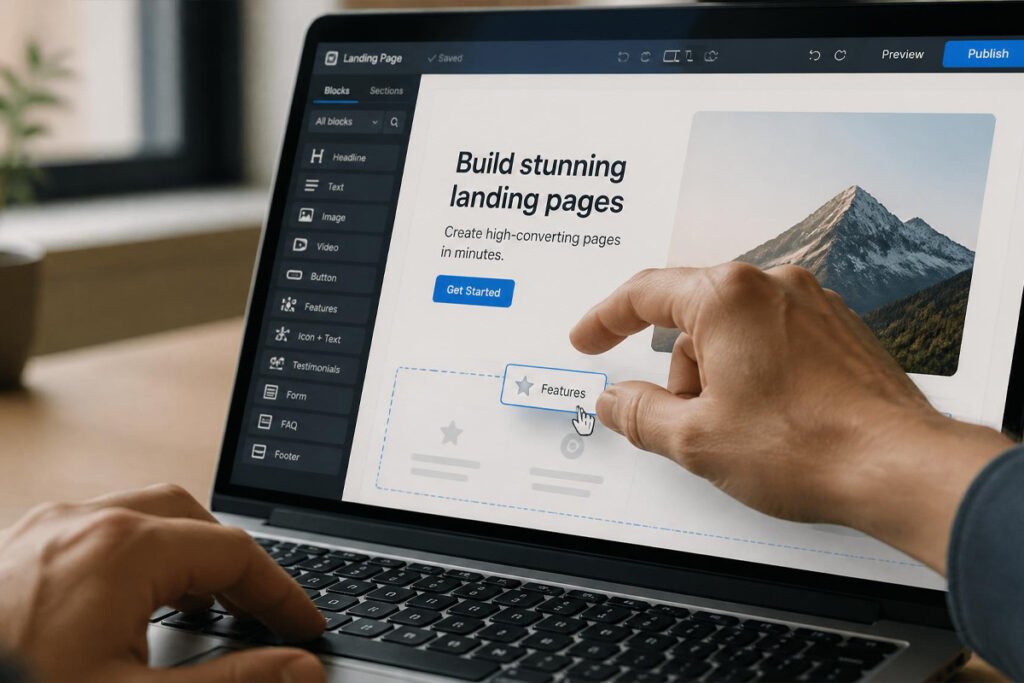
Step 1: Define One Clear Goal for the Page
Decide whether the page exists to sell directly, collect an email, or both — trying to do everything at once usually weakens the page’s focus.
Step 2: Choose a Builder That Matches Your Current Stage
Use the comparison above to match your traffic volume and product complexity to the right tool, rather than defaulting to the most talked-about option.
Step 3: Lead With the Outcome, Not the Feature List
Open the page with what the visitor gets out of the product, saving detailed feature breakdowns for further down the page.
Step 4: Add Social Proof if You Have Any
Even a handful of early testimonials or results meaningfully increases trust for first-time visitors deciding whether to buy.
Step 5: Test the Full Purchase Flow Yourself Before Launch
Go through your own checkout process as a buyer would — a broken or confusing checkout step is one of the most common reasons a good page underperforms.
Common Mistakes Creators Make With Landing Pages
Sending traffic to a generic homepage instead of a dedicated page. A homepage competes for attention with navigation menus and unrelated links; a landing page keeps visitor focus on one specific offer.
Overbuilding the page before validating the offer. Spending weeks perfecting a page for a product that hasn’t sold yet often means polishing the wrong thing — validate demand first with a simple page, then invest more once it’s working.
Ignoring mobile visitors. Most traffic from social media and email arrives on mobile devices, so a page that only looks good on desktop is quietly losing a large share of potential buyers.
Forgetting the business side once sales start coming in. Once a landing page is converting consistently, it’s worth revisiting whether you need a business license to sell online and what basic insurance makes sense at that revenue level.
Expert Tips for Higher Converting Pages
Write the headline last, not first. The strongest headlines usually come from summarizing the core benefit after you’ve written the rest of the page, not from trying to nail it before you’ve articulated the offer clearly.
Keep the page focused on one call to action. Multiple competing buttons or links dilute conversion — one clear next step, repeated a few times down the page, consistently outperforms a page full of options.
Revisit and update the page as your product evolves. A page that worked well at launch can quietly underperform months later if your product, pricing, or audience has shifted — treat it as a living asset, the same way you’d revisit any part of a growing small business.

Final Thoughts
Best overall for beginners: Carrd, for the fastest and cheapest way to test a single offer. Best for direct sales with built-in checkout: Leadpages, once you’re ready to sell consistently. Best all-in-one value: Systeme.io, if you want funnels, email, and course hosting bundled together. Best for scaling with data: Unbounce, once traffic volume justifies serious testing. Best for complex funnels: ClickFunnels, for multi-step sales sequences with upsells.
A landing page is only as strong as what’s behind it — pair the right builder with a real product built using AI creation tools, a platform to deliver it, and an email list to send traffic to, and the page becomes the final piece connecting all of it into actual sales.
Frequently Asked Questions
Do I need a landing page if I already have a product listing on a marketplace? It helps significantly. A dedicated landing page controls the entire visitor experience and typically converts better than sending traffic to a general marketplace listing competing with other products.
Which landing page builder is cheapest for beginners? Carrd is generally the cheapest starting point, with a usable free plan and low-cost paid tiers for a single, simple page.
Can I sell digital products directly from a landing page? Yes. Builders like Leadpages, Systeme.io, and ClickFunnels include built-in checkout and payment processing, so you don’t need a separate ecommerce platform.
What’s the difference between a landing page builder and an all-in-one platform like Systeme.io? A standalone landing page builder focuses purely on page creation, while an all-in-one platform bundles landing pages with email marketing, automation, and often course hosting in a single subscription.
Is A/B testing worth it for a new creator? Not usually at first. A/B testing needs meaningful traffic volume to produce reliable results, so it’s typically more valuable once you have consistent visitors rather than when you’re just launching.
How long should a landing page for a digital product be? It depends on price and complexity — a low-cost digital download can convert with a short, focused page, while a higher-priced course or bundle often benefits from a longer page addressing more objections.
Do I need coding skills to build a landing page? No. All five platforms in this guide use drag-and-drop editors designed for non-technical creators, with no coding required for a standard page.
Can I switch landing page builders later without losing my page design? You can typically rebuild a similar design on a new platform, but most builders don’t offer direct migration between different tools, so switching does involve some rebuilding time.
Should I use the same platform for my landing page and my email marketing? It’s not required, but bundling them in one platform like Systeme.io can simplify your workflow, while using separate specialized tools can give you more flexibility if you already have preferences for each.
What makes a landing page convert well? A clear single goal, a benefit-focused headline, visible social proof, and one consistent call to action tend to matter far more to conversion than flashy design alone.
Author: Morne Winston Last Updated: July 2026
Pingback: Best Website Builders for Small Business: Top 6 Proven Picks | Ideas Junction – Your Hub for Startups, Business Growth & Innovation