
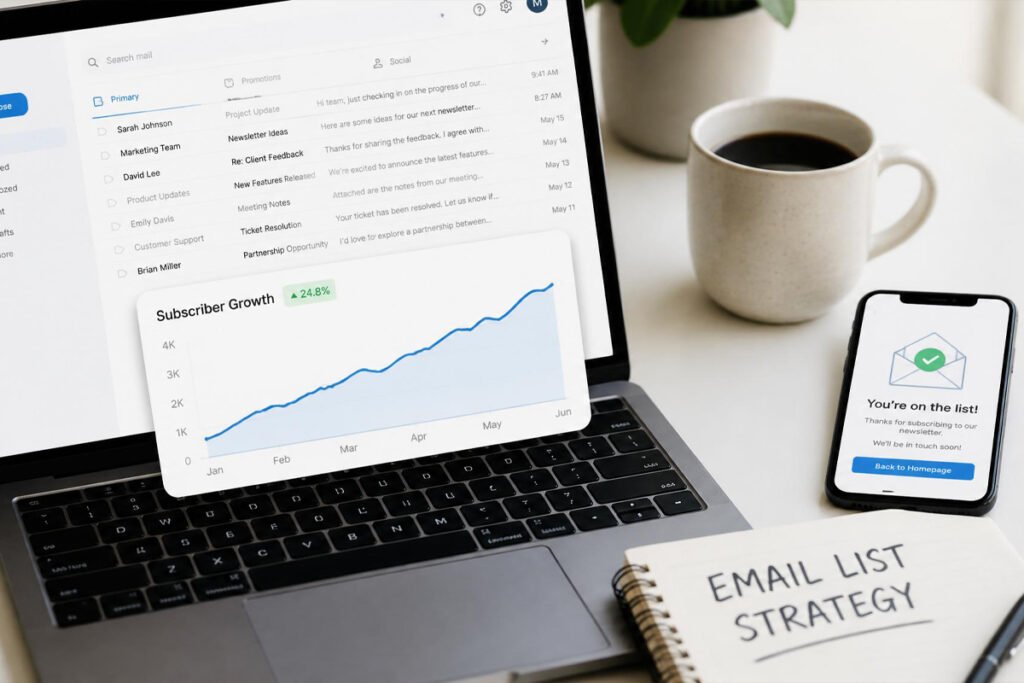
A finished digital product sitting on a platform nobody’s heard of doesn’t sell itself. The single biggest lever most creators underestimate is their email list — not social media followers, not marketplace search traffic, but a list of people who’ve already said yes to hearing from you directly. Platforms change algorithms overnight; an email list is one of the few audience assets you fully own.
If you’ve already built a digital product with AI tools and picked a platform to sell it on, an email marketing tool is the piece that turns one-off buyers into a repeat audience. This guide compares the five platforms creators actually rely on in 2026 to grow a list and turn it into consistent sales.
Quick Answer
The right email tool depends on how you actually make money. Kit (formerly ConvertKit) is the strongest overall pick for creators selling digital products, courses, or paid newsletters, thanks to deep automation and a genuinely generous free plan. Beehiiv is the top choice if your income leans more toward sponsorships and newsletter monetization rather than product sales, with built-in referral and ad-network tools Kit doesn’t match. MailerLite is the best budget option for creators who want solid automation without a big monthly bill. Flodesk suits creators who want simple, beautifully designed emails and don’t need complex segmentation. Mailchimp still makes sense mainly for ecommerce-heavy businesses that need broader marketing features beyond email alone.
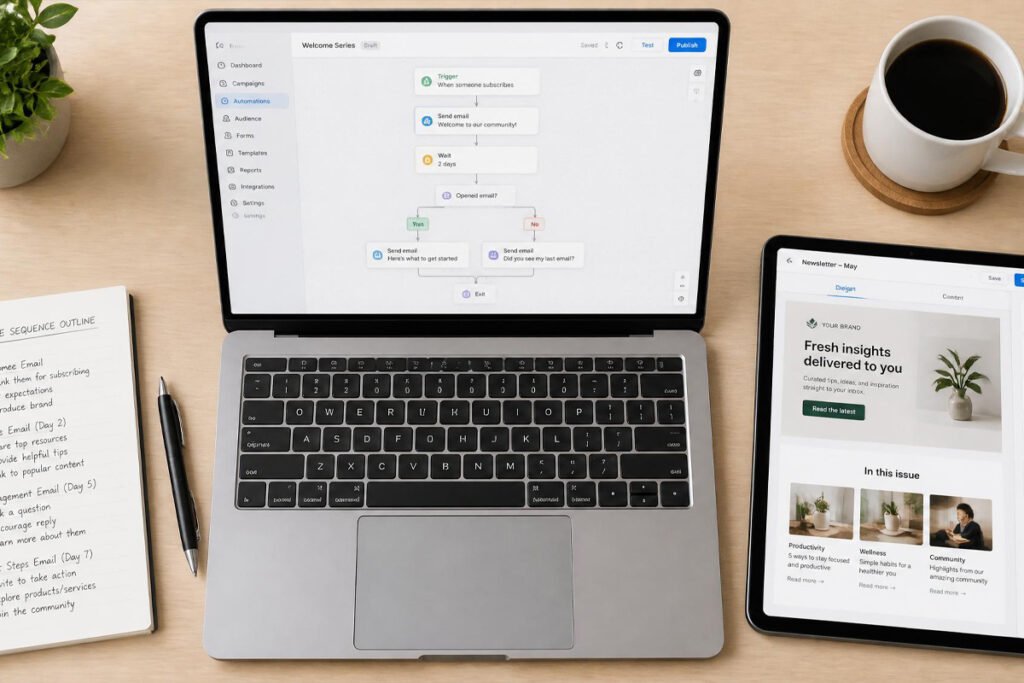
Table of Contents
- Why Every Creator Needs an Email List
- How to Choose the Right Email Tool for Your Business
- Top 5 Best Email Marketing Tools for Creators
- Platform Comparison Table
- Best Email Tool by Business Model
- How to Set Up Your First Email List Step by Step
- Common Mistakes Creators Make With Email Marketing
- Expert Tips for Growing Your List Faster
- Final Thoughts
- Frequently Asked Questions
Why Every Creator Needs an Email List
Every platform you don’t own — a marketplace, a social network, a search engine — can change its rules, its algorithm, or its fee structure without warning, and your reach can shrink overnight through no fault of your own. An email list sidesteps that risk almost entirely, since the people on it have directly opted in to hear from you specifically.
This matters just as much for someone selling digital products as it does for someone running affiliate marketing or freelancing — in every case, a list of people who already trust you is one of the most reliable ways to turn future launches into immediate sales instead of starting from zero every time.
How to Choose the Right Email Tool for Your Business
<a id=”how-to-choose”></a> Before picking a platform, answer these three questions:
- How do you actually make money from your audience? Product and course sellers benefit most from deep automation and tagging; sponsorship-driven newsletters benefit more from built-in monetization and growth tools.
- How big is your list right now, and how fast is it growing? Free tiers vary dramatically between platforms, and pricing at 10,000+ subscribers can differ by hundreds of dollars a month between tools that looked similar at launch.
- How much automation complexity do you actually need? A simple weekly newsletter needs far less sophistication than a multi-step sales sequence tied to specific customer behavior.

Top 5 Best Email Marketing Tools for Creators
1. Kit (formerly ConvertKit)
Overview: Kit was built specifically for creators selling digital products, courses, and paid newsletters, with automation and tagging tools designed around turning subscribers into buyers rather than just readers.
Key Features:
- Visual automation builder with conditional logic and behavior-based tagging
- Free plan supports up to 10,000 subscribers with unlimited sends, landing pages, and forms
- Built-in digital product and paid newsletter selling tools
Best For: Creators selling digital products, online courses, or paid subscriptions who need real automation depth.
Pros: ✅ Most generous free tier among major creator-focused platforms ✅ Deep automation for product-driven sales sequences ✅ Selling tools built directly into the platform Cons: ❌ Paid tiers have gotten notably more expensive at scale ❌ Less focused on newsletter monetization than Beehiiv
Our Verdict: If your income comes primarily from selling something — whether that’s a digital product or a service — Kit’s automation depth makes it the strongest starting point on this list.
2. Beehiiv
Overview: Built by former Morning Brew team members, Beehiiv is designed around growing and monetizing a newsletter specifically, with referral programs and a built-in ad network that most competitors don’t offer.
Key Features:
- Free plan covers up to 2,500 subscribers with full automation, no feature gates
- Built-in referral program and ad network for sponsorship-based monetization
- SEO-friendly web hosting for newsletter content, doubling as a content archive
Best For: Newsletter-first creators monetizing primarily through sponsorships and audience growth rather than direct product sales.
Pros: ✅ Genuinely useful free tier with no automation gates ✅ Unique built-in monetization tools ✅ Strong pricing at scale compared to legacy platforms Cons: ❌ Weaker on transactional emails and ecommerce-style flows ❌ Automation is simpler than Kit’s for complex product funnels
Our Verdict: If sponsorships and audience growth matter more to your business than product automation, Beehiiv’s monetization tools are hard to match elsewhere on this list.
3. MailerLite
Overview: MailerLite offers solid automation and a clean interface at a noticeably lower price point than most competitors, making it a strong pick for creators watching their monthly software costs closely.
Key Features:
- Free plan supports up to 1,000 contacts with automation included
- Drag-and-drop email builder with a clean, modern interface
- Significantly lower cost than Kit or Mailchimp at comparable list sizes
Best For: Budget-conscious creators who still want dependable automation without paying premium pricing.
Pros: ✅ Strong value at every list size ✅ Easy to learn for non-technical creators ✅ Automation included even on lower-cost tiers Cons: ❌ Smaller ecosystem of creator-specific integrations ❌ Fewer built-in monetization features than Beehiiv or Kit
Our Verdict: For creators just starting to build a list who don’t want to overcommit financially before they’ve validated demand, MailerLite is one of the safest low-cost starting points.
4. Flodesk
Overview: Flodesk focuses on visually polished, simple-to-design emails with flat-rate pricing that doesn’t increase as your list grows, which is unusual among email platforms.
Key Features:
- Flat monthly pricing regardless of subscriber count
- Highly visual, design-forward email templates
- Simple builder aimed at creators who want strong aesthetics without a learning curve
Best For: Creators with large lists who want predictable costs and don’t need complex behavioral automation.
Pros: ✅ Pricing doesn’t scale with list size, unlike most competitors ✅ Genuinely attractive templates with minimal design effort Cons: ❌ Automation is simpler than Kit’s or Beehiiv’s ❌ Fewer advanced segmentation options for complex funnels
Our Verdict: If your list is growing quickly and you’re worried about per-subscriber pricing eating into margins, Flodesk’s flat rate is worth serious consideration.
5. Mailchimp
Overview: Mailchimp has evolved into a broader marketing platform covering email, SMS, and ecommerce integrations, making it a better fit for online stores than for creators selling primarily through content and community.
Key Features:
- Combines email marketing with SMS, retargeting ads, and ecommerce tools
- Deep integrations with major ecommerce platforms
- Established, familiar interface with a large template library
Best For: Ecommerce-heavy businesses that want email, SMS, and store integrations in one platform rather than a creator-first tool.
Pros: ✅ Broadest feature set beyond email alone ✅ Strong ecommerce platform integrations Cons: ❌ Free plan has become far less generous in recent years ❌ Pricing scales up quickly and can outpace creator-focused alternatives at similar list sizes
Our Verdict: If you’re running a dropshipping or product-based store rather than a content-driven creator business, Mailchimp’s ecommerce integrations may outweigh its higher relative cost.
Platform Comparison Table
| Platform | Best For | Free Plan | Standout Feature |
|---|---|---|---|
| Kit | Digital product & course sellers | Up to 10,000 subscribers | Deep sales automation |
| Beehiiv | Sponsorship-driven newsletters | Up to 2,500 subscribers | Built-in ad network & referrals |
| MailerLite | Budget-conscious creators | Up to 1,000 contacts | Lowest cost with automation |
| Flodesk | Design-focused, large lists | No free plan (flat pricing) | Pricing doesn’t scale with list size |
| Mailchimp | Ecommerce businesses | Up to 500 contacts | Broadest all-in-one feature set |
Best Email Tool by Business Model
Selling Digital Products or Courses
Kit’s automation and tagging tools are purpose-built for turning subscribers into buyers, making it the strongest fit if your revenue comes from digital products or paid courses.
Newsletter Sponsorships and Ad Revenue
Beehiiv’s built-in ad network and referral tools are specifically designed for creators monetizing through sponsorships rather than direct product sales.
Freelancers and Service Providers Building Authority
A simpler, lower-cost tool like MailerLite often makes more sense here, since the goal is staying visible to potential clients rather than running complex sales funnels — a natural pairing with a freelancing business.
Ecommerce and Physical Product Sellers
Mailchimp’s ecommerce integrations and SMS features suit stores selling physical inventory more than content-first creator businesses.
How to Set Up Your First Email List, Step by Step
Step 1: Choose a Platform That Matches Your Business Model
Use the comparison above to match your revenue model — product sales, sponsorships, or ecommerce — to the platform built for it.
Step 2: Create a Simple Lead Magnet
Offer something small and specific in exchange for an email address — a mini-guide, template, or discount — rather than just asking people to “sign up for updates.”
Step 3: Set Up a Basic Welcome Sequence
A short automated series introducing yourself and your best content or product gives new subscribers immediate value instead of silence until your next newsletter.
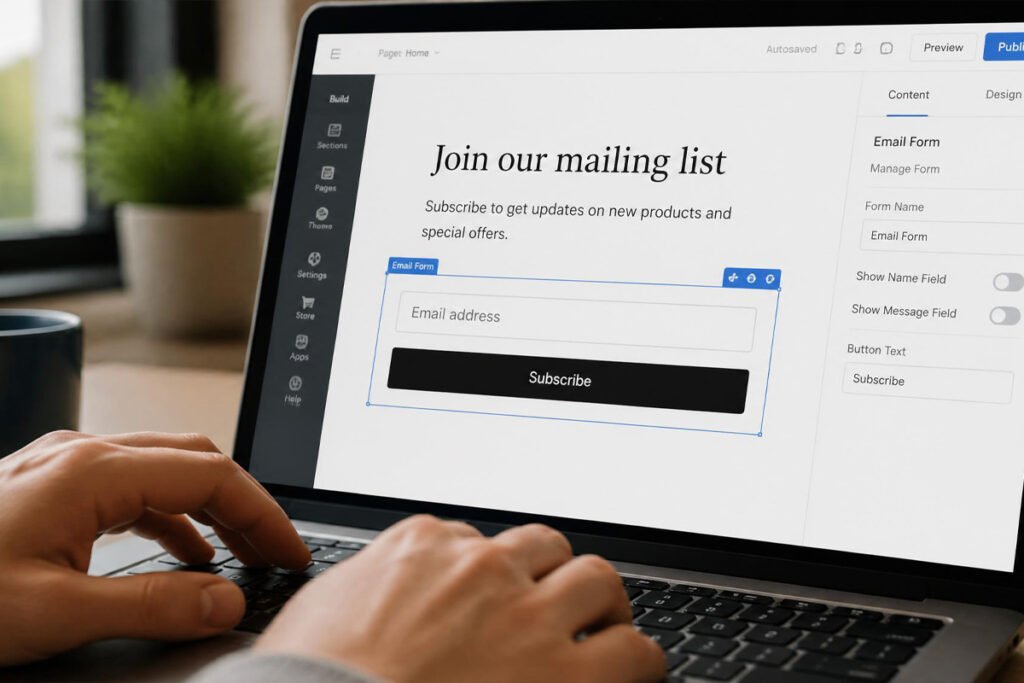
Step 4: Add Signup Forms Everywhere Your Audience Already Is
Place signup forms on your product pages, social bios, and any content you publish, since most people won’t seek out a newsletter signup on their own.
Step 5: Send Consistently, Even If Imperfectly
A shorter, consistent email schedule builds more trust over time than an occasional, highly polished one that arrives unpredictably.
Common Mistakes Creators Make With Email Marketing
Waiting until you “have something to say” to start collecting emails. Every day without a signup form is a lost subscriber who might never come back — start collecting emails before you have a full content calendar figured out.
Choosing a platform based on price alone. The cheapest tool that can’t handle the automation your business model actually needs will cost you more in lost sales than the subscription fee you saved.
Never emailing your list except to sell something. A list that only hears from you during launches tends to disengage — regular, useful content keeps subscribers warm between the moments you’re actually promoting a digital product or offer.
Forgetting that a growing list is still a business asset that needs protecting. As your list and revenue grow, it’s worth revisiting whether you need a business license to sell online, the same way you would for any other online business idea that starts generating real income.
Expert Tips for Growing Your List Faster
Repurpose your best-performing content into your welcome sequence. Your highest-engagement blog post or social content often makes an excellent first few emails for brand-new subscribers who haven’t seen it yet.
Use tagging to segment early, even with a small list. Behavior-based tags become far more valuable as your list grows, and setting them up early avoids a messy retroactive cleanup later.
Treat list growth as a core business metric, not an afterthought. Track it with the same seriousness you’d track revenue or traffic — the same discipline that pays off across any small business metric worth watching.

Final Thoughts
Best overall for product and course sellers: Kit, for its automation depth and generous free tier. Best for sponsorship-driven newsletters: Beehiiv, for its built-in monetization tools. Best budget option: MailerLite, for solid automation at a lower price. Best for visual simplicity at scale: Flodesk, for its flat pricing model. Best for ecommerce: Mailchimp, for its broader marketing feature set.
Whichever platform you choose, pair it with a real product to promote — whether that’s a digital product you built with AI tools or a broader online business idea — since a list with nothing to offer grows a lot slower than one tied to something genuinely useful.
Frequently Asked Questions
Which email marketing tool is best for beginners? Kit and MailerLite are both considered beginner-friendly, with Kit offering deeper automation on its free plan and MailerLite offering a simpler learning curve at a lower cost.
Is Beehiiv better than Kit for creators? It depends on your business model — Beehiiv is stronger for sponsorship-driven newsletters, while Kit is stronger for creators selling digital products, courses, or paid subscriptions directly.
How many subscribers do I need before it’s worth paying for a tool? Most platforms offer a usable free tier well into the thousands of subscribers, so it’s rarely necessary to pay before you’ve validated that your list is actually growing and engaging.
Do I need an email list if I already have social media followers? Yes, in most cases. Social platforms can change algorithms or restrict reach at any time, while an email list is a channel you control directly regardless of platform changes.
What’s the difference between Mailchimp and creator-focused tools like Kit? Mailchimp is built as a broader marketing platform for ecommerce businesses, while Kit is built specifically around automation and selling for individual creators and course sellers.
How often should I email my list? Weekly is a common starting cadence for most creators, though what matters more than frequency is consistency — an unpredictable schedule tends to hurt engagement more than a lower send frequency does.
Can I switch email marketing platforms later without losing my list? Yes, most platforms let you export and import your subscriber list, though rebuilding automations and sequences on a new platform typically takes real time, so it’s worth choosing carefully upfront.
Do I need a lead magnet to grow my email list? It’s not strictly required, but offering something specific in exchange for an email address consistently converts better than a plain “subscribe to my newsletter” request.
Is a free email marketing plan good enough to start? Yes, for most new creators. Free tiers on platforms like Kit and Beehiiv now include automation and reasonably generous subscriber limits, making them sufficient until your list grows substantially.
What should my first email to a new subscriber say? A strong first email typically introduces who you are, sets expectations for what they’ll receive, and points to your most useful existing content or product — not an immediate hard sales pitch.
Author: Morne Winston Last Updated: July 2026