
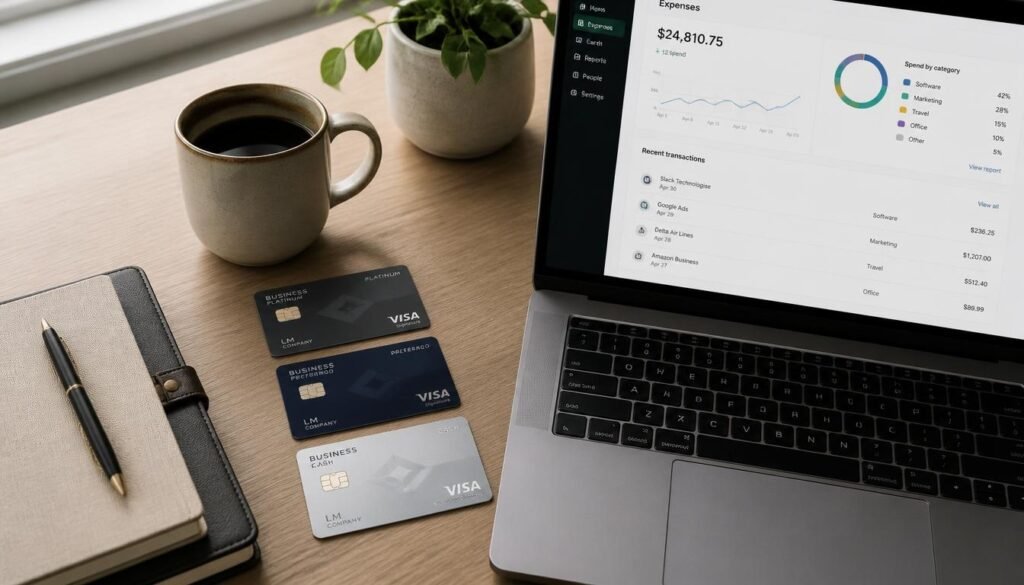
Most small business owners start by putting expenses on a personal card. It works for a while. Then tax season arrives, and you are sorting software subscriptions, client lunches and a laptop purchase out of the same statement as your groceries.
The best business credit cards fix that problem. They separate business spending from personal spending and pay you rewards on costs you already have. They can also help you build a credit history for the company itself. If you have already set up a business bank account, a business card is the natural next step.
This guide compares five cards that consistently rank well in 2026 reviews. We cover who each card suits, what it costs and where it falls short. If you are still choosing a legal structure, read our guide to forming an LLC first, because most issuers ask for your business details on the application.
Quick Answer
The best business credit card depends on how you spend. The Ink Business Unlimited is the best all-rounder for most owners, with a flat 1.5% back and no annual fee. The Wells Fargo Signify Business Cash and the Amex Blue Business Cash both earn 2% on everyday spending. The Ink Business Cash rewards office, phone and internet costs. The Ink Business Preferred suits travel and online advertising. Pick the card that matches your biggest expense category, and do not pay an annual fee unless the extra rewards cover it.
Table of Contents
- What Is a Business Credit Card?
- How to Choose the Right Business Credit Card
- Best Business Credit Cards Available
- Comparison Table
- Best Business Cards for Different Business Types
- How to Apply Correctly
- Common Mistakes
- Expert Tips
- Final Verdict
- Frequently Asked Questions
What Is a Business Credit Card?
A business credit card is a card issued for company expenses rather than personal ones. Sole proprietors, freelancers, LLCs and corporations can all apply. You do not need employees or a storefront. A side business with a real income stream usually qualifies.
These cards work like personal cards but add business features. You get employee cards with spending limits, expense categorization and exports to accounting tools. Many also offer higher credit limits.
Spending still goes through your own credit in most cases. Most business cards from major issuers require a personal guarantee, which means you are personally responsible for the debt. Business card activity usually does not appear on your personal credit report unless you default, but this varies by issuer.
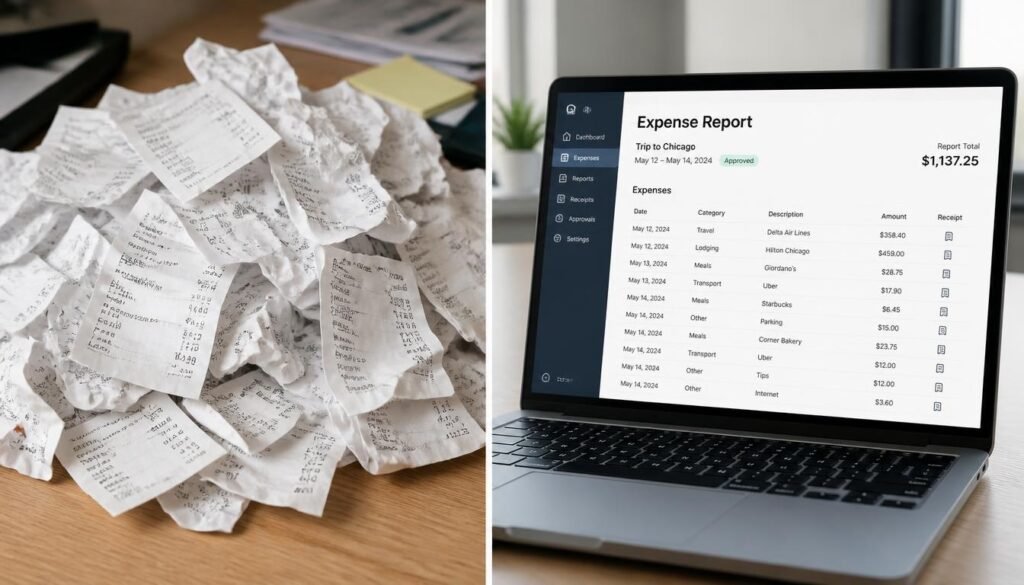
The real value is in the paperwork. A dedicated card gives you a clean record of every expense. That is useful when you pair it with accounting software at tax time, and it helps if you ever need to prove a deduction.
If you are a sole proprietor, an EIN keeps your Social Security number off applications. Our guide on how to get an EIN walks you through it for free.
How to Choose the Right Business Credit Card
Answer three questions before comparing cards.
1. Where does most of your money go? Look at three months of expenses. If you spend heavily on internet, phone and office supplies, a category card pays more. If your spending is scattered, a flat-rate card is simpler.
2. Do you carry a balance? If you pay in full every month, rewards matter most. If you sometimes carry a balance, a low intro APR matters more than points. Interest charges cancel out cash back quickly.
3. Do you want cash or travel? Cash back is easy to use and easy to value. Points can be worth more when transferred to travel partners, but only if you actually travel and enjoy the planning.
Before you apply, it also helps to understand how borrowing affects your business. The Consumer Financial Protection Bureau explains credit card basics clearly. If a card is not enough to fund a larger purchase, compare it with small business loans.
Best Business Credit Cards Available
1. Chase Ink Business Unlimited: Best Overall
Overview: The Ink Business Unlimited is the card we would suggest to most new owners. It earns a flat 1.5% cash back on every purchase, charges no annual fee and has no category caps to track. NerdWallet names it the best overall card for new businesses. It also rates well for LLCs and freelancers.
The rewards are issued as Chase Ultimate Rewards. If you also hold a premium Chase card, you can combine the points and transfer them to travel partners.
Key Features:
- Unlimited 1.5% cash back on all purchases
- $0 annual fee
- Intro APR period on purchases
- Employee cards at no extra cost
- Welcome bonus that changes by promotion
Best For: Owners with varied spending who want a simple, uncapped card.
Pros:
✅ No annual fee
✅ No spending caps on the 1.5% rate
✅ Points can combine with other Chase cards
Cons:
❌ Lower rate than 2% flat cards
❌ Needs good to excellent credit
Our Verdict: This is the safest first choice. If you spend across many categories, the flat rate beats juggling bonus tiers. Pair it with a solid invoicing tool so you always know what cash is coming in to cover the bill.
2. Chase Ink Business Cash: Best for Bonus Categories
Overview: The Ink Business Cash is built for the costs most small businesses share. It pays 5% on the first $25,000 spent each year at office supply stores and on internet, cable and phone services. It pays 2% on the first $25,000 spent at gas stations and restaurants. Everything else earns 1%.
The caps matter. Once you pass them, the rate drops to 1%. A heavy office-supply buyer can hit that limit, so run the numbers first.
Key Features:
- 5% back on office supplies, internet, cable and phone (annual cap)
- 2% back at gas stations and restaurants (annual cap)
- $0 annual fee
- Intro APR period
Best For: Home-office and service businesses with steady phone, internet and supply costs.
Pros:
✅ Highest return on common overhead
✅ No annual fee
✅ Works well alongside the Unlimited
Cons:
❌ Only 1% outside bonus categories
❌ Bonus caps limit larger spenders
Our Verdict: If your monthly bills are mostly internet, phone and supplies, this card earns more than a flat rate. Owners who also buy equipment, such as laptops or external monitors, can pair it with a flat-rate card for everything else.
3. Wells Fargo Signify Business Cash: Best Flat 2% Card
Overview: This card earns an unlimited 2% cash back on purchases and charges no annual fee. Reviewers highlight the lack of reward caps and the intro APR period. The trade-off is that there are no bonus categories at all.
Key Features:
- Unlimited 2% cash back on purchases
- $0 annual fee
- No reward caps
- Intro APR offer
Best For: Owners who want the highest simple rate and no spreadsheets.
Pros:
✅ Highest flat rate in this list
✅ No annual fee
✅ No caps to track
Cons:
❌ No bonus categories
❌ Fewer redemption options than Chase points
Our Verdict: If you will never optimize categories, this card does the work for you. It is a strong fit for consultants and agencies whose spending is mixed. Many such owners also run proposals and subscriptions that are billed monthly, which suits a flat 2% well.
4. American Express Blue Business Cash: Best for New Businesses
Overview: The Blue Business Cash earns 2% back on eligible purchases up to an annual spending limit, then 1% after that. It has no annual fee. NerdWallet lists it as a top pick for new businesses in its no-annual-fee ranking.
Amex cards are accepted almost everywhere, but a few merchants decline them or add surcharges. Check that your key vendors take Amex before you apply.
Key Features:
- 2% cash back up to an annual spending cap, then 1%
- $0 annual fee
- Rewards credited automatically
- Employee cards available
Best For: Startups with moderate spending that stays under the cap.
Pros:
✅ 2% rate on everyday spending
✅ No annual fee
✅ Simple automatic rewards
Cons:
❌ Rate drops after the cap
❌ Amex acceptance is not universal
Our Verdict: Early-stage owners often stay below the cap, which makes this a very strong pick. When spending grows, add a second card for the overflow. Freelancers who find clients on online marketplaces often have modest, steady expenses that fit well here.
5. Chase Ink Business Preferred: Best for Travel and Advertising
Overview: The Ink Business Preferred carries a $95 annual fee. It earns 3x points on travel, shipping, internet, cable, phone and advertising on social media and search engines, up to an annual combined cap. Everything else earns 1x. NerdWallet names it the best travel card for LLCs and for freelancers.
The points are worth more when transferred to Chase travel partners, so the card suits owners who value that flexibility.
Key Features:
- 3x points on travel, shipping, utilities and online ads (annual cap)
- $95 annual fee
- Large welcome bonus
- Points transfer to travel partners
Best For: Owners who run paid ads, ship products or travel for work.
Pros:
✅ Strong rewards on advertising
✅ Points can be worth more than 1 cent each
✅ Travel protections included
Cons:
❌ $95 annual fee
❌ More complex rewards to manage
Our Verdict: If you spend heavily on ads and shipping, the fee pays for itself quickly. If you do not, choose a no-fee card. Online sellers should also check whether they need a license to sell online before scaling their ad spend.
Comparison Table
| Card | Best For | Annual Fee | Rewards Rate | Caps |
|---|---|---|---|---|
| Ink Business Unlimited | Overall, new businesses | $0 | 1.5% flat | None |
| Ink Business Cash | Office, internet, phone | $0 | 5% / 2% / 1% | Yes, bonus tiers |
| Wells Fargo Signify Business Cash | Simple flat rate | $0 | 2% flat | None |
| Amex Blue Business Cash | Startups | $0 | 2%, then 1% | Yes, annual |
| Ink Business Preferred | Travel and ads | $95 | 3x / 1x points | Yes, bonus tiers |
Rates and offers change. Always confirm current terms with the issuer before applying.
Best Business Credit Cards for Different Business Types
Freelancers and Consultants
Freelancers usually have low, scattered expenses: software, a coworking day, client meals. A flat-rate card makes sense because there is no category to optimize. The Ink Business Unlimited or the Wells Fargo Signify Business Cash both fit. Put your tools on the card, and keep the receipts for your accountant.
Freelancers who meet clients online often buy hardware too. See our picks for webcams and noise-cancelling headphones before you spend.
Online Sellers and Marketers
Sellers pay for ads, shipping and software. The Ink Business Preferred rewards exactly those costs. Start by confirming your setup: a website builder and the right licenses come before ad spend. Creators running launches may also want a webinar platform, which is another recurring cost that belongs on a business card.
Local and Service Businesses
Service businesses usually have steady phone, internet and fuel costs. The Ink Business Cash pays most on those. If your work involves permits, such as a mobile food business, review our food truck license guide so your startup costs are planned properly. Owners also need protection, so compare business insurance alongside your card choice.
[IMAGE 4: Step-by-Step Process | Alt text: “applying for the best business credit cards online on a laptop with business details form”]
How to Apply Correctly
Applying takes about 10 minutes, but preparation prevents rejections. The IRS explains small business tax basics if you are unsure how business spending is treated.
Step 1: Check Your Credit
Most top cards want good to excellent personal credit. Check your score before applying so you do not take an avoidable hard inquiry.
Step 2: Gather Your Details
You will need your legal business name, address, industry, estimated annual revenue and an EIN or Social Security number. Keep your records tidy. Our guide to document and recordkeeping tools helps.
Step 3: Apply for One Card
Apply for one card at a time. Multiple applications within a short window can lower your approval odds.
Step 4: Set Up Employee Cards
If you have staff, issue cards with spending limits. This keeps expenses controlled without sharing your own card.
Step 5: Connect Your Accounting
Link the card to your bookkeeping so every transaction is categorized as it happens. This saves hours at year-end.
Common Mistakes
Mixing personal and business spending. This defeats the main purpose of the card. It also weakens your records if you are ever audited. Use one card for business only, and keep your business bank account separate too.
Chasing rewards while carrying a balance. Interest is far higher than any rewards rate. If you cannot pay in full, a lower-rate product or a business loan may be cheaper.
Ignoring the spending caps. Bonus categories often reset yearly and drop to 1% after the cap. Track your spending so you know when to switch cards. A shared note-taking app is enough for a simple cap tracker.
Expert Tips
Pair two cards. A flat-rate card plus a category card often beats either alone. Use the category card for bonus spending and the flat card for everything else.
Pay early and automate. Set autopay for the full statement balance. A single missed payment can cost more than a year of rewards.
Match the card to your growth plan. If you expect to scale quickly, think about how a card fits into your overall funding. Our guide on pricing a business proposal can help you set rates that cover your costs and card payments.
Final Thoughts
There is no single best business credit card for everyone. There is only the best card for how you spend.
- Best overall: Chase Ink Business Unlimited
- Best for category spending: Chase Ink Business Cash
- Best flat 2%: Wells Fargo Signify Business Cash
- Best for startups: American Express Blue Business Cash
- Best for travel and ads: Chase Ink Business Preferred
Start with a no-annual-fee card, pay it in full every month and use the savings to grow. Next, review your business insurance options, set up e-signatures for contracts and build a proposal process that wins clients.
This article is for general information only. We are not financial advisors, so check current terms with the card issuer before applying.
Frequently Asked Questions
Do I need a business to get a business credit card?
Not a formal company. Sole proprietors and freelancers can apply using their own name and Social Security number. You do need real or expected business income, and an EIN is a safer option than using your SSN.
Will a business credit card affect my personal credit?
The application usually causes a hard inquiry on your personal report. Day-to-day activity generally is not reported to personal credit bureaus unless you default, but each issuer has its own policy.
What credit score do I need?
Top cards generally want good to excellent credit. Requirements vary, and approvals also consider income and existing debt.
Is a flat 2% card better than a 1.5% card?
Usually yes, if the rate is uncapped and the fees are equal. The Ink Business Unlimited can still win if you value Chase points and travel transfers.
Are annual fees worth paying?
Only if the extra rewards exceed the fee. Calculate your yearly spending in the bonus categories first. If the result is not clearly higher, choose a no-fee card.
Can I use a business card for personal purchases?
You can, but you should not. It muddies your books and creates tax headaches. Keep the card strictly for business.
How long does approval take?
Many applications return a decision in minutes. Some are sent for review and take a few days.
What is the difference between a business card and a corporate card?
Small business cards usually require a personal guarantee. Corporate cards are often tied to company finances and used by larger firms. Most small owners need the first kind.
What should I do if I am denied?
Check the reason in the denial letter. Improving your credit, lowering your debt or applying with a stronger business profile can help. You can also start with a secured business card.
Do business cards help build business credit?
Some issuers report to business credit bureaus, which can help. Ask the issuer, and always pay on time.
Should I use a business card or a loan for a big purchase?
A card suits purchases you can repay quickly. A loan usually suits larger, longer-term needs. Compare both before committing.
Author: Morne Winston
Last Updated: November 2026