
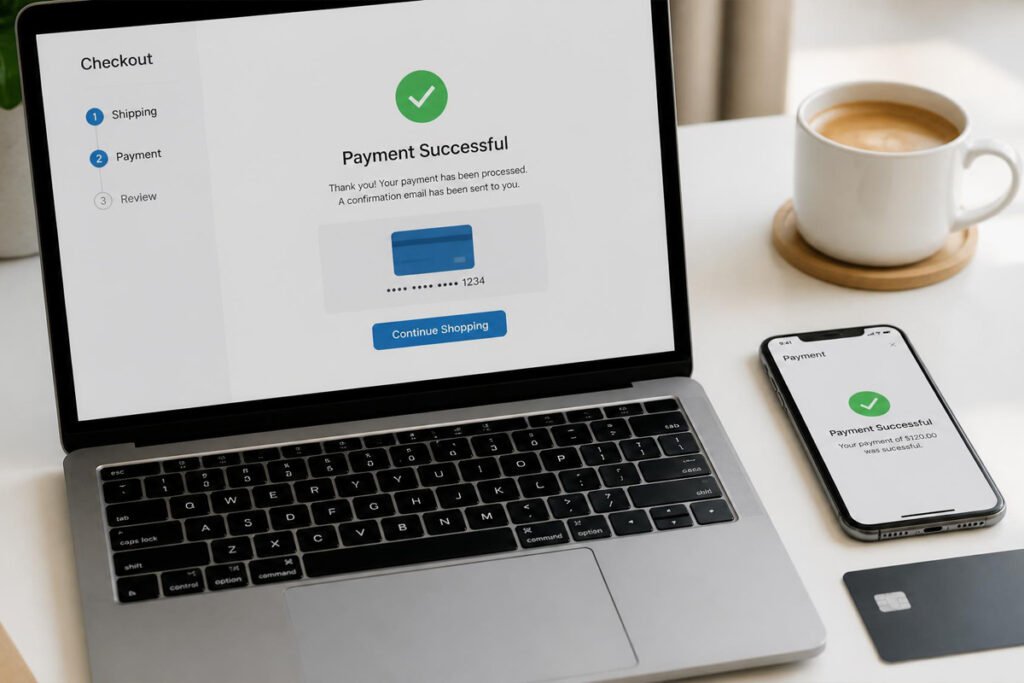
Somewhere behind every “Buy Now” button on your store is a decision that quietly shapes how much of each sale you actually keep, how quickly you get paid, and — for anyone selling internationally — whether you’re the one legally responsible for collecting sales tax in a hundred different countries. Most sellers pick a payment processor once, early, and never revisit it, which means an easy early decision can turn into an expensive long-term one.
If you’ve already worked through whether you need a business license to sell online, payment processing is the next piece of the compliance puzzle — some processors quietly hand you the tax responsibility, while others take it off your plate entirely for a higher fee. This guide compares the five payment options online sellers rely on most in 2026, and explains the distinction that actually matters most: who’s legally responsible for your sales tax.
Quick Answer
The right payment processor depends almost entirely on how much tax complexity you want to handle yourself. Stripe offers the lowest base fees and the most developer flexibility, but you remain the legal seller responsible for collecting and remitting sales tax and VAT yourself. PayPal is worth adding as a secondary option even if it’s not your primary processor, since its brand trust measurably increases conversion, especially for buyers unfamiliar with your store. Paddle and Lemon Squeezy both operate as a Merchant of Record, meaning they become the legal seller and handle global tax compliance on your behalf — at a higher per-transaction fee, but with real peace of mind for sellers going international. Square makes the most sense if you sell both online and in person and want unified inventory and payments in one platform.
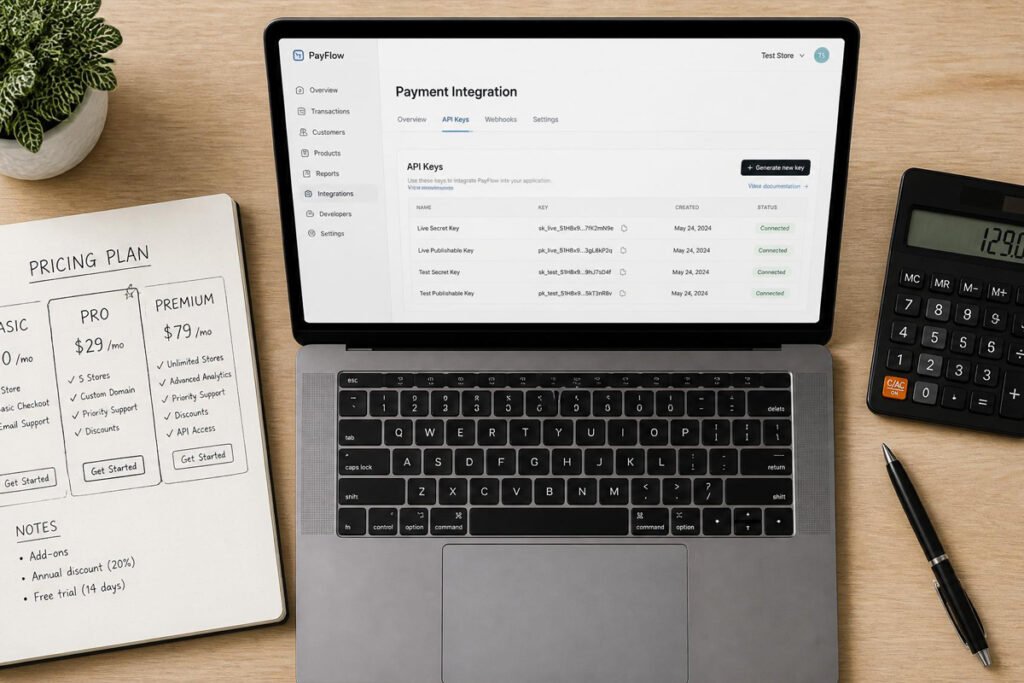
Table of Contents
- Payment Processor vs. Merchant of Record: The Distinction That Matters Most
- How to Choose the Right Payment Setup
- Top 5 Best Payment Processors for Online Sellers
- Platform Comparison Table
- Best Payment Setup by Seller Type
- How to Set Up Your First Checkout Step by Step
- Common Mistakes Online Sellers Make With Payments
- Expert Tips for Reducing Fees and Risk
- Final Thoughts
- Frequently Asked Questions
Payment Processor vs. Merchant of Record: The Distinction That Matters Most
Every option on this list falls into one of two categories, and understanding the difference will save you more money and stress than comparing fee percentages alone. A traditional payment processor — Stripe, PayPal, Square — moves money from buyer to seller, but you remain the legal seller responsible for collecting and remitting sales tax, VAT, and GST in every jurisdiction where you owe it. A Merchant of Record, like Paddle or Lemon Squeezy, actually becomes the legal seller of record for each transaction, which means they collect and remit that tax on your behalf — a meaningful relief for anyone selling digital products globally, since over a hundred countries now require tax collection on digital goods.
This isn’t just a technical distinction — it directly affects whether you need to separately confirm your own licensing and tax obligations or whether your payment provider has already absorbed a meaningful chunk of that responsibility.
How to Choose the Right Payment Setup
- Do you sell primarily domestically or internationally? Domestic-only sellers usually save money with a standard processor like Stripe; international sellers often find the Merchant of Record fee worth it to avoid tax compliance entirely.
- Do you have the resources to handle tax compliance yourself? Larger operations with an accountant or in-house finance function can often manage Stripe’s lower fees; solo creators frequently prefer paying more to a Merchant of Record and never thinking about VAT filings.
- Do you sell online only, or in person too? If you need unified in-person and online payments, a platform built for both, like Square, avoids juggling two completely separate systems.

Top 5 Best Payment Processors for Online Sellers
1. Stripe
Overview: Stripe remains the default choice for developers and technically-minded sellers, with the lowest base fees among major processors and the most flexible, well-documented API on the market.
Key Features:
- Base pricing starts at 2.9% + $0.30 for domestic card transactions
- Extensive API and developer ecosystem, with the broadest third-party integrations
- Optional add-on tools for tax calculation, though these increase total cost
Best For: Technically capable sellers or those with development resources who want maximum control and the lowest base fees.
Pros: ✅ Lowest base fees among major processors ✅ Best developer experience and integration ecosystem ✅ Fast, reliable payouts Cons: ❌ You remain fully responsible for tax compliance ❌ Adding tax and billing tools separately increases real total cost
Our Verdict: If you’re comfortable handling your own sales tax obligations, or your sales are mostly domestic, Stripe’s lower fees make it the most cost-effective option on this list at meaningful scale.
2. PayPal
Overview: PayPal’s biggest advantage isn’t its fee structure — it’s brand recognition. Adding PayPal as a checkout option measurably increases conversion simply because so many buyers already trust and use it.
Key Features:
- Recognized by hundreds of millions of existing account holders worldwide
- Fast payout speed, often instant to a linked account
- Works well as a secondary option alongside a primary processor
Best For: Sellers who want to boost buyer trust and conversion by offering a familiar checkout option alongside their main processor.
Pros: ✅ Strong brand trust that measurably lifts conversion ✅ Wide international reach and familiarity Cons: ❌ Higher headline fees than Stripe for digital goods ❌ More exposed to chargeback risk and occasional account holds
Our Verdict: Most sellers get the best results using PayPal as a supplementary option rather than a sole processor — the conversion lift from buyer familiarity is real, but the fee and risk profile make it a poor primary choice on its own.
3. Paddle
Overview: Paddle operates as a full Merchant of Record, taking on legal responsibility for collecting and remitting sales tax, VAT, and GST across the markets it supports, which removes an entire category of operational work for sellers going global.
Key Features:
- Merchant of Record model handles global tax compliance automatically
- Strong support for subscription billing and usage-based pricing
- Built for established businesses with more complex billing needs
Best For: Established sellers or SaaS-style businesses selling internationally who want tax compliance fully handled.
Pros: ✅ Removes global tax compliance burden entirely ✅ Strong subscription and complex billing support ✅ No need for separate entity setup in each market Cons: ❌ Higher per-transaction fee than Stripe ❌ More setup complexity than simpler Merchant of Record alternatives
Our Verdict: For a business with real international revenue and more complex billing needs, the tax compliance Paddle absorbs is often worth its higher fee many times over compared to managing that complexity yourself.
4. Lemon Squeezy
Overview: Lemon Squeezy built a strong following among indie developers and digital product creators for its polished, conversion-optimized checkout combined with Merchant of Record tax handling — and was acquired by Stripe in 2024, adding long-term stability to its roadmap.
Key Features:
- Merchant of Record model, similar to Paddle, handling global tax on your behalf
- Particularly polished experience for one-time digital product sales, including file delivery and license keys
- Fast setup, often live within about ten minutes
Best For: Indie developers, digital product sellers, and solo creators who want simplicity and a fast, clean checkout without enterprise complexity.
Pros: ✅ Fastest, most beginner-friendly Merchant of Record setup ✅ Strong fit for one-time digital product sales specifically ✅ Backed by Stripe following its 2024 acquisition Cons: ❌ Weaker for complex, enterprise-level billing than Paddle ❌ Total cost can exceed Paddle on some transaction types due to added fees
Our Verdict: If you’re a solo creator selling digital products or courses and want tax compliance solved quickly without a complicated setup, Lemon Squeezy remains one of the fastest, most approachable ways to get there.
5. Square
Overview: Square unifies in-person and online payments in a single platform, making it the standout choice for sellers who operate both a physical presence and an online store rather than one or the other.
Key Features:
- Unified inventory and payment tracking across in-person and online sales
- Competitive online rate around 2.6% for card transactions
- Built-in point-of-sale hardware options for physical selling
Best For: Sellers who need both in-person and online payment processing without managing two separate systems.
Pros: ✅ Genuinely unified online and in-person system ✅ Competitive rates for omnichannel sellers ✅ No separate vendor needed for physical sales Cons: ❌ Less developer flexibility than Stripe for complex online-only setups ❌ Not built around Merchant of Record tax handling
Our Verdict: If your business spans both a physical and digital storefront — think a food truck that also sells merchandise online — Square avoids the headache of stitching together two unrelated payment systems.
Platform Comparison Table
| Processor | Type | Base Fee | Best For |
|---|---|---|---|
| Stripe | Payment processor | 2.9% + $0.30 | Technical sellers, lowest base fees |
| PayPal | Payment processor | ~2.99% + $0.49 | Boosting buyer trust and conversion |
| Paddle | Merchant of Record | 5% + $0.50 | Established, complex international sales |
| Lemon Squeezy | Merchant of Record | 5% + $0.50 (plus some premiums) | Solo creators, fast digital product setup |
| Square | Payment processor | ~2.6% online | Combined online and in-person selling |
Best Payment Setup by Seller Type
Solo Creators Selling Digital Products
Lemon Squeezy’s fast setup and Merchant of Record tax handling make it one of the most beginner-friendly ways to start selling digital downloads globally without a tax headache.
Established or Scaling International Sellers
Paddle’s deeper billing capabilities and Merchant of Record model suit sellers with more complex subscription or usage-based pricing needs.
Domestic-Only or Technically Capable Sellers
Stripe’s lower base fees make the most financial sense once you’re comfortable handling your own tax compliance, or your sales are concentrated in one country.
Sellers With a Physical and Online Presence
Square’s unified system avoids the complexity of running separate in-person and online payment setups for businesses like a mobile car detailing or vending operation that also sells online.
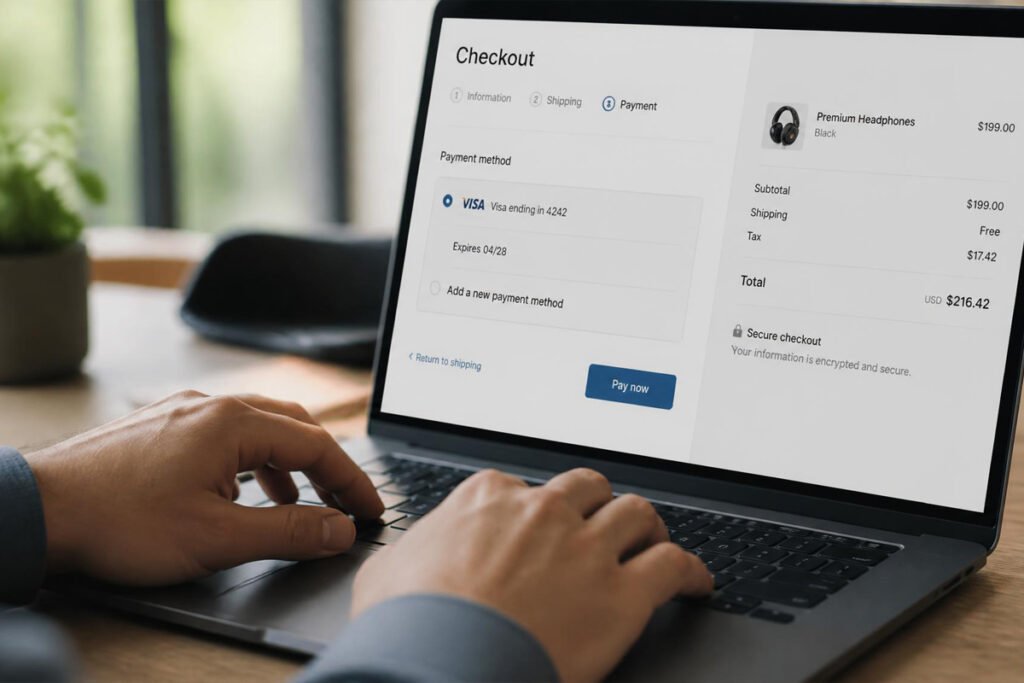
How to Set Up Your First Checkout, Step by Step
Step 1: Decide Between a Payment Processor and a Merchant of Record
Use the comparison above to weigh lower fees and control against having tax compliance handled entirely on your behalf.
Step 2: Create Your Account and Complete Verification
Most providers require basic business and banking information before you can start accepting live payments — have this ready to avoid delays.
Step 3: Connect Your Chosen Processor to Your Platform
Whether you’re using a landing page builder or a full storefront, connect your payment provider directly through the platform’s built-in integration.
Step 4: Test the Full Purchase Flow Yourself
Run a real test transaction before going live to confirm the checkout experience, confirmation emails, and product delivery all work correctly.
Step 5: Add a Secondary Payment Option if It Makes Sense
Consider adding PayPal alongside your primary processor if your audience data suggests it would meaningfully boost conversion.
Common Mistakes Online Sellers Make With Payments
Choosing a processor based on fees alone, ignoring tax responsibility. A lower per-transaction fee can end up costing far more once you factor in the time and risk of managing your own sales tax compliance across multiple countries.
Not testing the checkout flow before launch. A broken or confusing checkout step is one of the most common, most fixable reasons a good product underperforms — always test your own purchase flow before sending real traffic.
Relying on a single payment option. Buyers who don’t see their preferred payment method sometimes abandon checkout entirely — even a simple secondary option like PayPal can meaningfully reduce that drop-off.
Assuming a payment processor replaces proper business registration. Even with a Merchant of Record handling sales tax, you’re still responsible for confirming whether you need a business license to sell online and keeping accurate records with proper accounting software.
Expert Tips for Reducing Fees and Risk
Model your real margin at different price points before choosing. A 5% Merchant of Record fee matters far more on a $9 ebook than on a $200 course — run the math on your actual product pricing before assuming one option is obviously cheaper.
Keep a payout buffer for chargebacks and disputes. Especially with consumer-trust platforms like PayPal, budgeting for occasional disputes avoids cash flow surprises when a chargeback hits.
Revisit your payment setup as you scale internationally. Many sellers start with a Merchant of Record for simplicity and migrate toward Stripe once they can justify hiring help for tax compliance — treat this as a decision to revisit, not a permanent one, the same way you’d revisit any part of a growing online business.

Final Thoughts
Best overall for lowest fees: Stripe, for technically capable sellers comfortable handling their own tax compliance. Best for boosting conversion: PayPal, as a secondary option alongside your primary processor. Best for established international sellers: Paddle, for complex billing with tax fully handled. Best for solo digital product creators: Lemon Squeezy, for fast setup and simplicity. Best for combined online and in-person sales: Square, for a genuinely unified system.
Whichever option you choose, remember that payment processing is only one piece of running a compliant online business — pair it with the right license, accounting setup, and insurance so nothing falls through the cracks as revenue grows.
Frequently Asked Questions
What’s the difference between a payment processor and a Merchant of Record? A payment processor moves money but leaves you legally responsible for sales tax and VAT; a Merchant of Record becomes the legal seller and handles that tax collection and remittance on your behalf.
Which payment processor has the lowest fees? Stripe generally offers the lowest base fees among major processors at 2.9% + $0.30 for domestic transactions, though Merchant of Record options charge more in exchange for handling tax compliance.
Do I need a Merchant of Record if I only sell in the US? It’s less critical for purely domestic sales, since US sales tax rules are generally simpler to manage than the international VAT and GST landscape a global seller faces.
Is PayPal safe to use as a primary payment processor? PayPal is widely trusted by buyers, but it’s more exposed to chargeback risk and occasional account holds, which is why many sellers use it as a secondary option rather than their sole processor.
Can I use more than one payment processor at once? Yes, many sellers combine a primary processor like Stripe with PayPal as a secondary option specifically to boost conversion among buyers who prefer a familiar checkout.
Does Lemon Squeezy still operate independently after being acquired by Stripe? Yes, Lemon Squeezy continues operating as its own product following the 2024 acquisition, with the backing adding long-term stability to its roadmap.
How fast do I get paid with these payment processors? Payout speed varies by provider — PayPal can be near-instant to a linked account, Stripe typically follows a 2-day rolling schedule, and Merchant of Record platforms vary but commonly pay out weekly or on a similar cycle.
Do Merchant of Record platforms really handle all my sales tax? Yes, for the transactions they process — platforms like Paddle and Lemon Squeezy collect and remit sales tax, VAT, and GST in the markets they support, removing that specific compliance burden from you.
Which payment processor is best for a small in-person and online business? Square is generally the best fit here, since it unifies inventory and payments across both channels without requiring two separate systems.
Should I switch payment processors once my business grows? It’s common. Many sellers start with a Merchant of Record for simplicity and later migrate to a lower-fee processor like Stripe once they can justify managing tax compliance themselves at higher revenue.
Author: Morne Winston Last Updated: July 2026