
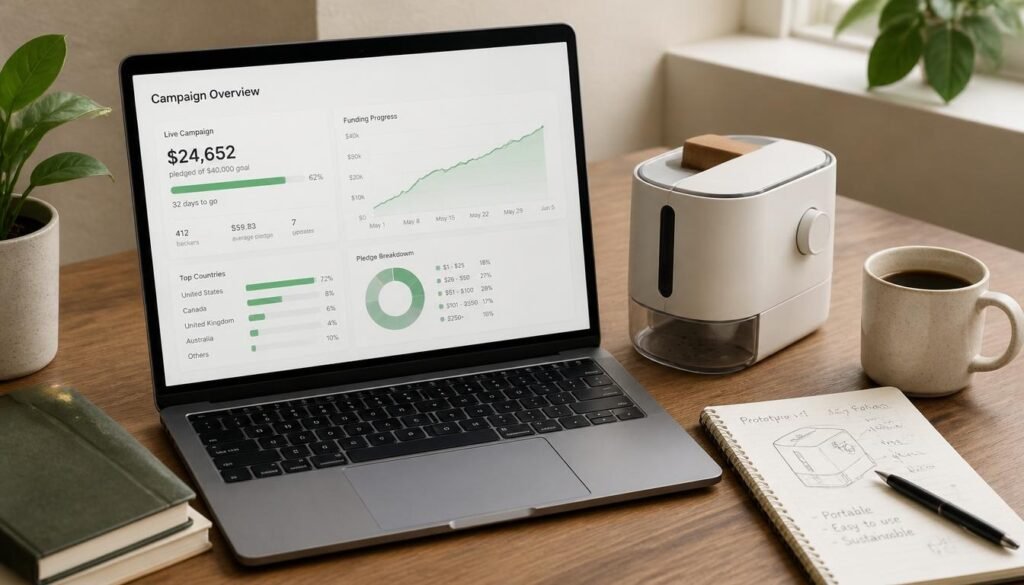
You have a working prototype, a manufacturer’s quote for the first production run, and a bank that wants two years of financials you don’t have yet. Traditional funding keeps asking for proof you haven’t had the money to create. That gap is exactly where many founders start searching for the best crowdfunding platforms, and it is also where a rushed choice gets expensive.
The trouble is that “crowdfunding” is not one thing. Kickstarter sells pre-orders. Patreon sells ongoing memberships. Wefunder sells ownership stakes. Each model brings different fees, different legal duties, and a different kind of backer. Pick the wrong one and you can lose a chunk of every dollar raised, or take on obligations you never saw coming.
If you have already looked at small business loans and found the terms too steep, crowdfunding can be a smart alternative or a companion. Before you launch anything, get the basics in place. A registered entity (our guide to LLC formation services walks through it) and an EIN make payouts, banking, and tax reporting far cleaner.
This guide compares five platforms by funding model, cost, and audience, then shows which one fits your situation. Fee figures were checked in November 2026, but platforms change pricing often, so confirm current terms before you commit.
Quick Answer
The best crowdfunding platform depends on what you are offering backers in return. Physical products or creative projects with a clear delivery date fit Kickstarter. Ongoing creator income fits Patreon. Selling ownership stakes to everyday investors requires an SEC-regulated equity platform such as Wefunder or StartEngine. Indiegogo is a workable but smaller Kickstarter alternative, especially after its 2025 platform changes. Choose the funding model that matches your business first, then compare fees. Most one-time reward platforms cost roughly 8% to 10% of funds raised once payment processing is included.

Table of Contents
- What Are Crowdfunding Platforms and How Do They Work?
- How to Choose the Right Crowdfunding Platform
- Best Crowdfunding Platforms for 2026
- Comparison Table
- Best Platform for Different Business Types
- How to Launch a Crowdfunding Campaign Correctly
- Common Mistakes
- Expert Tips
- Final Verdict
- Frequently Asked Questions
What Are Crowdfunding Platforms and How Do They Work?
A crowdfunding platform is an online marketplace where many people each contribute a small amount toward a project or company. The platform hosts your campaign page, handles payments, and, for investment campaigns, manages the regulatory paperwork. You set a goal, tell your story, and backers decide whether to chip in.
There are four main models:
- Reward-based: Backers pledge in exchange for a product or perk. Kickstarter and Indiegogo work this way.
- Membership: Supporters pay a recurring amount for ongoing content or access. Patreon is the best-known example.
- Equity: Investors receive a small ownership stake. Wefunder and StartEngine operate here.
- Donation: Supporters give with nothing expected back. This suits causes more than businesses.
Funding rules matter just as much as the model. Under an all-or-nothing rule, you collect only if you hit your goal by the deadline. Platforms then deduct their own fee plus payment processing before money reaches your account.
One thing no platform provides is a permanent home for your brand. Strong campaigns send traffic to a site you control, so it helps to have one ready. Our roundup of website builders for small business covers fast options.
How to Choose the Right Crowdfunding Platform
Before comparing fee percentages, answer three questions.
1. What are you giving backers in return? A product, a membership, or ownership each point to a different platform. This single answer eliminates most of the field.
2. How big is your own audience? Platforms rarely create demand from nothing. Most successful campaigns arrive with an email list or social following ready to pledge in the first days. If you have none, build that first.
3. Can you afford the total cost? Fees are only part of it. Production, shipping, taxes, marketing, and legal costs all come out of the same pot.
If you are leaning toward equity, read the SEC’s guidance for issuers on Regulation Crowdfunding first. It explains the offering limit, which currently sits at $5 million in a 12-month period, and the requirement to use an SEC-registered broker-dealer or funding portal.
Best Crowdfunding Platforms for 2026
1. Kickstarter — Best Overall for Product Launches
Overview: Kickstarter is the best-known reward-based platform. Backers pledge money for a product or perk, and you collect only if you reach your goal by the deadline. That all-or-nothing rule protects you from owing rewards you cannot afford to build, and it creates urgency that tends to drive late pledges. It is designed for creative and product projects rather than charity or personal causes.
Key Features:
- All-or-nothing funding with a fixed campaign deadline
- Large community of backers who actively browse new projects
- 5% platform fee on successfully funded projects, plus payment processing of roughly 3% to 5%
Best For: Physical products, games, design, and creative projects with a clear delivery plan.
Pros:
- ✅ Biggest built-in audience of any reward platform
- ✅ No platform fee if you miss your goal
- ✅ Familiar, trusted checkout for backers
Cons:
- ❌ All-in fees typically land around 8% to 10%
- ❌ Miss your goal and you collect nothing
Our Verdict: Kickstarter is the default pick when you are pre-selling something tangible. Treat your campaign page like a storefront, because sharp images lift pledges. Our guide to product photography equipment covers affordable setups.
2. Indiegogo — Best Kickstarter Alternative
Overview: Indiegogo has been around since 2008 and changed hands in 2025, when Gamefound acquired it. The platform upgrade that followed ended flexible funding for new campaigns, so new projects now run on fixed, all-or-nothing terms, much like Kickstarter. Older guides still describe flexible funding, which is no longer available. Its audience is far smaller: one November 2026 comparison counted 224 live campaigns on Indiegogo against 3,464 on Kickstarter in early October.
Key Features:
- Flat 5% platform fee plus payment processing of 3% + $0.20 per transaction
- InDemand program for continued sales after a campaign ends
- Fixed funding for new campaigns
Best For: Teams that want a second channel, or products that plan to keep selling after the campaign closes.
Pros:
- ✅ Simple, flat fee structure
- ✅ Post-campaign sales path through InDemand
- ✅ Fewer competing campaigns for attention
Cons:
- ❌ Much smaller backer audience than Kickstarter
- ❌ Recent ownership change means features and terms may keep shifting
Our Verdict: Indiegogo works best as a complement, not a first choice. Send your own traffic to it through a dedicated page, and our list of landing page builders shows how to capture emails along the way.
3. Patreon — Best for Recurring Creator Income
Overview: Patreon works on a different principle. Supporters pay monthly for ongoing content, access, or perks, so there is no deadline and no funding goal to hit. Income grows as your audience does. For creators who join now, Patreon charges a 10% platform fee plus payment processing, currency conversion, and payout fees, while some legacy creators remain on older plans.
Key Features:
- Tiered memberships with perks you define
- Recurring revenue instead of a one-time raise
- No all-or-nothing goal or deadline
Best For: Writers, educators, podcasters, and service-based creators with a loyal audience and a steady stream of content.
Pros:
- ✅ Predictable monthly income
- ✅ No deadline pressure
- ✅ Builds an ongoing relationship with supporters
Cons:
- ❌ Higher platform fee than one-time reward sites
- ❌ Not built for a large one-time capital injection
Our Verdict: Patreon rewards consistency, so it is a poor fit if you cannot publish regularly. A good scheduling workflow helps, and our guide to social media scheduling tools for creators is a useful place to start.
4. Wefunder — Best for Equity Crowdfunding
Overview: Wefunder lets startups sell small ownership stakes to everyday investors under the SEC’s Regulation Crowdfunding. By one 2026 tally it is the largest Reg CF platform by volume, with $99.4 million raised in 2024. Investors can often start from around $100 on some offerings. Published coverage puts founder fees at roughly 7.5% to 7.9% of money raised, with sources differing and some administrative fees possible, so verify the current schedule.
Key Features:
- Regulation CF raises of up to $5 million per 12-month period
- Success-based fee structure
- Everyday investors, not only accredited ones
Best For: Early-stage startups with a community of customers or fans willing to invest.
Pros:
- ✅ Raises real capital without taking on a bank loan
- ✅ Turns customers into invested advocates
- ✅ Fees are tied to a successful raise
Cons:
- ❌ Securities-law disclosures and ongoing reporting duties
- ❌ Many small investors on your cap table
Our Verdict: Wefunder suits founders ready to treat fundraising as a legal process. Because you are handling investor money, clean books are non-negotiable, and our guide to accounting software for small business helps you stay organized.
5. StartEngine — Best for Larger Equity Raises
Overview: StartEngine offers both Regulation CF and Regulation A+ offerings, which gives growing companies room to raise more than the Reg CF ceiling allows. By one 2026 account, citing its annual filing, it has run more than 1,500 Reg CF offerings since 2016. Reported issuer fees range from roughly 6% to 10%, and some deals include an equity component. It also runs a marketplace for reselling eligible private-company securities.
Key Features:
- Reg CF and Reg A+ offerings
- Large existing investor base
- Secondary marketplace for eligible shares
Best For: Startups with real traction preparing a bigger, more formal raise.
Pros:
- ✅ Large audience of existing investors
- ✅ Path to raises beyond the Reg CF cap
- ✅ Option for investors to resell eligible shares
Cons:
- ❌ Costs are higher and more variable
- ❌ Reg A+ adds legal and reporting complexity
Our Verdict: StartEngine is for companies that have outgrown a simple campaign. Investor communication and compliance generate paperwork, so look at document security and recordkeeping tools before you launch. Equity crowdfunding means selling securities, so talk to a securities attorney first.

Comparison Table
| Platform | Model | Best For | Typical Cost | Key Rule |
|---|---|---|---|---|
| Kickstarter | Rewards | Product and creative launches | 5% + about 3–5% processing | All-or-nothing |
| Indiegogo | Rewards | Second channel, post-campaign sales | 5% + 3% + $0.20 per transaction | Fixed funding for new campaigns |
| Patreon | Memberships | Recurring creator income | 10% for new creators + fees | Ongoing, no goal |
| Wefunder | Equity (Reg CF) | Early-stage startups | About 7.5%–7.9% | Up to $5M per 12 months |
| StartEngine | Equity (Reg CF, Reg A+) | Larger or more formal raises | About 6%–10% reported | SEC rules apply |
Fees reflect published figures as of November 2026. Always check each platform’s current fee page.
Best Crowdfunding Platform for Different Business Types
Physical Product Launches
Kickstarter is the usual first stop, with Indiegogo as an optional second channel. The real challenge begins after the campaign: building, shipping, and tracking hundreds of orders. A tool from our roundup of project management software for small business keeps production milestones visible. Once the campaign ends, you will also want a store that can keep selling, so compare payment processors for online sellers in advance.
Digital Creators and Service Businesses
Patreon fits when your value is ongoing, such as lessons, content, or community. A one-time Kickstarter works when you are funding a defined project, like a course or a book. If you are still choosing what to sell, our guide to digital products to sell online can help you decide. Live events convert especially well with an existing audience, and webinar software for creators makes that practical.
Startups Raising Equity
Wefunder and StartEngine fit companies that want investors, not just customers. Expect more paperwork, so set up a dedicated small business bank account before money moves. Investors also expect you to look protected, so review small business insurance options early. Remember that equity campaigns follow securities law, and the SEC’s guidance for issuers is the authoritative starting point.

How to Launch a Crowdfunding Campaign Correctly
Step 1: Set a Realistic Goal
Add up production costs, shipping, platform and processing fees, taxes, and a buffer for surprises. Your goal should be the minimum amount that lets you deliver on every promise, not your dream budget.
Step 2: Build Your Audience Before Launch
Collect emails on a simple pre-launch page for at least a few weeks. A lightweight CRM for small business helps you segment early supporters and follow up with them.
Step 3: Create Your Campaign Page
Lead with a short video and clear images. Explain the problem, show the product, list reward tiers, and state your delivery timeline honestly. A decent camera matters here, and our guide to webcams for virtual client meetings includes budget options that work for talking-head clips.
Step 4: Launch and Promote
The first 48 hours set the tone, because early momentum attracts browsing backers. Notify your email list on day one, and post updates as milestones are reached.
Step 5: Deliver and Keep Communicating
Fulfillment is where reputations are made. Send regular updates, flag delays early, and ship in the order you promised.
Common Mistakes
1. Setting the goal based on production cost alone. Fees, shipping, and taxes can eat a large share of what you raise. Cover upfront costs with a tool like one of the business credit cards for small business so a timing gap does not stall production.
2. Launching without an audience. Backers rarely discover a brand-new campaign on their own. Without an existing list, you will likely stall in the first week.
3. Ignoring legal and tax obligations. Selling products online can trigger licensing and tax duties, so read our guide on whether you need a business license to sell online. Equity raises carry additional securities-law requirements.
Expert Tips
1. Offer a limited early-bird tier. A discounted reward for the first wave of backers creates momentum in the critical opening days and gives hesitant supporters a reason to act now.
2. Run a pre-launch page. Even a simple sign-up page proves demand before you spend money on a campaign. If your email list is small, delay the launch rather than hoping the platform’s audience will fill the gap.
3. Budget a buffer, then communicate delays quickly. Manufacturing slips are common. Backers forgive late deliveries far more readily than silence, so update them early and often.

Final Verdict
There is no single winner, because each platform solves a different funding problem.
- Best overall: Kickstarter, for pre-selling products and creative projects.
- Best for recurring income: Patreon.
- Best for equity from everyday investors: Wefunder.
- Best for larger or more formal raises: StartEngine.
- Best alternative reward platform: Indiegogo, particularly for post-campaign sales.
Whichever you choose, protect the business around the campaign. Open a dedicated business bank account, review your insurance coverage, and if you hire people to help deliver, set up payroll software before you need it.
Frequently Asked Questions
What is the best crowdfunding platform for a small business? It depends on your model. Kickstarter fits product and creative launches, Patreon fits recurring income, and Wefunder or StartEngine fit businesses raising equity. Choose by what you are giving backers, then compare fees.
How much do crowdfunding platforms charge? Reward platforms like Kickstarter and Indiegogo charge a 5% platform fee plus roughly 3% to 5% in payment processing, so budget 8% to 10% in total. Patreon charges 10% for new creators plus other fees. Equity platforms commonly charge about 6% to 10%.
Do I need an LLC before starting a crowdfunding campaign? Not always for a reward campaign, but it is strongly advisable. An entity helps separate personal and business liability and simplifies banking and taxes. For equity crowdfunding you will need a properly formed company, since you are issuing securities.
What is the difference between Kickstarter and Indiegogo? Both charge a 5% platform fee and run all-or-nothing campaigns for new projects. Kickstarter has a much larger audience, while Indiegogo offers its InDemand program for continued sales after the campaign. Indiegogo’s older flexible funding option no longer applies to new campaigns.
What happens if I do not reach my goal? On all-or-nothing campaigns, you receive no funds and backers are not charged. Kickstarter takes its fee only on successfully funded projects. Patreon and equity platforms work differently, so review each platform’s rules before launching.
Is equity crowdfunding legal? Yes, in the United States under SEC Regulation Crowdfunding. Offerings must run through a registered broker-dealer or funding portal, and a company can raise up to $5 million in a 12-month period. Consult a securities attorney before you start.
How long should a crowdfunding campaign run? Most reward campaigns run 30 to 60 days, and Kickstarter caps campaigns at 60 days. Shorter campaigns usually create more urgency, but they require your audience to be ready on day one.
Is crowdfunding better than a business loan? They solve different problems. Crowdfunding validates demand and does not require repayment, but it demands marketing effort and fulfillment. A loan provides cash on a schedule but must be repaid. Compare your options in our guide to small business loans.
Do I pay taxes on crowdfunding money? Often yes. Funds from reward or membership campaigns are commonly treated as business income, though the rules vary by situation and location. This is general information, not tax advice, so speak with a qualified tax professional.
Author: Morne Winston Last Updated: November 2026